Blog

  • Golden Son Mocks Brother at Funeralโ€”Then the Lawyer Stood Up

    Golden Son Mocks Brother at Funeralโ€”Then the Lawyer Stood Up

    He mocked his “adopted” brother at the funeral… Then the lawyer stood up with a 30-year-old DNA test.

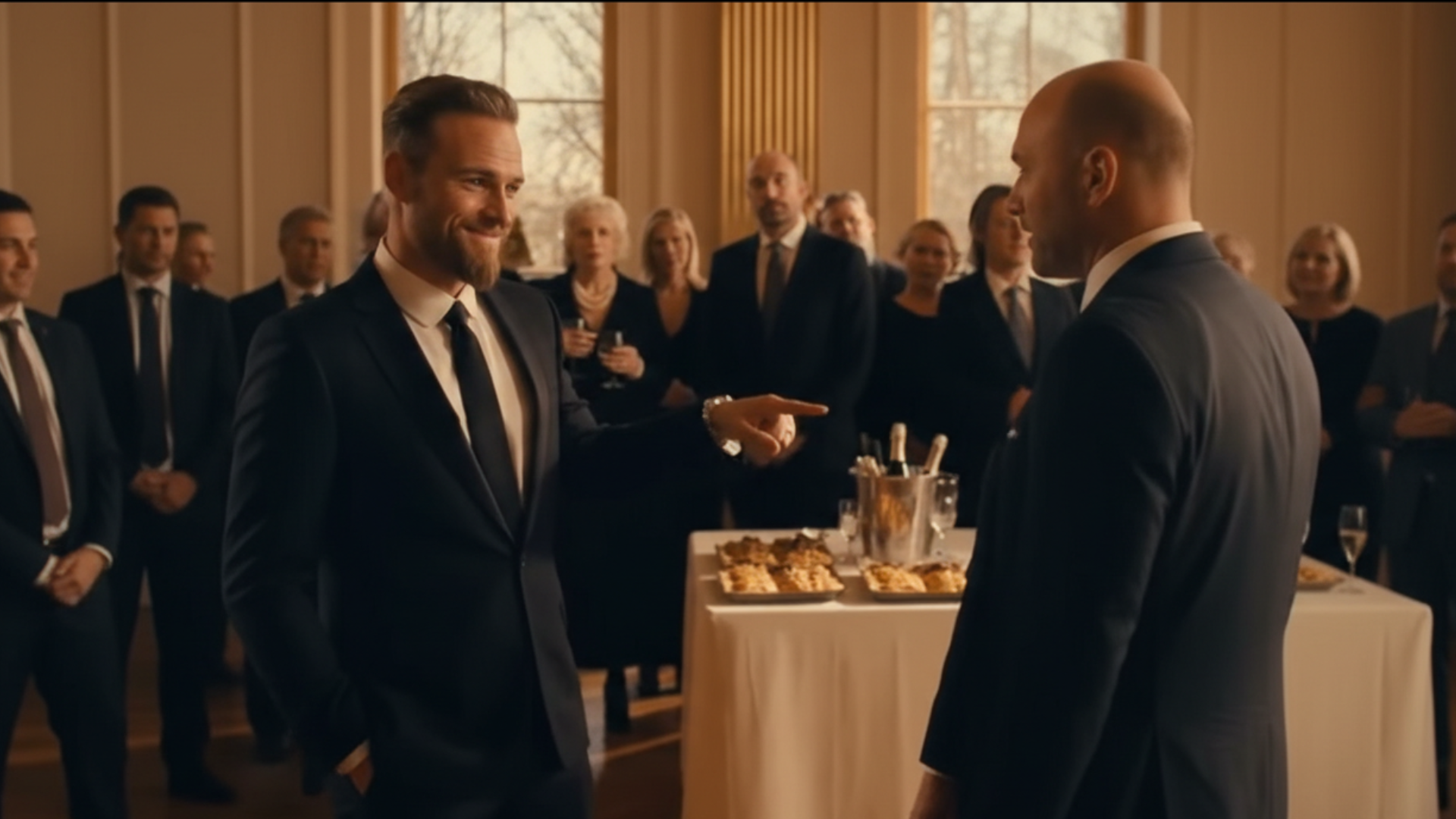
    The crystal chandeliers caught every whisper in the Connecticut estate’s ballroom. Two hundred guests in black silk and Italian wool stood in clusters, champagne flutes balanced on crisp white napkins.

    Marcus adjusted his Rolex and raised his voice. “A toast to Dadโ€”who built an empire and left it to someone who actually carries his legacy forward.”

    His brother Daniel stood by the catering table in a rented suit, refilling water pitchers.

    “Not you, obviously,” Marcus said, turning to point at Daniel. “You were charity. A tax write-off with a bedroom.”

    Scattered gasps rippled through the crowd. Daniel’s jaw tightened, but he said nothing.

    Marcus’s wife Victoria looped her arm through his, diamond tennis bracelet flashing. “Marcus, maybe not hereโ€””

    “Why not here?” Marcus spread his arms wide. “Everyone knows the truth. Dad took pity on some kid from nowhere, gave him a roof, paid for his state school education. Meanwhile, I went to Yale. I ran the international division. I’m the son who mattered.”

    Daniel set down the water pitcher with shaking hands.

    “You were never really family anyway,” Marcus continued, his voice carrying across the silent room. “After today, you’ll go back to whatever mediocre life you had planned, and I’ll be running Dad’s companies. Fifty million dollars and four corporations. Not bad for an afternoon’s work.”

    Victoria squeezed his arm. “The lawyer’s here. Should weโ€””

    “Let him wait.” Marcus grabbed a champagne flute from a passing tray. “I want to enjoy this moment.”

    An elderly woman in pearls approached Daniel. “Are you all right, dear?”

    “I’m fine, Mrs. Chen.” Daniel’s voice was barely audible.

    “Your father loved you very much,” she whispered. “More than you know.”

    Before Daniel could respond, a sharp voice cut through the room. “If everyone could take their seats.”

    Howard Brennan, the family attorney for thirty-five years, stood at the front of the ballroom beside a mahogany podium. His gray suit was immaculate, his expression unreadable.

    Marcus strode to the front row and dropped into a leather chair. “Finally. Let’s make this official.”

    Victoria settled beside him, smoothing her black Chanel dress.

    Daniel remained standing in the back, hands clasped behind him.

    Howard pulled reading glasses from his jacket pocket. “Before we begin, I need to clarify something. The will I’m about to read is not the one filed with the probate court last week.”

    Marcus frowned. “What?”

    “Your father changed his will eight days before his death.” Howard’s voice was steady. “He left specific instructions that the new will was to be read here, in front of all gathered witnesses, with no prior notification to family members.”

    Victoria’s hand found Marcus’s knee. “That’s unusual.”

    “It’s invalid,” Marcus snapped. “You can’t just change a will a week before dying andโ€””

    “I can assure you, it’s entirely valid.” Howard opened a leather folder. “Witnessed by three attorneys, notarized, filed appropriately. Your father was exceptionally clear-minded and specific about his wishes.”

    The room went silent.

    Howard cleared his throat. “The Last Will and Testament of Richard Anthony Castellan, dated November second. ‘I, Richard Castellan, being of sound mind and body, do hereby revoke all previous wills and codicils.’”

    Marcus leaned back, confidence returning. “Get on with it.”

    “‘To my son Marcus Castellan, I leave the sum of one dollar, to be paid immediately upon the reading of this will.’”

    The room erupted.

    Marcus shot to his feet. “What?!”

    “‘One dollar,’” Howard repeated calmly. “‘And nothing more.’”

    “That’s impossible! I’m his son! I’mโ€””

    “Please sit down, Mr. Castellan.” Howard’s tone sharpened. “I’m not finished.”

    Victoria’s face had gone white. She didn’t pull Marcus back down.

    Howard continued. “‘To my son Daniel Castellan, I leave the entirety of my estate, including all liquid assets, all real property, all business interests, and all personal effects. This includes Castellan Industries, Castellan International, Castellan Properties, and Castellan Investments.’”

    Daniel’s knees buckled. Mrs. Chen caught his elbow.

    “The estimated value,” Howard added, “is fifty-three million dollars.”

    “This is insane!” Marcus’s voice cracked. “He’s not evenโ€”Dad adopted him! Some random kid! You’re giving fifty million dollars toโ€””

    “That’s where you’re wrong.” Howard reached into his folder and pulled out a sealed envelope. “Your father left this letter to be read aloud immediately following the will.”

    Marcus’s breathing was ragged. “I’ll contest this. I’ll sue. I’llโ€””

    Howard broke the seal and unfolded cream-colored stationery. “‘Marcus, if you’re hearing this, you’ve just learned you’ve been disinherited. You deserve an explanation.’”

    The room was so quiet, the rustle of paper sounded like thunder.

    “‘Thirty-two years ago, I had an affair. I’m not proud of it. Your motherโ€”Catherineโ€”and I were going through a difficult time. The woman’s name was Sarah Mitchell. She worked in our Chicago office. When she became pregnant, I offered support, but she refused. She wanted nothing from me except my absence.’”

    Daniel’s face had gone gray.

    “‘Sarah raised Daniel alone until she died when he was sixteen. Cancer. She told him on her deathbed who his father was. He showed up at our door three days after her funeral with a birth certificate and a letter Sarah had written.’”

    Marcus groped for his chair, missing it, nearly falling.

    “‘I did a paternity test immediately. Daniel is my biological son. My blood. But your mother begged me not to tell you. She said youโ€”Marcusโ€”were fragile. That you needed to believe you were the favorite, the heir, the golden child. She convinced me that bringing Daniel into the family as “adopted” would be easier for you.’”

    Howard paused, letting that sink in.

    Victoria’s hand had slipped away from Marcus’s entirely.

    “‘I agreed, Marcus, because I loved your mother. Because she was dying of the same cancer that took Sarah. Because she asked me with her last breath to give you a chance to become the man she believed you could be.’”

    Someone in the crowd was crying softly.

    “‘I gave you sixteen years, Marcus. Sixteen years to show kindness to your brother. Sixteen years to prove you could be generous, humble, family-minded. Instead, you became cruel. You mocked Daniel at every turn. You called him charity. You made him feel small.’”

    Marcus’s face was the color of old newspaper.

    “‘The final straw was last Christmas, when you told Daniel he didn’t deserve a place at the family table because he “wasn’t real family.” You said this in front of twenty guests. You laughed when he left the room.’”

    Howard looked up briefly. “There’s more. ‘I decided that day that you would get nothing. That the funeral would be your last moment of false glory before the truth destroyed every lie you’d built your identity on.’”

    Marcus made a choking sound.

    “‘Daniel is my biological son. You, Marcus, are not.’”

    The room exploded into chaos.

    Howard raised his voice. “The letter continues. ‘Your mother and I adopted you when you were three days old. We loved you. We gave you everything. But you were never my blood, Marcus. Daniel is.’”

    Marcus turned to look at Daniel, his face a mask of horror and disbelief.

    Howard pulled out another document. “Your father also left this.” He held up a DNA test results page. “Dated August 1995. Confirming Daniel Castellan is Richard Castellan’s biological son with 99.9% certainty.”

    He pulled out a second page. “And this. Marcus Castellan’s adoption papers from Presbyterian Hospital, filed November 1988.”

    The pages were passed down the rows. Guests craned to see them.

    Victoria stood abruptly. “I need air.”

    “Vicโ€”” Marcus reached for her.

    She jerked away. “Don’t touch me.”

    “What? Why are youโ€””

    “You told me you were inheriting fifty million dollars, Marcus.” Her voice was ice. “You told me your father built his empire for you. That you were blood. That Daniel was just charity your dad took pity on.”

    “I didn’t know! I swear I didn’tโ€””

    “You’ve been lying to me for two years.” Victoria pulled off her wedding ring and dropped it on the floor. It bounced twice, a tiny metallic ping. “We’re done.”

    “Victoria, pleaseโ€””

    “My lawyer will contact you.” She walked out, heels clicking on marble.

    The room watched her go in stunned silence.

    Marcus turned back to Howard, desperation flooding his face. “There has to be a mistake. Dad wouldn’tโ€”he raised me. He called me his son. Heโ€””

    “He gave you every chance,” Howard said quietly. “He hoped, until the very end, that you’d change. That you’d show Daniel even a shred of kindness. You didn’t.”

    Marcus looked around the room at two hundred faces staring at him with pity, shock, or satisfaction.

    His gaze landed on Daniel.

    Daniel stood frozen, Mrs. Chen still holding his elbow, his eyes wet.

    “You,” Marcus whispered. “You knew. You knew this whole time and you justโ€””

    “I didn’t know.” Daniel’s voice cracked. “He never told me. I thought I was adopted too. I thoughtโ€””

    “Liar!”

    “I’m not lying!” Daniel stepped forward. “Do you think I wanted this? Do you think I wanted Dad toโ€”” His voice broke completely. “I just wanted a family, Marcus. That’s all I ever wanted.”

    Marcus stared at him, chest heaving.

    “You had everything,” Daniel continued, tears streaming down his face. “You had Dad’s name, his attention, his pride. I got table scraps and your contempt. I would’ve traded it all just to have you treat me like a brother.”

    “You’re not my brother.”

    “Apparently, I’m more your brother than you ever were mine.”

    The silence that followed was deafening.

    Howard closed his folder. “The estate will be transferred to Daniel within thirty days. Marcus, your dollar will be provided in cash before you leave today. That concludes the reading.”

    Marcus didn’t move.

    Guests began to stand, murmuring, glancing between the two brothers.

    Mrs. Chen approached Marcus gently. “Your father loved you both, dear. But love isn’t enough when there’s no kindness to nurture it.”

    Marcus looked at her with hollow eyes. “I have nothing now.”

    “You have what you built yourself,” she said softly. “If you built anything at all.”

    Within the hour, the ballroom had emptied.

    Daniel sat alone in a leather chair, staring at the folder Howard had left him. Inside were keys to four companies, deeds to three properties, and a handwritten letter from his father.

    He opened it with shaking hands.

    “Daniel, you won’t understand this now, but you will one day. I didn’t leave you money to hurt Marcus. I left it to you because you’re my son, and because you have the heart I hoped Marcus would develop but never did. Use it wisely. Use it kindly. Build something better than I did. I love you. I’m sorry I couldn’t say it more when I was alive. โ€”Dad”

    Daniel folded the letter carefully and pressed it to his chest.

    Six months later, Daniel launched the Sarah Mitchell Foundation, dedicated to supporting children who’d lost parents to cancer. The first donation was five million dollars.

    Marcus’s LinkedIn profile listed him as “Sales Associate” at a mall electronics store in Stamford.

    His divorce was finalized in three months. Victoria remarried within a yearโ€”to a hedge fund manager she’d apparently been seeing for eighteen months.

    Marcus sent Daniel one text message during that time: “Did you know?”

    Daniel replied: “No. But I wish Dad had just told us both the truth from the start. I wish you’d been kinder. I wish a lot of things.”

    Marcus never responded.

    On the one-year anniversary of Richard Castellan’s death, Daniel visited his grave alone. He placed two bouquetsโ€”one on his father’s headstone, one on his mother Sarah’s, two rows away.

    As he turned to leave, he saw Marcus standing by the cemetery gates, fifty yards away, watching.

    They locked eyes for a long moment.

    Daniel raised one hand in a small wave.

    Marcus stared, then turned and walked away.

    Daniel stood in the cold autumn air, watching him go, and felt the strangest mix of grief and relief.

    His father’s words echoed in his mind: Build something better than I did.

    He intended to.

  • CFO Fires IT Guy In Front Of Everyoneโ€”His Response Destroyed Her

    CFO Fires IT Guy In Front Of Everyoneโ€”His Response Destroyed Her

    CFO fires the “useless” IT guy in front of the whole company for a system crash… But he wasn’t ITโ€”he owned 51% of the company and had six months of evidence proving she’d been embezzling millions

    The all-hands meeting was supposed to last twenty minutes. It lasted six.

    “Can someone PLEASE explain why our entire system crashed this morning?” Victoria Chen’s voice cut through the conference room like a blade. She stood at the front, arms crossed, her Hermรจs blazer sharp enough to draw blood.

    Fifty employees sat in uncomfortable silence. I stayed in the back corner, laptop bag on my knees.

    “You.” Victoria pointed directly at me. “IT guy. The one who’s been here what, six months? Stand up.”

    I stood slowly.

    “What’s your name again?”

    “David Morrison.”

    “David.” She said it like the word tasted bad. “Your system crashed our payment processing for three hours this morning. Do you understand how much money that cost us?”

    “It wasn’t myโ€””

    “I don’t want excuses.” She stepped closer, heels clicking on the hardwood. “I want answers. Did you or did you not touch the server configuration yesterday?”

    “I ran a routine backup. Standard protocol.”

    Victoria laughed. Actually laughed. “Standard protocol. This is a Series B company, not your college dorm room.”

    A few nervous chuckles rippled through the crowd.

    “The crash happened because someone disabled the redundancy failsafe,” I said quietly. “That wasn’t me.”

    “Oh, so now you’re blaming someone else?” Victoria turned to address the room. “This is what happens when you hire bottom-tier contractors to save money. They break things, then point fingers.”

    My jaw tightened. I’d heard worse in the past six months.

    “You’re fired,” Victoria said. “Effective immediately. Linda will process your final payment. Clean out your desk and leave your badge at reception.”

    The room went dead silent.

    “Actually,” I said, “I quit.”

    Victoria blinked. “Excuse me?”

    “I quit. Because I’m firing you.”

    Someone near the front gasped.

    Victoria’s smile was pure venom. “Are you having some kind of breakdown? Securityโ€””

    “Before you call security, you might want to check your calendar.” I pulled out my phone. “You have a board meeting scheduled in fifteen minutes. Conference Room B.”

    Her face went pale. “How do youโ€””

    “I scheduled it. Three weeks ago. Unanimous vote required for executive termination.” I glanced at my watch. “You have fourteen minutes.”

    “This is insane.” But her voice had lost its edge. “Who the hell do you think you are?”

    “David Morrison.” I met her eyes. “Alexander Morrison’s son.”

    The room erupted. Whispers, gasps, someone’s chair scraping back.

    Victoria’s face cycled through emotionsโ€”confusion, disbelief, rage. “Alex didn’t have a son. He told meโ€””

    “He had a son who was in grad school when he died. A son who inherited fifty-one percent of this company.” I let that sink in. “Thirteen minutes.”

    “You’re lying.” But she was already pulling out her phone, fingers shaking as she scrolled. “This is some kind of con. Alex left everything to me. I was his partner, hisโ€””

    “You were his CFO. Not his beneficiary.” I opened my laptop, turned it toward the room. “My father died of a heart attack eighteen months ago. Sudden. Unexpected. You told everyone he wanted you to run the company.”

    “He did!”

    “Then explain why the will filed with his attorney names me as primary heir. Explain why you never mentioned me to the board. Explain why you filed paperwork claiming he had no living relatives.”

    Victoria’s knuckles were white on her phone. “I don’t have to explain anything to some IT contractor whoโ€””

    “I wasn’t just IT.” I pulled up a folder on my screen. “I was documenting. Every day for six months.”

    Her eyes went wide.

    “Screen recordings,” I said. “Keystroke logs. Every transfer you made to those offshore accounts. Every falsified expense report. Every email to your contact in the Cayman Islands.”

    “That’s illegal surveillanceโ€””

    “That’s lawful monitoring of company resources by the majority shareholder. My lawyer assures me it’s completely admissible.” I glanced at my watch again. “Eleven minutes. You should probably head to Conference Room B.”

    “This is a coup.” Victoria looked around the room desperately. “He’s trying to steal the company that Alex built. You all know me. You know what I’ve done hereโ€””

    “We know you’ve been bleeding us dry,” said Sarah Chen from product. She stood up, phone in hand. “I got an email this morning. From David’s lawyer. With documentation.”

    Three more people stood. Then five. Then ten.

    “You’ve been rejecting our raises for a year,” said Marcus from engineering. “Said we couldn’t afford it. But you bought a house in Napa. And a condo in Miami.”

    “I have private investmentsโ€””

    “With company money.” I advanced the slides on my laptop. The first image appeared on the conference room screenโ€”a wire transfer receipt. “Forty thousand dollars from our operating account to your personal LLC. Tagged as ‘consulting fees.’”

    Victoria lunged for the laptop. I stepped back smoothly.

    “Here’s another one.” Click. “Sixty-five thousand. Vendor payment for marketing services that were never rendered.” Click. “Ninety thousand. Equipment purchase from a company that doesn’t exist.”

    “Stopโ€””

    Click. Click. Click. The images kept coming.

    “In six months,” I said, “you transferred two-point-three million dollars out of this company. You almost destroyed what my father built.”

    Victoria’s face was red, then white, then gray. “You can’t prove those weren’t legitimateโ€””

    “I can. The FBI can too.” I nodded toward the glass doors.

    Two agents in dark suits stood in the hallway. They’d been there the whole time.

    Victoria saw them. Her knees actually buckled. She grabbed the edge of the conference table.

    “The board meeting starts in nine minutes,” I said quietly. “But I don’t think you’ll make it.”

    The lead FBI agent pushed open the door. “Victoria Chen?”

    “This isโ€”this is a mistakeโ€””

    “Ma’am, we have a warrant for your arrest on charges of wire fraud, embezzlement, and falsification of corporate documents.” He held up the paperwork. “You have the right to remain silent.”

    Victoria looked at me, and for the first time, I saw actual fear.

    “My father trusted you,” I said. “He called you brilliant. He thought you’d take care of his company after he was gone.”

    “I did take care of itโ€””

    “You gutted it. You fired good people to hide the budget holes. You delayed product launches because you’d stolen the development funds. You told everyone my father wanted you in charge because you needed them to believe it.”

    The agent stepped forward with handcuffs.

    “Wait.” Victoria’s voice cracked. “David. Please. We can work this out. I can pay it back. I canโ€””

    “You told the whole company I was useless,” I said. “You humiliated me in front of fifty people. Called me bottom-tier.”

    “I didn’t knowโ€””

    “That’s not an apology. That’s regret about getting caught.”

    The handcuffs clicked shut.

    “Victoria Chen, you’re under arrest.” The agent began reading her rights as he guided her toward the door.

    She twisted back to look at me. “You set this up. You planned this whole thing.”

    “I documented evidence of a crime. You committed the crime.”

    “Alex would neverโ€””

    “My father would have turned you in himself.” I closed my laptop. “He built this company to help people. You turned it into your personal ATM.”

    The agents led her out. Through the glass walls, I watched them walk her past the rows of desks, past the reception area with its inspirational quotes my father had chosen, past the framed photo of the original team.

    The conference room stayed silent for a long moment.

    Then Sarah spoke up. “What happens now? To the company?”

    I turned to face them. Fifty pairs of eyes. Scared. Uncertain. Hopeful.

    “First, we fire the entire executive team who helped her or looked the other way.” I pulled up a list. “Three VPs. Two directors. All complicit or negligent. They’re gone by end of day.”

    A few people shifted uncomfortably.

    “Second, we promote from within. Sarah, you’re the new head of product. Marcus, you’re CTO. Linda, you’ve been holding HR and finance together with duct tapeโ€”you’re COO.”

    Sarah’s hand went to her mouth. Marcus just stared.

    “Third, we restructure. I’m not interested in running a traditional hierarchy. My father wanted this company to be different. So we’re going to be.” I pulled up the next slide. “Employee ownership structure. Everyone in this room gets equity. Real equity. Voting shares.”

    The silence broke. People started talking, gasping, a few even crying.

    “You’re serious?” Linda asked. “Actual ownership?”

    “My father built this company with twenty people who believed in him. You’re the people who stayed when she was gutting the budget. You’re the ones who deserve to own it.”

    “But you own fifty-one percent,” someone called out.

    “I’m transferring thirty percent to an employee pool. I keep twenty-one percent and a board seat. You elect the rest of the board. You vote on major decisions.” I smiled. “That’s what my father would have wanted.”

    Marcus stood up. Then Sarah. Then the whole room. Someone started clapping. Then everyone.

    I held up my hand. “One more thing. The money she stole? The FBI’s going to seize her assets. The house. The condo. The offshore accounts. It won’t be all of it, but we’ll get about sixty percent back.”

    “What do we do with it?” Linda asked.

    “Raises. Retroactive to when she started cutting pay. Plus bonuses. Plus the expansion into AI tools we shelved last year.” I looked around the room. “We’re going to build what we should have built eighteen months ago.”

    Sarah wiped her eyes. “Why’d you wait six months? If you knew she was stealingโ€””

    “I needed proof. Incontrovertible, FBI-grade proof. And I needed to understand who in this company was part of it versus who was just scared.” I picked up my laptop bag. “Also, I needed to make sure she fired me in front of everyone.”

    “Why?” Marcus asked.

    “Because I wanted you all to see who she really was. I wanted witnesses when the truth came out.” I headed for the door. “Board meeting is in seven minutes. Anyone who wants to attend is welcome.”

    Conference Room B was smaller. More intimate. The board members were already seatedโ€”two investors, one independent director, and my father’s old attorney.

    I took my seat at the head of the table. The chair my father used to sit in.

    “Let’s begin,” I said. “First order of business: formal termination of Victoria Chen as CFO and CEO, effective immediately upon her arrest, which occurred approximately four minutes ago.”

    The investors exchanged glances.

    “All in favor?”

    Five hands went up. Unanimous.

    “Second order of business: company restructure to employee ownership model. I’m distributing materials now.”

    I spent the next hour walking them through it. The equity distribution. The voting structure. The financial projections showing how this would actually make the company more profitable, not less.

    “Your father would love this,” the attorney said quietly. “He always said the best companies were the ones where everyone had skin in the game.”

    “That’s why I’m doing it.”

    By five PM, the paperwork was filed. By six PM, the news had spread through the entire office. By seven PM, I was sitting in my father’s old officeโ€”my office nowโ€”looking at the photo on the desk.

    My father and me. Hiking in Yosemite. Three months before he died.

    My phone buzzed. A message from Sarah: “We’re ordering pizza for everyone. Celebration. You coming down?”

    I looked at the photo one more time.

    “I think we did okay, Dad,” I said to the empty room.

    Then I headed downstairs to join my company.

    Our company.

  • Bank Teller Mocks Elderly Womanโ€”Then She Says Her Name

    Bank Teller Mocks Elderly Womanโ€”Then She Says Her Name

    A teen bank teller mocked an elderly woman asking “stupid questions” about her account… Then she quietly said her name to the manager.

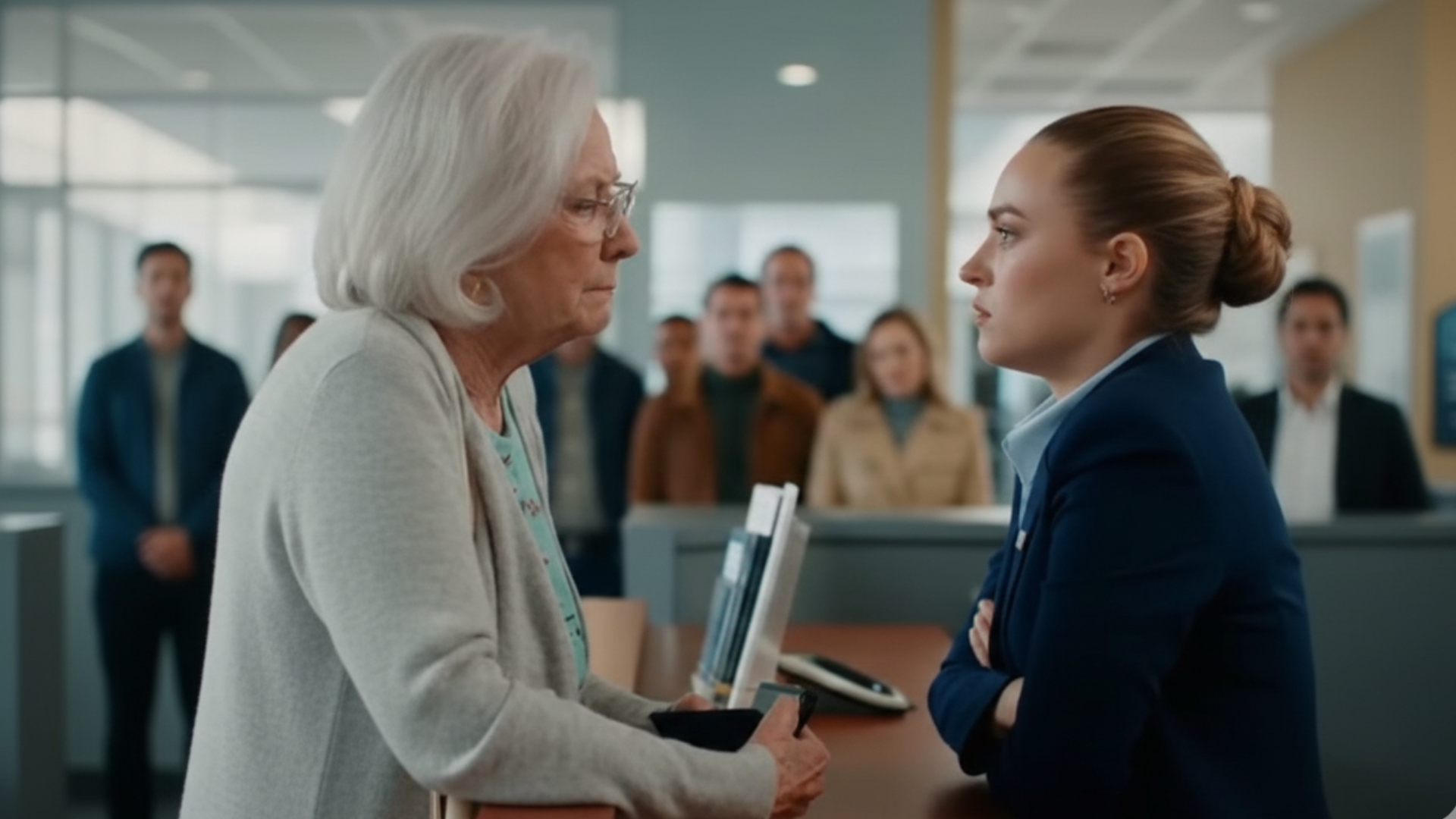
    Dorothy Morrison stood at the counter, her wrinkled hands trembling slightly as she held her checkbook. The mid-morning sun streamed through the bank’s tall windows.

    “Ma’am, I already explained this twice,” the young teller said, her voice rising. “You need to use the app. It’s not that hard.”

    Dorothy adjusted her glasses. “I’m sorry, dear. I just want to understand how to see my balance withoutโ€””

    “Without wasting everyone’s time?” The teller, her nameplate reading “Brittany Chen,” rolled her eyes. “Look, there’s a line behind you. Can you step aside and figure this out?”

    Behind Dorothy, a man in a business suit shifted impatiently. A mother with two children checked her phone.

    “I apologize,” Dorothy said softly. “I’m 80 years old. Technology is difficult for me.”

    Brittany laughed. “Maybe you shouldn’t have accounts you can’t manage.”

    Dorothy’s face remained calm. “Could I speak with your manager, please?”

    “Oh my God.” Brittany threw up her hands. “Fine. Waste his time too.”

    She pressed a button on her phone. “Tom? Yeah, some old lady with stupid questions. Can you deal with this?”

    The man behind Dorothy muttered something to his companion. The mother pulled her children closer, uncomfortable.

    Dorothy stood perfectly still, her hands folded over her checkbook.

    A middle-aged man in a tie emerged from a back office. “What seems to be the problem?”

    Brittany waved dismissively at Dorothy. “She doesn’t understand online banking and won’t step aside.”

    Tom approached with a practiced smile. “Ma’am, I’m Tom Reynolds, branch manager. How can I help?”

    Dorothy looked at him with steady blue eyes. “Tell me, Tom. How long have you worked for this bank?”

    He blinked, surprised. “Uh, seven years. Why?”

    “And you, dear?” Dorothy turned to Brittany. “How long?”

    Brittany crossed her arms. “Three months. Not that it’s your business.”

    Dorothy nodded slowly. “I see.” She paused. “Tom, could you tell Richard Carlson that Dorothy Morrison is here? He’s expecting me at ten thirty.”

    Tom’s face went white. “I’m sorry… Dorothy Morrison?”

    “Yes.” She smiled gently. “Though I prefer Dot.”

    Brittany frowned. “Who cares what your name is?”

    Tom grabbed Brittany’s arm, his grip tight. “That’s Mrs. Morrison. Sheโ€”” He stopped, his voice shaking. “She owns this bank.”

    The lobby went silent. Every conversation stopped.

    “Not quite,” Dorothy corrected. “I’m the majority shareholder. My late husband, Frank Morrison, founded this bank in 1974. I chair the board of directors.”

    Brittany’s mouth opened. No sound came out.

    “I visit branches quarterly,” Dorothy continued. “Unannounced. I like to see how our employees treat customers when they think no one important is watching.”

    A woman in the line pulled out her phone, recording.

    Tom’s face had gone from white to gray. “Mrs. Morrison, I am so deeplyโ€””

    “I’ve been standing here for twelve minutes,” Dorothy said. “I asked simple questions about accessing my account statements. Your employee called my questions stupid. Twice. She suggested I shouldn’t have accounts I can’t manage.”

    Brittany started backing away. “I didn’t knowโ€””

    “No,” Dorothy said, her voice hardening. “You didn’t know who I was. But that shouldn’t matter, should it?”

    The mother in line spoke up. “I heard everything. She was horrible to her.”

    The businessman nodded. “Completely unprofessional.”

    Tom’s hand shook as he pulled out his phone. “Mrs. Morrison, please, let me call Richard right nowโ€””

    “He’s already on his way,” Dorothy said. “We have a ten-thirty quarterly review. I always arrive early to observe.” She looked directly at Brittany. “I’ve been watching you for twenty minutes before I got in your line.”

    Brittany’s face crumpled. “Please, I need this jobโ€””

    “Did that woman at the other counter need respect?” Dorothy asked. “The one you called ‘slow’ under your breath at nine forty-five?”

    Brittany’s eyes widened. “I… I…”

    “Or the man with the accent you mimicked after he left at ten?”

    Tom closed his eyes. “Jesus Christ.”

    The glass doors opened. A tall man in an expensive suit strode in, followed by two others carrying briefcases. Richard Carlson, the regional vice president, stopped when he saw Dorothy.

    “Dot!” He crossed the lobby quickly. “I’m so sorry, I’m a few minutes earlyโ€”” He saw her face. “What happened?”

    Dorothy gestured to Brittany. “This young woman has been providing customer service for the past hour.”

    Richard’s expression went cold as Tom quietly explained. With each sentence, Richard’s jaw tightened.

    Brittany started crying. “I’m sorry, I’m so sorryโ€””

    “You’re not sorry you did it,” Dorothy said. “You’re sorry you got caught.” She turned to Richard. “This isn’t just about me. How many elderly customers has she treated this way when I wasn’t here?”

    Richard looked at Tom. “Pull up her transaction records. Every customer interaction. I want to see the surveys.”

    Tom rushed to a computer. His face fell as he scrolled. “Oh no.”

    “What?” Richard demanded.

    “Fourteen customer complaints in three months,” Tom read. “All elderly or disabled customers. I… I didn’t see these. They went to the general feedback inboxโ€””

    “Which you’re supposed to monitor weekly,” Richard said.

    Dorothy shook her head. “Tom, you hired her?”

    “Yes, ma’am.”

    “And you didn’t review complaint feedback?”

    He looked at the floor. “I’ve been… busy with other priorities.”

    Dorothy was quiet for a long moment. “My husband opened this bank because larger institutions treated working-class families like they didn’t matter. He hired people who needed second chances. People with respect and dignity.”

    She looked around the lobby. “Every person who walks through these doors deserves kindness. Whether they’re 25 or 85. Whether they understand technology or not. Whether they have ten dollars or ten million.”

    Richard nodded. “Brittany, you’re terminated effective immediately. Security will escort you out.”

    Brittany sobbed. “Pleaseโ€””

    “Tom,” Richard continued, “you’re suspended pending review. Two weeks, no pay. When you return, you’ll undergo management retraining. If there’s one more oversight like this, you’re gone.”

    Tom nodded silently.

    Dorothy opened her checkbook. “Tom, before you go, could you help me with that question? I’d like to know how to access my statements online.”

    He looked up, surprised. “You… still want help?”

    “That’s why I came in,” she said. “The question was genuine.”

    His eyes filled with tears. “Yes, ma’am. Of course.”

    He spent ten minutes patiently walking her through the app, his voice gentle and clear. Dorothy listened carefully, asking questions. Taking notes in careful handwriting.

    When they finished, she smiled. “Thank you. That was excellent customer service.”

    Richard cleared his throat. “Dot, shall we head to the conference room?”

    “One moment.” Dorothy turned to the people still in line. “I apologize for the delay. Please see the other tellers. And if anyone here experienced poor service today or any day, please ask for these comment cards.” She picked up a stack from the counter. “Richard reads them personally. Don’t you, Richard?”

    “Every single one,” he confirmed, his face serious. “And we will do better.”

    As Dorothy walked toward the back offices, she paused by the woman with two children. “Thank you for speaking up, dear.”

    The woman smiled. “My grandmother is 85. If someone treated her like that…” She shook her head. “I hope I would’ve said something even if you hadn’t been Mrs. Morrison.”

    “The world needs more people like you,” Dorothy said.

    In the conference room, Richard slumped into a chair. “Dot, I am mortified.”

    “Don’t be,” she said, settling into her seat. “We found the problem. Now we fix it. I want revised training protocols on my desk by next board meeting. And Tom needs coaching, not just punishment. He’s a good person who stopped paying attention.”

    Richard made notes. “Brittany?”

    “Gone,” Dorothy said firmly. “Some people need second chances. Some people show you exactly who they are.”

    Richard nodded. “The board meeting is Tuesday. Should I add this to the agenda?”

    “As a case study,” Dorothy said. “Not naming names. But our branch managers need to understand that kindness isn’t optional. It’s our foundation.”

    She pulled out a tablet from her purseโ€”the same technology she’d claimed not to understand. Richard raised an eyebrow.

    Dorothy smiled. “I’ve been using tablets since the first iPad, Richard. But I like to see how staff treat customers who need help. You learn a lot about people when they think they have power over someone vulnerable.”

    “Remind me never to underestimate you,” Richard said.

    “Frank taught me that,” Dorothy said, her voice soft. “He grew up poor. He remembered every banker who looked down on his mother when she came in with her house-cleaning money. He built this bank on one principle: everyone deserves dignity.”

    She looked out the window at the lobby. “I’m 80 years old, Richard. I won’t be around forever. When I’m gone, I need to know this bank will still honor that principle.”

    “We will,” Richard promised. “I swear it.”

    Dorothy nodded. “Then let’s get to work.”

    Two weeks later, Dorothy returned to the same branch. Tom was back, noticeably humbled. A new training certificate hung on the wall.

    She got in line with a genuine question about wire transfers.

    Tom served her himself this time. Patient. Kind. Thorough.

    When she left, he walked her to the door.

    “Mrs. Morrison,” he said quietly. “Thank you for the second chance.”

    “Thank you for learning from it,” she replied.

    As she walked to her car, a young woman caught up with her. “Mrs. Morrison? I’m the teller from window three. I just wanted to say… thank you. I’ve been trying to report problems to management for months, but I’m new and scared of making waves.”

    Dorothy stopped. “What kind of problems?”

    The young woman hesitated. “Can I buy you coffee?”

    Dorothy smiled. “Dear, I’m buying. And I have time.”

    They sat in the cafรฉ next door for an hour. Dorothy took notes. Asked questions. Listened.

    The next board meeting had a fuller agenda than Richard expected.

    And three more branches got surprise visits from an elderly woman with “stupid questions” and a checkbook that never left her purse.

    Because Dorothy Morrison had spent 50 years proving that the most powerful thing you can do with power is remember what it felt like not to have it.

  • New Kid Gets Shoved Dailyโ€”Until He Slammed Into THIS Teacher

    New Kid Gets Shoved Dailyโ€”Until He Slammed Into THIS Teacher

    The new kid got shoved into lockers every day… Until the bullies pushed him in front of the wrong teacher.

    Jason kept his head down. New school. New town. Same problems.

    “Move it, freak.” Trent’s hand slammed into Jason’s shoulder. The locker rattled.

    Jason stumbled. “Sorry.”

    “Sorry?” Marcus laughed. “He’s always sorry.”

    They took his lunch on Tuesday. Tripped him on the stairs Wednesday. Thursday, they cornered him by the water fountain.

    “You gonna cry?” Trent leaned in close.

    Jason stared at the floor. “Just leave me alone.”

    “Make us.”

    He couldn’t. He never could.

    Friday started the same. Jason was shoving books into his locker when Trent appeared.

    “Lunch money. Now.”

    “I don’t have any.”

    “Liar.” Trent grabbed his backpack. Ripped it open. Coins scattered across the floor.

    Jason dropped to his knees. Started gathering them with shaking hands.

    Marcus kicked a quarter down the hallway. “Fetch.”

    Kids walked past. No one stopped. No one ever did.

    “Get up.” Trent yanked Jason’s shirt collar.

    Jason stood. His books were still on the floor. His backpack was torn.

    “Pathetic.” Marcus shoved him backward.

    Jason hit the lockers. The metal clanged.

    “What’s wrong with you?” Trent moved closer. “You gonna do something about it?”

    “No.” Jason’s voice cracked.

    “That’s what I thought.”

    They walked away laughing. Jason slid down to the floor. Sat there until the bell rang.

    Monday was worse.

    Jason was heading to gym when Trent and Marcus blocked the hallway.

    “Where you going?” Trent asked.

    “Gym.”

    “Not anymore.”

    Marcus grabbed Jason’s arm. Twisted it behind his back.

    “Stopโ€”” Jason gasped.

    “Stop what?” Marcus pushed him forward. Hard.

    Jason stumbled into the wall. His shoulder burned.

    “Keep moving, loser.”

    They shoved him again. And again. Each push harder than the last.

    Jason’s vision blurred. His chest tightened. He couldn’t breathe right.

    “Look at him.” Trent laughed. “He’s gonna cry.”

    “Pleaseโ€””

    “Please what?” Marcus mocked. “Please stop? Please help me?”

    Kids gathered. Phones came out. Someone filmed.

    No one helped.

    Trent shoved Jason toward the gym doors. “Go on. Run.”

    Jason ran. Or tried to. His legs felt like rubber.

    Marcus stuck his foot out.

    Jason didn’t see it coming. He crashed forwardโ€”straight through the gym doors.

    And slammed into someone.

    Big. Solid. Unmovable.

    Jason looked up. Coach Miller stared down at him.

    Then at Trent and Marcus in the doorway.

    “You two.” Miller’s voice was granite. “With me. Now.”

    “We were justโ€”” Trent started.

    “Now.”

    They followed. Jason stayed on the floor.

    Miller turned back. “You too, son.”

    Jason stood on shaking legs. Followed them to Miller’s office.

    Miller closed the door. Pointed at chairs. “Sit.”

    They sat.

    “How long has this been going on?” Miller looked at Jason.

    Jason stared at his hands. “A while.”

    “How long?”

    “Since I started. Two months.”

    Miller’s jaw tightened. He turned to Trent and Marcus. “Every day?”

    They said nothing.

    “I asked a question.”

    “Yeah,” Marcus muttered. “Sometimes.”

    “Every day,” Jason said quietly. “Multiple times.”

    Miller leaned back. Crossed his arms. “You know what I used to do? Before teaching?”

    Trent shrugged.

    “I was a wrestler. State champion. Went to nationals three times.” Miller’s eyes hardened. “I know bullies. I’ve dealt with them my whole life. In the ring. Out of it.”

    “We weren’tโ€”” Trent began.

    “Don’t.” Miller cut him off. “I saw everything. The shoves. The mocking. The phones recording.”

    Silence.

    “You’re both on probation. Effective immediately. One more incidentโ€”one word, one look, one anythingโ€”and you’re suspended.” Miller stood. “We’re also starting an anti-bullying program. You’ll be the first participants.”

    “That’s not fairโ€”” Marcus protested.

    “Fair?” Miller’s voice rose. “Was it fair when you pushed him into walls? Stole his lunch? Humiliated him in front of everyone?”

    Marcus looked away.

    “The program starts tomorrow. Three days a week. After school. Mandatory.” Miller opened the door. “Get out.”

    They left quickly.

    Miller turned to Jason. “You okay?”

    Jason nodded. But his hands were still shaking.

    “Listen to me.” Miller pulled up a chair. Sat down level with Jason. “This stops today. No more hiding. No more taking it.”

    “I triedโ€””

    “You survived. That takes strength.” Miller’s voice softened. “But surviving isn’t enough. You need to stand up.”

    “I don’t know how.”

    “I’ll teach you.”

    Jason looked up. “What?”

    “I’m starting the program for them. But I’m offering training for you.” Miller leaned forward. “Self-defense. Confidence. How to carry yourself so they won’t try this again.”

    “Why would you help me?”

    “Because I was you once.” Miller’s expression shifted. “Skinny kid. New school. Got pushed around until I learned to push back. Not with violenceโ€”with presence. With boundaries.”

    Jason’s throat tightened. “I don’t think I can.”

    “You can. You’re already here. That’s the hardest part.”

    The next day, Jason showed up to the gym after school. So did Trent and Marcus.

    Miller separated them. “You twoโ€”corner. Worksheets on bullying consequences.”

    They slouched to the corner.

    Miller walked to Jason. “Youโ€”with me.”

    For the next hour, Miller taught him stances. How to stand with shoulders back. How to make eye contact. How to set verbal boundaries.

    “Again,” Miller said. “Look me in the eye. Say it.”

    Jason met his gaze. “Back off.”

    “Louder.”

    “Back off.”

    “Like you mean it.”

    “Back off!” Jason’s voice echoed through the gym.

    Miller nodded. “Better.”

    Trent and Marcus watched from the corner. Their worksheets sat untouched.

    “See something interesting?” Miller called over.

    They looked away quickly.

    Days turned into weeks. Jason kept coming. His shoulders straightened. His voice steadied. He stopped looking at the floor.

    Trent and Marcus kept coming tooโ€”but to write essays about empathy. To watch videos about bullying impacts. To sit in awkward silence while Miller lectured them.

    “How would you feel if someone did this to you?” Miller asked them one day.

    Trent mumbled something.

    “Speak up.”

    “Bad,” Trent said. “I’d feel bad.”

    “Then why did you do it?”

    No answer.

    “Because it made you feel powerful?” Miller pressed. “Because everyone else was watching?”

    Marcus shifted uncomfortably. “I guess.”

    “Power built on someone else’s pain isn’t power. It’s cowardice.”

    The words hung in the air.

    Three weeks in, Jason was practicing in the gym when Trent approached.

    Jason’s muscles tensed. Old instinct.

    “Hey,” Trent said.

    Jason turned. Shoulders back. Eyes level. “What do you want?”

    Trent hesitated. “I just… I wanted to sayโ€”” He stopped. Started again. “I’m sorry. For everything.”

    Jason studied him. “Why now?”

    “Because Coach is right. What we did…” Trent looked at the floor. Then forced himself to look up. “It was messed up. You didn’t deserve it.”

    “No. I didn’t.”

    “I know that now.”

    Marcus appeared behind Trent. Nodded. “Me too. Sorry.”

    Jason wanted to stay angry. Part of him was. But another partโ€”the part that had spent every day terrifiedโ€”felt something shift.

    “Okay,” Jason said carefully. “But words aren’t enough.”

    “I know,” Trent said. “What do you want?”

    “Leave me alone. Actually leave me alone. And if you see someone else getting bulliedโ€”stop it.”

    Trent nodded slowly. “We can do that.”

    “We will,” Marcus added.

    They walked away.

    Miller approached from the side. “How do you feel?”

    Jason exhaled. “Weird. Good weird.”

    “That’s called closure.” Miller clapped his shoulder. “You set boundaries. They respected them. That’s how it should work.”

    “Do you think they meant it?”

    “Time will tell. But you know what? It doesn’t matter what they do next. It matters what you do.”

    Jason nodded.

    The next day, Trent and Marcus kept their distance. Actually kept it. No smirks. No shoves. Just space.

    A week later, Jason saw Marcus pull someone aside in the hallway. A younger kid was being cornered by seniors.

    “Back off,” Marcus said to them. “Leave him alone.”

    The seniors looked surprised. Then left.

    Jason watched from his locker. Caught Marcus’s eye.

    Marcus gave a small nod.

    Maybe people could change. Maybe they couldn’t. But Jason wasn’t waiting around to find out.

    He had Miller in his corner now. He had skills. He had a voice.

    And he finally had something he hadn’t had in monthsโ€”peace.

    Two months later, the school assembly announced the anti-bullying program’s success. Incidents were down 60%. More kids were reporting issues. The culture was shifting.

    Principal Hayes stood at the podium. “This wouldn’t have happened without Coach Miller’s leadership. And without the brave students who spoke up.”

    Jason sat in the audience. Miller caught his eye from the side of the auditorium. Gave him a thumbs up.

    Jason smiled.

    After the assembly, Trent approached again.

    Jason’s guard went up automatically.

    “Relax,” Trent said. “I’m not here to start anything. I just wanted to say… you were right. About everything.”

    “Okay.”

    “I got accepted into the peer mentoring program. I’m going to help Coach with the younger kids.”

    Jason blinked. “Seriously?”

    “Yeah. Figured I owed it. To you. To everyone I was a jerk to.” Trent rubbed the back of his neck. “I know I can’t fix it. But I can try to do better.”

    “That’s all anyone can do.”

    Trent extended his hand.

    Jason looked at it. Thought about all the times those hands had shoved him. Hurt him. Humiliated him.

    Then he thought about growth. About second chances. About the person he’d become because of Miller’s guidance.

    He shook Trent’s hand. “Good luck with the program.”

    “Thanks.” Trent walked away.

    Miller appeared beside Jason. “Proud of you, kid.”

    “For what?”

    “For becoming someone who can forgive without forgetting. That’s strength.”

    Jason considered that. “I still don’t trust him completely.”

    “Good. Trust is earned. He’s got a long way to go.” Miller smiled. “But youโ€”you’re exactly where you need to be.”

    Jason looked around the hallway. Kids talking. Laughing. No one cornering anyone. No phones out filming cruelty.

    Just a normal school day.

    For the first time since he’d arrived, Jason felt like he belonged.

    Not because he’d fought back with fists. But because he’d fought back with courage.

    And that made all the difference.

  • She Got Pushed In The Pool At Promโ€”Then 50 Bikers Walked In

    She Got Pushed In The Pool At Promโ€”Then 50 Bikers Walked In

    She got pushed into the country club pool in front of everyoneโ€ฆ Then fifty bikers walked in, and the leader called her “daughter.”

    The chlorine burned my throat as I surfaced, gasping.

    “Oops!” Chloe’s voice cut through the music. “Slippery when wet, trash.”

    I wiped water from my eyes. My mother’s vintage silk dress clung to me like a lead weight. Around the pool deck, phones were out. Everyone was filming. The whole senior class watching me drown in humiliation.

    Braden stood at the edge, laughing so hard he was doubled over. “You actually thought I liked you?” he wheezed. “It was a bet, Maya. Fifty bucks to get the trailer park girl to prom.”

    My heart shattered. I’d spent six months restoring this dress. Three years pretending I belonged at Oak Creek High. All for nothing.

    “Get out,” Chloe sneered. “You’re ruining the vibe.”

    I swam to the ladder, my arms shaking. Then the music cut. Not fadedโ€”cut dead.

    The laughter died with it.

    I pulled myself up, shivering. But no one was looking at me anymore. They were staring at the entrance.

    I turned.

    Fifty men in black leather lined the terrace. Moonlight glinted off the patches on their chestsโ€”a skull in thorns.

    The Iron Saints.

    In the center stood a man built like a bear. Gray beard, scarred knuckles, eyes like flint.

    My father.

    Jack “Hammer” Miller. I hadn’t seen him in three years. Not since the police took him away. I’d told everyone he was dead.

    His gaze swept the crowd, then landed on me. Dripping. Humiliated. Trembling.

    His jaw tightened.

    He walked down the stairs. Fifty bikers followed. The rich kids scattered like roaches.

    He stopped three feet from Braden. The boy looked like he might vomit.

    “You think that’s funny?” Dad’s voice was a low rumble. “Putting my daughter in the water?”

    “I… it was just a joke, sir. Just a prankโ€””

    Dad’s hand settled on Braden’s shoulder. Heavy. A warning.

    “Get in,” Dad said.

    “What?”

    “The water. It’s a party, right? Get in.”

    “But my phone… my tuxโ€””

    “I won’t ask twice.”

    Braden jumped. The splash echoed across the silent deck.

    Dad turned away like the boy no longer existed. He crouched by the ladder. “Come on, May-Bug.”

    I stared at his scarred hand. The hand I swore I’d never hold again.

    But I was so cold.

    I reached up. He pulled me out effortlessly. A giant manโ€”Tinyโ€”draped a leather vest over my shoulders.

    “We’re leaving,” Dad said.

    “I can’t go with you,” I whispered. “I have school Monday. I can’t justโ€””

    “Look around.” He gestured at the crowd. “You think you can stay here?”

    Every eye held fear. I wasn’t Maya the scholarship kid anymore. I was the mobster’s daughter.

    “I have nowhere to go.”

    “You have a home. Ride with me.”

    The Iron Saints formed a wall around us. We walked through the frozen crowd to the parking lot.

    Fifty Harleys gleamed under the streetlights. Dad mounted his bike.

    “Hop on.”

    I hiked up my wet dress and climbed behind him. The engine roared to life.

    We tore onto the highway. I pressed my face into his back and finally stopped pretending to be someone I wasn’t.


    We didn’t go to my aunt’s house. We rode to the industrial district, to a warehouse with a faded sign: AUTO REPAIR.

    The Clubhouse.

    Dad led me to his back office and tossed me a towel. “Dry off.”

    “How did you even know?” I asked.

    “I have eyes everywhere. I knew about Braden. Knew his father is a judge. Knew they were planning to humiliate you.”

    “So you embarrassed me in front of the whole school!”

    “They were treating you like garbage!” he snapped. “I reminded them you’re iron.”

    “I didn’t want to be iron!” I screamed. “I wanted to be silk! I wanted to be normal! I worked so hard to be different from you, and you dragged me back into the mud!”

    I sobbed. Ugly, heaving sobs.

    Dad waited until I quieted. Then he pulled a crumpled paper from his pocket.

    My Stanford acceptance letter.

    “You went through my room?”

    “Your aunt brought it on visiting day,” he said quietly. “She said you weren’t going because we can’t afford it.”

    He opened a safe and pulled out rubber-banded stacks of cash. Fifty thousand dollars.

    “Three years in a cage,” he said. “I broke bones. Moved things I shouldn’t have. But I did it so when this day came, you wouldn’t have to choose.”

    He pushed the money toward me.

    “You’re going to Stanford. You’re leaving me, the club, that idiot Braden behind.”

    “Dadโ€””

    A knock. Tiny’s voice: “We got company. Blue lights.”

    Dad pulled a Glock, checked it, tucked it away. “Stay here.”

    I waited three seconds, then followed.

    Through the bay door, I saw four cruisers. A black SUV. A Sheriff stepped out.

    “We had a disturbance call,” the Sheriff said. “Assault. Menacing a minor.”

    “I picked up my daughter,” Dad said. “Being a father isn’t illegal.”

    “It is when you threaten Judge Sterling’s son.”

    A woman in a gray suit emerged from the SUV. Child Protective Services.

    My blood froze.

    “Emergency removal order,” she announced. “Maya is being placed in temporary state custody.”

    “You’re not taking her,” Dad growled.

    “Don’t do it, Jack,” the Sheriff warned. “I have four deputies with AR-15s. You draw, we turn this place into a slaughterhouse. And Maya watches.”

    Dad’s muscles tensed. He was calculating. If he fought, he’d go back to prison forever.

    I ran out. “Stop!”

    “Maya, get back inside,” Dad said.

    “No.” I looked at the CPS woman. “I’m safe here. I want to be here.”

    “That’s not for you to decide. Please come with us. If you resist, we’ll arrest your father for obstruction.”

    I looked at Dad. His eyes were desperate.

    “Don’t fight,” I whispered. “Please. If you fight, you lose everything.”

    “I can’t let them take you.”

    “It’s just for a few days. We’ll fix this. But you have to let me go.”

    Dad slowly raised his empty hands.

    “If you hurt her,” he said to the Sheriff, “I will burn this city down.”

    “Get in the car, Maya.”

    I walked to the SUV. The door slammed. The lock clicked.

    As we drove away, the CPS woman turned to me.

    “Don’t worry, dear. Judge Sterling has offered to foster you personally until Monday’s hearing.”

    My heart stopped.

    I wasn’t going to safety. I was going to Braden’s house. To the home of the man who hated my father.

    I was the hostage.


    Judge Sterling’s office smelled of leather and scotch. He slid a paper across his desk.

    “Sign this. It says your father kidnapped you. That he’s unstable, has weapons, and you fear for your life.”

    “And if I don’t?”

    “I’ll revoke his parole. Send him to a supermax in Arizona. You’ll never see him again. Stanford becomes a memory.”

    He leaned forward.

    “But if you sign, I’ll pay for your books. Just cut the cancer out.”

    The door opened. Braden walked in, an ice pack on his cheek.

    “Dad, don’t do this.”

    “Quiet, Braden. I’m cleaning up your mess.”

    I looked at Braden’s bruised face. The monster wasn’t my father. It was the man in the silk tie.

    “My father never hit me,” I said, standing. “He never looked at me the way you look at your son.”

    “Your father is a thug!”

    “My father is iron,” I said. “And when you strike iron, it doesn’t break. It rings.”

    “Sit down!”

    The lights died. The entire mansion went black.

    Then came the sound. Thud. Thud. Thud.

    Heavy boots on the front porch.

    “Sheriff!” Sterling shouted into the darkness. “Miller! Where are you?”

    No answer.

    The front door creaked open. Footsteps echoed in the foyer.

    Sterling fumbled for his phone flashlight, his other hand grabbing a revolver from the drawer.

    “Don’t,” Braden said, blocking the doorway.

    “Get out of the way!”

    “Put it down, Judge,” a voice rumbled from the shadows.

    Jack Miller stepped into the light. Alone. No gun. Just a leather-bound ledger.

    He tossed it on the desk.

    “What is this?” Sterling demanded.

    “The accounting book for Iron Saints security contracting. The one you’ve been using to launder bribes for five years.”

    The room went silent.

    “I kept records, Sterling,” Dad said. “Every payment you took to dismiss cases. Every kickback. I was the bagman. You thought I was just a dumb biker.”

    He leaned over the desk, inches from the gun.

    “I didn’t bring an army tonight. I brought the truth. And outside? The FBI.”

    Sterling’s face went gray. “You wouldn’t call the Feds. You’d go down with me.”

    “I’m counting on it.” Dad looked at me, his expression soft. “I’m a three-time loser. I go back, I stay. I made peace with that when you took my daughter.”

    He turned back to Sterling.

    “I turned myself in. Gave them everything. RICO. Money laundering. Conspiracy. I traded my life for yours.”

    “Dad, no,” I gasped.

    “The deal is simple. You surrender, let her walk, maybe you get a plea. You shoot me? The Feds rush in, you die, your son watches.”

    Sterling looked at the ledger. The gun. His son’s disgusted face.

    His hand trembled. He dropped the gun.

    “It’s over,” Dad said.

    Red and blue lights flooded the windows. But this time, not for us.


    Two months later.

    The Palo Alto bus terminal smelled of diesel. I adjusted my backpack, two suitcases at my feet. Inside was the silver silk dress, dry-cleaned and folded in tissue.

    “You got everything?” Tiny asked, eyes wet.

    “I got it all.”

    He handed me an envelope. “From the boys. For commissary. Books and stuff.”

    “Thanks, Tiny.”

    I couldn’t visit the prison today. I’d said goodbye yesterday through thick glass.

    “Don’t look back, May-Bug,” Dad had said through the phone. “You fly. Be silk. I’ll be the iron that holds the gate shut behind you.”

    Dad got seven years for cooperation. Judge Sterling got twenty.

    “Bus to Palo Alto, boarding now!”

    I hugged Tiny and the three other bikers who came. They formed a protective ring one last time.

    I climbed the steps. Found a window seat.

    As the bus pulled out, I looked back.

    The Iron Saints stood in a line on the sidewalk. No cutsโ€”the club was disbandedโ€”but they stood with that same unbreakable posture. Fists raised in salute.

    I pressed my hand against the cold glass.

    I pulled out a photo from my bag. Dad and me on his first Harley when I was five. Both of us laughing.

    I wiped a tear away.

    I was Maya Miller. Daughter of the King. And I was going to conquer the world.

    But I knew one thing for sure.

    If anyone ever tried to push me under again, they’d drown long before I did.

  • Homeless Boy Says He Can Heal Her Daughterโ€”Then The Doctors See His Sacrifice

    Homeless Boy Says He Can Heal Her Daughterโ€”Then The Doctors See His Sacrifice

    Lily hadn’t walked in three years.

    The doctors called it an incomplete spinal injury. Mark called it the end of everything normal.

    They sat at their usual spot in downtown Phoenix, Sunday afternoon, same park bench, same routine. Lily watched kids run past, her hands gripping the wheelchair armrests.

    That’s when the boy appeared.

    Torn clothes. Dirty face. Maybe ten years old.

    He crossed the street slowly, staring at Lily.

    “We don’t have money,” Mark said immediately.

    The boy shook his head. “I don’t want money.”

    “Then go.”

    “I can help her walk.”

    The words hit like glass breaking.

    Lily’s eyes filled with tears instantly. Mark felt rage flood his chest.

    “Get away from us,” Mark snapped.

    The boy didn’t move. “I’ve done it before.”

    “Bullshit,” Mark said. “Doctors couldn’t fix her. Specialists. Surgeons. Millions of dollars.”

    “I’m not a doctor.”

    “Then what are you?”

    The boy pulled out a worn photograph. Two images taped togetherโ€”a girl in a wheelchair, then the same girl standing.

    “My sister,” he said quietly.

    Lily reached for the photo with shaking hands.

    Mark wanted to throw it back. “Pictures prove nothing.”

    “I know,” the boy said. “That’s why I’m not asking you to believe me. I’m asking for five minutes.”

    “Dad, please,” Lily whispered.

    Mark looked at his daughter’s face. That careful hope. The kind that had been broken before.

    “Five minutes,” Mark said. “That’s it.”

    They moved to a quiet patch of grass.

    “What’s your name?” Mark asked.

    “Eli.”

    “Tell me exactly what you’re doing.”

    Eli crouched in front of Lily, keeping distance. “I’m not touching her. Not without permission.”

    He picked up a small stone and pressed it gently against her shoe.

    “Can you feel that?” he asked.

    Lily frowned. “Barely.”

    “That’s okay. That means the message still gets through.”

    Mark scoffed. “Doctors said the same thing.”

    Eli looked up at him. “Then they were right. The connection isn’t broken. It’s just sleeping.”

    He turned back to Lily. “Close your eyes. Don’t think about walking. Just think about your feet.”

    Lily closed her eyes.

    Eli’s voice dropped to barely a whisper. “Your legs didn’t forget you. They’re just scared.”

    “This is ridiculous,” Mark muttered.

    “Then stop me,” Eli said calmly.

    Mark didn’t move.

    Lily’s breathing changed. Slower. Deeper.

    “I feel warm,” she whispered. “My legs feel… heavy.”

    Mark’s heart hammered. “Lily?”

    “Heavy means awake,” Eli said. His forehead was sweating now.

    “Try to move your toes,” Eli said. “Just one.”

    Lily’s face tightened in concentration.

    Nothing.

    “That’s enough,” Mark said.

    “Wait,” Lily whispered. “I think… I think one moved.”

    Mark stared at her feet. They were still.

    “I felt it,” she insisted.

    Eli smiled faintly. “That’s how it starts.”

    He leaned back, breathing hard. “That’s all for today.”

    “What happened to your sister?” Mark demanded.

    Eli’s face darkened. “People didn’t let her finish.”

    “What does that mean?”

    “It means belief scares people.”

    Lily grabbed her father’s hand. “Please don’t send him away.”

    Mark looked between them. Every instinct screamed to run.

    “Where do you sleep?” Mark asked.

    “Anywhere.”

    Mark swallowed. “Be here tomorrow. Same time.”

    Eli’s eyes widened. “You mean it?”

    Mark nodded once.

    That night, Mark didn’t sleep. He kept seeing Lily’s toes twitch. Kept wondering if he’d imagined it.

    The next day, they returned to the park.

    Eli was already waiting.

    They repeated the routine. This time, Mark saw it clearly.

    Lily’s toes moved.

    Not imagination. Real movement.

    “Oh my God,” Mark whispered.

    Eli swayed, catching himself. His face was pale, sweat dripping.

    “Eli?” Lily asked, frightened.

    “I’m okay,” he said, though he clearly wasn’t.

    A woman nearby whispered, “Did you see that?”

    A man pulled out his phone.

    Mark’s instincts flared. “Time to go.”

    On the third day, everything changed.

    A police cruiser sat by the curb. Two officers. A small crowd.

    Mark’s stomach dropped.

    “What’s going on?” he asked an officer.

    “Reports of a child performing medical procedures,” the officer said. “That him?”

    He pointed at Eli, who stood near the trees looking terrified.

    “He’s not performing procedures,” Mark said quickly. “He’s just… talking to her.”

    “That’s not appropriate, sir.”

    A woman from the crowd stepped forward. Carol Henderson, fifty-three, neighborhood watch coordinator.

    “That boy is clearly homeless,” she said loudly. “He’s been harassing families for days.”

    “He hasn’t harassed anyone,” Mark snapped.

    “He’s claiming he can cure paralysis,” Carol continued. “That’s fraud. That’s abuse.”

    “He’s helping my daughter!”

    Carol’s eyes narrowed. “By giving her false hope? That’s cruel.”

    Lily’s voice cut through. “He’s not lying.”

    Everyone turned.

    “I can move my toes,” Lily said. “I couldn’t before. Now I can.”

    Carol laughed. “Psychosomatic. Placebo effect.”

    “You don’t know anything about my daughter,” Mark said.

    “I know exploitation when I see it,” Carol shot back.

    The officer stepped between them. “Ma’am, sir, please.”

    Eli tried to back away.

    “Don’t move,” the second officer said.

    Eli’s breathing grew shallow. Panicked.

    “Where are your parents?” the first officer asked.

    Eli didn’t answer.

    “Son, we need to take you to child services.”

    “If he stops now, she won’t finish,” Eli said desperately.

    Mark stepped forward. “Finish what?”

    “Waking up.”

    Before anyone could react, Eli collapsed.

    “Eli!” Lily screamed.

    Mark caught him as he fell. His body was burning up.

    “Call an ambulance!” Mark shouted.

    “This is what happens,” Carol said to the crowd. “When you let these people prey on the vulnerable.”

    Mark rounded on her, Eli limp in his arms. “Shut your mouth.”

    The ambulance arrived in minutes.

    At the hospital, Mark paced while Lily was examined and Eli was rushed to emergency.

    A doctor approached after an hour.

    “Your daughter shows significant improvement,” she said, confusion clear in her voice. “She has voluntary motor function that wasn’t present in her previous scans.”

    Mark felt dizzy. “And the boy?”

    The doctor’s expression shifted. “He’s severely malnourished. Dehydrated. His body is shutting down.”

    “What does that mean?”

    “It means he’s been sacrificing everything to survive. Whatever he was doing with your daughter… it was costing him.”

    Mark’s blood ran cold.

    “Can you save him?”

    “We’re trying.”

    Mark sat beside Lily’s bed. She was wiggling her toes, tears streaming down her face.

    “Is Eli okay?” she whispered.

    “They’re working on him.”

    “Dad… I can feel my legs. Really feel them.”

    Mark took her hand. “I know, sweetheart.”

    “Why didn’t Eli tell us he was sick?”

    Mark’s throat tightened. “Because he cared more about you than himself.”

    A nurse entered at dawn. Her face said everything.

    “The boy?” Mark asked.

    She shook her head. “I’m sorry. His heart gave out.”

    Lily sobbed into her father’s chest.

    Two weeks later, Mark sat in the hospital administrator’s office.

    “We need to discuss the incident,” the administrator said.

    “What incident?”

    “The boy. The complaints. Mrs. Henderson has filed a formal grievance claiming your family endangered a minor.”

    Mark’s jaw tightened. “Eli saved my daughter’s life.”

    “That’s not the narrative being presented.”

    “Then let me present the truth.”

    Mark stood and walked to the window. Below, in the therapy courtyard, Lily stood between parallel bars, taking careful steps.

    “My daughter is walking,” Mark said. “For the first time in three years.”

    “That’s wonderful, butโ€””

    “No buts,” Mark interrupted. “Eli died because he gave everything to help her. And Carol Henderson wants to make him a villain because she doesn’t understand what she saw.”

    The administrator sighed. “What do you want, Mr. Wilson?”

    “A memorial,” Mark said. “In Eli’s name. For homeless children. Real help, not bureaucracy.”

    “That’s… unusual.”

    “So was Eli.”

    Three months later, the memorial opened. A small clinic downtown offering free medical care and shelter to homeless youth.

    Carol Henderson led a protest outside on opening day.

    “This glorifies fraud!” she shouted. “That boy wasn’t a healer, he was a con artist!”

    Mark stood on the clinic steps with Lily beside him. She stood on her own, no wheelchair, just a cane for balance.

    The news cameras turned.

    “Eli taught my daughter to believe in herself,” Mark said clearly. “He asked for nothing. No money. No recognition. Just a chance to help.”

    “He died!” Carol yelled. “That’s proof it was fake!”

    “He died,” Mark agreed, “because he gave everything. Including his life.”

    The crowd shifted. Murmurs of discomfort.

    A reporter stepped forward. “Mr. Wilson, do you believe the boy had supernatural abilities?”

    “I believe,” Mark said carefully, “that Eli saw something doctors didn’t. Whether that was skill, instinct, or something else doesn’t matter. What matters is my daughter walks because he cared.”

    Lily stepped forward, speaking into the microphone without help.

    “Eli was ten years old,” she said. “He was alone. He was scared. And he still chose to help me when everyone else had given up.”

    Her voice didn’t waver.

    “If you want to protest something, protest the system that failed him. Protest the people who walked past him every day. Don’t protest his memory.”

    The cameras flashed.

    Carol’s face flushed. She looked around at the shifting crowd, then turned and walked away.

    The clinic doors opened.

    Five children entered that first day. Lost. Hungry. Alone.

    By the end of the month, twenty-three.

    Mark stood in his daughter’s room that night, watching her practice her steps.

    “Does it still hurt?” he asked.

    “Every day,” Lily said. “But that’s okay.”

    “Why?”

    She turned to him, eyes bright. “Because Eli made me promise something before he left.”

    “What?”

    “To keep going. No matter what.”

    Mark felt his eyes burn.

    In his pocket was the photograph. Eli’s sister. Standing.

    He’d never found out if the photo was real.

    It didn’t matter anymore.

    What mattered was Lily was standing.

    And Eli’s memory would never be forgotten.

    Six months later, Carol Henderson’s son was arrested for embezzling from the neighborhood watch fund.

    The irony wasn’t lost on anyone.

    The clinic thrived. Dozens of children found help. Found hope.

    Found what Eli had given Lily.

    A chance.

    One year after Eli’s death, Lily walked into the clinic without her cane.

    The staff erupted in applause.

    Mark stood at the back, tears streaming.

    Some people are forgotten by the world.

    But not by the ones they save.

    Not ever.

  • Bully Pours Coffee On New Kidโ€”What Happens Next Ends His Reign

    Bully Pours Coffee On New Kidโ€”What Happens Next Ends His Reign

    The new kid let the school bully dump coffee on his head without fighting backโ€ฆ But the hidden cameras captured what ended the reign of terror

    I walked through the doors of Oakridge High on a Tuesday morning, backpack slung over one shoulder, already tagged with a nickname I didn’t choose.

    “Fresh Meat.”

    They whispered it in the hallways. Laughed it at lunch tables. I was the new transfer, the quiet one, the easy target.

    My name is Jacob Daniels. Fifteen years old. Fifteen years of Taekwondo training under Master Chen. But nobody here knew that. And I intended to keep it that way.

    “Your power is not for proving yourself,” Master Chen told me the night before my first day. “It’s for protecting those who cannot.”

    I nodded. I understood.

    What I didn’t understand yet was how much I’d need that lesson.


    The hallways of Oakridge operated on a simple hierarchy: predators and prey. At the top sat Martin Pikeโ€”six feet tall, linebacker build, lawyer father, and zero consequences for anything he did.

    I saw his first victim during second period.

    A skinny kid named Rowan stood at his locker, hands shaking as he fumbled with the combination. Martin walked past and slammed the locker door shutโ€”nearly catching Rowan’s fingers.

    “Watch it, Rowan,” Martin said, grinning.

    Rowan said nothing. Just reopened the locker with his head down.

    I kept walking. Not my fight. Not yet.


    Third period, Martin found me.

    I was pulling my chemistry textbook from my locker when something hard shoved into my shoulder. My books scattered across the floor.

    Laughter erupted around me.

    Martin stood there, smirking. “Oops. My bad, Fresh Meat.”

    His crewโ€”five guys who looked like they bench-pressed smaller students for funโ€”circled behind him.

    I bent down slowly. Picked up each book. Stacked them carefully.

    “Hey, I’m talking to you,” Martin said.

    I stood, met his eyes, said nothing.

    “What, you deaf?”

    “No,” I said quietly. “Just not interested.”

    His face darkened. “You think you’re tough?”

    “I think you should move.”

    The hallway went silent.

    Martin stepped closer. “Or what?”

    I didn’t blink. “Or we’ll both be late to class.”

    Someone laughed nervously. Martin’s jaw clenched. But he stepped aside.

    I walked past him without looking back.

    Behind me, I heard one of his crew whisper: “Dude, you just gonna let himโ€””

    “Shut up,” Martin snapped.


    Lunch was when I met Rowan properly.

    He sat alone at a corner table, picking at a sandwich he clearly wasn’t eating. I took the seat across from him.

    He looked up, startled. “You shouldn’t sit here.”

    “Why not?”

    “Because Martin… he’ll think we’re friends. And then he’ll come after you worse.”

    “He’s already coming after me.”

    Rowan shook his head. “You don’t get it. He doesn’t stop. Ever. Last year, a kid named Derek stood up to him. Martin broke his nose in the parking lot. Derek’s parents tried to press charges, but Martin’s dad is some hotshot attorney. It all went away.”

    “Nothing goes away forever,” I said.

    “You sound like you’ve never been bullied before.”

    I looked at him. “I have. That’s why I know it ends when someone makes it end.”

    Rowan stared at me like I’d just spoken a foreign language.

    Then Martin’s shadow fell across our table.


    He stood there holding a large iced coffee. Caramel swirl. Extra ice.

    “Fresh Meat,” he said cheerfully. “You look hot. Let me help.”

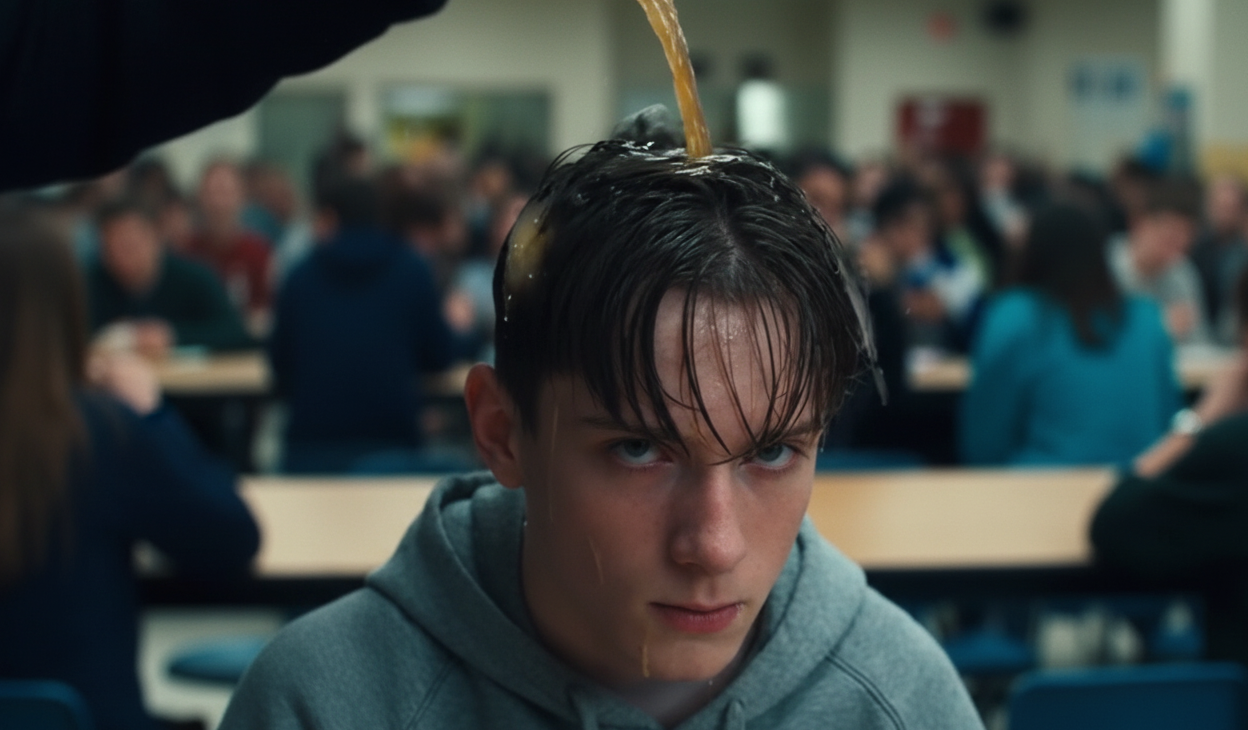
    He tipped the cup.

    Cold coffee splashed over my head. Down my neck. Soaked my hoodie.

    The cafeteria exploded with laughter and jeers. Phones came out instantly, recording.

    I sat perfectly still. Let it drip. Didn’t wipe my face.

    Martin leaned down. “What, gonna cry?”

    I looked up at him, coffee dripping from my hair. “Are you done?”

    The laughter faltered.

    “What?” Martin said.

    I stood slowly, eye-level with him now. “I asked if you’re done.”

    His face twisted. “Sit down before Iโ€””

    “Before you what?” I said calmly. “Pour another coffee? Shove me again? Get your friends to jump me after school?”

    The cafeteria had gone dead quiet.

    Martin’s hand twitched toward my chest. I didn’t move.

    “That’s what I thought,” he muttered. But his voice had lost its edge.

    I turned and walked out of the cafeteria, soaked and silent.

    Behind me, Rowan called out, “Jacob, waitโ€””

    But I kept walking.


    The video went viral by sixth period.

    #CoffeeKid was trending on every platform. Students I’d never met clapped me on the shoulder. Whispered that I had guts. Asked if I was okay.

    I didn’t care about the video.

    But Martin did.


    The next morning, Principal Hayes called us both to her office.

    She played the cafeteria video on her desktop. Martin sat beside me, slouched, arms crossed.

    “Mr. Pike,” she said. “Do you want to explain this?”

    “It was just a joke,” Martin said. “He knows I was messing around.”

    “Does this look like a joke to you?” She replayed the part where coffee drenched my head.

    Martin shrugged. “He didn’t even react. So obviously he wasn’t hurt.”

    Principal Hayes turned to me. “Jacob, do you have anything to say?”

    I looked at Martin. Then at her. “He’s been targeting students for years. Rowan, Derek, probably a dozen others. This isn’t about coffee. It’s about power. And nobody stops him because his father makes problems disappear.”

    Martin sat up straight. “That’s a lie.”

    “Is it?” I pulled out my phone. Opened a folder I’d been building since day one. Photos of Rowan’s bruised arm from last week. Screenshots of group chats where Martin bragged about making kids cry. Testimonies from three students too afraid to speak up before.

    I handed the phone to Principal Hayes.

    Her face went pale as she scrolled.

    “This ends now,” she said. “Martin, you’re suspended for one week. Mandatory counseling. And if I hear about one more incidentโ€”even a rumorโ€”you’re expelled. Do you understand?”

    Martin’s face turned red. “My dad willโ€””

    “Your father can call me,” she said coldly. “I’ll be happy to discuss this evidence with him.”


    Outside her office, Martin grabbed my arm.

    “You think you’re smart?” he hissed. “Gym. After school. Three o’clock. Let’s settle this like men.”

    I pulled my arm free. “I’m not interested in your games.”

    “Then you’re a coward.”

    “Call it whatever helps you sleep,” I said, and walked away.

    But I knew he wouldn’t let it go.


    At 3:15, I walked into the gym.

    Half the school was there. Phones out. Bleachers packed.

    Martin stood in the center with five of his crew. All of them grinning.

    “Knew you’d show,” Martin said. “Can’t back down now, Fresh Meat.”

    I stopped ten feet away. “This doesn’t have to happen.”

    “Oh, it’s happening.”

    One of his crew stepped forward. Then another. They were flanking me.

    This wasn’t a fair fight. It was an ambush.

    Then the gym doors slammed open.

    Coach Martinez stormed in with two security guards. “Everyone out! NOW!”

    The crowd scattered like roaches. Martin’s crew backed off.

    Coach pointed at both of us. “My office. Now.”


    But Martin didn’t move.

    He lunged at me instead.

    Instinct took over. Fifteen years of training compressed into two seconds.

    I sidestepped. Redirected his momentum. Swept his leg.

    He hit the floor hard, gasping.

    The security guards grabbed him before he could get up.

    Coach Martinez stared at me. “What was that?”

    “Taekwondo,” I said quietly. “I didn’t want to use it.”

    “Clearly,” he muttered. He turned to security. “Take Pike to the principal. Get his parents on the phone.”


    This time, there was no lawyer who could twist the truth.

    The gym had cameras. They caught everythingโ€”Martin’s ambush, his crew circling me, the lunge, my defensive move.

    He was suspended for two weeks. Ordered into anger management. Required to issue a formal written apology to me and Rowan.

    When he came back, something had shifted.

    He walked the hallways differently. Quieter. No crew trailing him. No smirks.

    Kids who used to scatter when he approached now just… walked past him.

    Rowan started eating lunch with other people. Started laughing again.


    A week later, Coach Martinez found me after class.

    “Jacob, I want to start a self-defense club. Teach kids what you know. Interested?”

    I thought about Rowan. About Derek. About all the others who spent years afraid.

    “Yeah,” I said. “I’m in.”


    The club started with eight students.

    By the second week, we had twenty.

    By the end of the month, thirty-five.

    They didn’t come to learn how to fight. They came to learn how not to be afraid.

    I taught them balance. Breathing. Awareness. The same lessons Master Chen taught me.

    “You don’t need to throw a punch to be powerful,” I told them during our first session. “You just need to stand your ground.”

    Rowan was there. Front row. Focused.

    After class, he approached me. “Thank you.”

    “For what?”

    “For showing me I didn’t have to live like that anymore.”


    Three months later, Martin’s parents transferred him to a private military academy upstate.

    I didn’t celebrate. Didn’t gloat.

    I just hoped he’d find whatever he needed to become better.

    The club kept growing. Forty students. Fifty. Kids who once walked the hallways with their heads down now made eye contact. Spoke up in class. Defended each other.

    Oakridge wasn’t perfect. But it was changing.


    Two years later, at graduation, I sat in the auditorium watching our former club memberโ€”a freshman named Sophie who used to flinch at loud noisesโ€”give the valedictorian speech.

    “Courage isn’t the absence of fear,” she said. “It’s deciding fear doesn’t get to control you anymore.”

    Master Chen sat beside me, beaming.

    “You did well, Jacob,” he whispered. “You used your strength to give others theirs.”

    I watched Rowan laughing with his friends in the third row. Watched Sophie stand tall at the podium. Watched a school that once felt like a battlefield transform into something safer.

    And I realized: Master Chen was right.

    True power isn’t about winning fights.

    It’s about making sure fewer fights need to happen at all.

  • He Fired The Nanny On Christmas Eveโ€”Then His Mute Daughter Spoke

    He Fired The Nanny On Christmas Eveโ€”Then His Mute Daughter Spoke

    The nanny was fired on Christmas Eve after four yearsโ€ฆ But when the mute child spoke her first word, everything changed. Full story in the comments.

    Elisa Carter never imagined Christmas Eve would be her last day in the Montgomery estate.

    That morning, she stood in the kitchen shaping gingerbread cookies. The same ones she’d made every year for four years. The only ones Lucy would eat.

    Outside the Connecticut mansion, snow fell softly. Inside, staff rushed through halls preparing for the annual Christmas gala.

    But Elisa’s hands trembled.

    Because she knew what no one else did.

    At midnight, her time here would end.

    The letter had arrived three days earlier. Thick paper. Cold wording. A signature at the bottom.

    Alexander Montgomery.

    Her employer. Lucy’s father.

    “Your services as nanny will no longer be required. Contract ends December 24 at 11:59 p.m.”

    No explanation. No discussion. Just an ending.

    Four years of sleepless nights. Four years of sitting beside a bed while a little girl trembled from nightmares she couldn’t describe. Four years of loving a child who never spoke.

    Gone with a signature.

    Lucy had been mute since her mother died in a car crash. Trauma-induced mutism, the doctors said. Therapists came and went. Specialists tried everything. Nothing worked.

    Until Elisa.

    Not with pressure. Not with force. But with patience. With warmth. With love.

    Slowly, Lucy changed. She smiled more. She slept. She stopped hiding.

    And now Elisa was being erased.

    That afternoon, the front door opened.

    Isabella Rhodes stepped inside.

    She was strikingโ€”flawless hair, designer dress, heels clicking sharply on marble. She moved like she owned the place already.

    She barely glanced at Lucy.

    Her eyes locked on Elisa.

    “I need you out of the main staff bedroom,” Isabella said coldly. “Alexander and I are redecorating. Fresh start.”

    Fresh start. As if four years meant nothing.

    Lucy’s hands gripped Elisa’s leg. Her eyes filled with terror.

    Elisa nodded slowly. “Of course.”

    Because she understood now.

    This wasn’t about redecorating.

    This was about replacement.

    Later that day, Doรฑa Margaret appeared.

    Alexander’s grandmother. The only Montgomery who still had a heart.

    She watched Lucy from across the room, sorrow in her eyes.

    “He’s running,” Margaret said quietly. “From his grief. From his guilt. From everything that reminds him of her.”

    Elisa’s throat tightened.

    “You gave that child what he couldn’t,” Margaret continued. “Love. Real love. And it terrifies him.”

    Elisa looked at Lucy, who sat tracing circles on the floor.

    “I can’t stay,” she whispered.

    Margaret squeezed her hand. “I know.”

    That evening, Elisa packed.

    Each folded sweater felt like betrayal.

    When Lucy saw the suitcase, panic flooded her face.

    Her breathing quickened. Her hands shook.

    Then, for the first time in four years, Lucy spoke.

    “Youโ€ฆ lied.”

    Two words. Clear. Fragile. Devastating.

    Elisa dropped to her knees, tears streaming.

    She had promised she’d never leave.

    And now she was breaking that promise.

    As the mansion buzzed with party preparations, Elisa took Lucy outside one last time.

    The winter air bit their skin.

    Lucy knelt in the snow, writing Elisa’s name over and over with her finger.

    Her lips trembled.

    Thenโ€”barely louder than the windโ€”she whispered:

    “Mama.”

    The word shattered everything.

    Elisa froze.

    Every sacrifice suddenly made sense. Every sleepless night. Every swallowed tear.

    She had always been Lucy’s mother.

    When they returned inside, Isabella was waiting by the grand staircase.

    “It’s almost midnight,” Isabella said sharply. “You should be gone by now.”

    But before Elisa could respond, Alexander appeared.

    He stopped cold.

    He was staring at Lucy.

    Not as a problem. Not as an obligation.

    But as a little girl who had finally found her voice.

    “What did you just say?” he whispered.

    Lucy looked up at Elisa, tears streaming. “Mama.”

    Alexander’s face went white.

    The room fell silent.

    Margaret stepped forward. “She spoke, Alexander. After four years. Do you understand what that means?”

    Isabella shifted uncomfortably. “This doesn’t changeโ€””

    “It changes everything,” Margaret interrupted. “That child just called Elisa her mother. Because that’s what she is.”

    Alexander’s hands began to shake.

    He looked at Elisaโ€”really looked at herโ€”for the first time in months.

    “I was running,” he said, his voice breaking. “From the pain. From the memories. I thought replacing you would make it easier.”

    He turned to Lucy, tears in his eyes.

    “But you didn’t need a replacement. You needed the one person who never gave up on you.”

    Elisa stood frozen, Lucy’s hand in hers.

    Alexander knelt before them both.

    “I was wrong,” he said. “You didn’t just care for her. You saved her. You gave her a voice when I couldn’t even look at her without seeing what I’d lost.”

    He looked directly at Elisa.

    “Please stay. Not as an employee. As family. As the mother you already are.”

    Isabella stepped forward. “Alexander, we discussedโ€””

    “We’re done,” he said firmly. “This was a mistake. All of it.”

    He pulled out his phone, made a call.

    “James? Draw up adoption papers. Full parental rights for Elisa Carter. Effective immediately.”

    Isabella’s jaw dropped. “You can’t be serious.”

    “I’ve never been more serious,” Alexander said. “Get out of my house.”

    Isabella stared in disbelief, then grabbed her coat and stormed out.

    The door slammed.

    Silence filled the mansion.

    Then Lucy spoke again.

    “Mama’s staying?”

    Elisa dropped to her knees, pulling Lucy into her arms. “Yes, baby. Mama’s staying.”

    Alexander knelt beside them, tears streaming. “I’m so sorry. To both of you.”

    Margaret watched from the doorway, smiling through her own tears.

    That night, snow blanketed Connecticut.

    Inside the mansion, Elisa, Alexander, and Lucy sat by the fireplace.

    Not as employer and employee.

    As family.

    Three months later, spring arrived.

    The adoption was finalized.

    Elisa Carter-Montgomery.

    Lucy’s legal mother.

    The little girl who once had no voice now wouldn’t stop talking.

    She told stories, asked questions, laughed freely.

    One afternoon, Alexander found Elisa in the garden.

    “I need to thank you,” he said. “For not giving up. On her. On us.”

    Elisa smiled. “She was always worth fighting for.”

    “So were you,” he said quietly.

    That evening, Lucy ran through the garden calling for both her parents.

    “Mama! Papa! Look!”

    She held up a butterfly that had landed on her hand.

    Elisa and Alexander stood side by side, watching their daughter bloom.

    A year later, Lucy stood on stage at her school’s Christmas concert.

    She sang.

    Her voiceโ€”clear, strong, beautiful.

    In the audience, Elisa held Alexander’s hand, tears streaming.

    The girl who once couldn’t speak was now leading the choir.

    After the show, Lucy ran into Elisa’s arms.

    “Did you hear me, Mama?”

    “I heard you, baby. The whole world heard you.”

    Lucy hugged her tight. “You taught me to talk. You taught me everything.”

    Elisa kissed her forehead. “No, sweetie. You taught me. You taught me what real love is.”

    That night, the three of them drove home through falling snow.

    Lucy chattered happily in the backseat.

    Alexander glanced at Elisa. “Best decision I ever made. Asking you to stay.”

    “Best decision I ever made,” Elisa replied, “was saying yes.”

    When they arrived home, Margaret was waiting with hot chocolate.

    “My family,” she said proudly, embracing them all.

    Lucy grabbed Elisa’s hand. “Tell me the story again. About how you became my mama.”

    Elisa smiled. “Once upon a time, there was a little girl who couldn’t find her voice. And a woman who helped her find it. And they found each other.”

    “And we lived happily ever after,” Lucy finished.

    “Yes, baby. We did.”

    Outside, snow continued to fall.

    Inside, a fire crackled.

    And a familyโ€”built not by blood, but by loveโ€”celebrated Christmas together.

    Lucy had found her voice.

    Elisa had found her daughter.

    Alexander had found his way back.

    And the woman who was once just a nanny had become the heart of the Montgomery family.

    Justice had come not through revenge, but through recognition.

    The one who gave everything received everything in return.

    And the child who once sat in silence now filled the mansion with laughter and stories.

    Because sometimes, the greatest victories come when love refuses to give up.

  • They Humiliated The Colonel’s Daughterโ€ฆ BIG Mistake

    They Humiliated The Colonel’s Daughterโ€ฆ BIG Mistake

    A Marine Colonel stormed into prom with his entire platoon after his daughter was doused in trash on stageโ€ฆ But the video went viral for reasons no one expected

    The smell hit me first.

    Rotting vegetables. Sour milk. Coffee grounds.

    All over my silver dress.

    Three seconds ago, I was Maya Hart, prom queen. Now I was the janitor’s daughter covered in cafeteria garbage, center stage at Oak Creek High.

    The laughter started with Chloe Vance.

    “The trash finally found its home,” her voice rang through the speakers.

    Four hundred students roared. Cameras flashed. I was already trending.

    “Maya, wait!” Liam stepped forward, then stopped. He looked at his friends. He stepped back.

    That hurt worse than the garbage.

    I thought about my dad. Colonel Jack Miller. He’d dropped me off in his beat-up truck tonight, stiff and quiet like always.

    “Call if you need anything,” he’d said.

    “I won’t,” I’d told him.

    I should have listened.

    BOOM.

    The gym doors slammed open.

    My father stood in the doorway. Full Dress Blues. Medals gleaming. Grey hair high and tight.

    He wasn’t alone.

    Ten men stepped out behind him. Army greens. Marine blues. Navy whites. Scars. Grey beards. Predatory grace.

    The laughter died.

    My father walked forward. Each boot hit the floor like a gunshot.

    He stopped at the stage.

    “Who threw that bucket?” His voice cut like a razor.

    Nobody breathed.

    The giant next to himโ€”Marcus, six-five with a prosthetic legโ€”stepped forward. “I asked a question.”

    Principal Higgins scurried over. “Mr. Miller, you can’t barge in with a paramilitary force! I’m calling the police!”

    “Call them,” Dad said. “What I’m looking at is assault. Premeditated harassment. A biohazard risk.”

    “It’s just kids being kids, Jack.”

    “Marcus. Is that what we’re seeing?”

    Marcus looked at the crowd. “Looks like an ambush to me, Colonel.”

    The football team shrank back.

    Dad stepped toward them. “Who. Threw. The bucket.”

    Chloe flipped her hair. “You can’t talk to us like that. Do you know who my dad is?”

    Dad turned to her. “I don’t care who your father is.”

    The Air Force guyโ€”Millerโ€”tapped his tablet. “Colonel, I’ve got the network traffic. Three IP addresses uploaded rigging videos two hours ago. Accounts: QueenChloe, QuarterbackTy, and LiamTheLion.”

    My heart stopped.

    Dad looked at Liam. “You helped.”

    Liam’s voice cracked. “I just held the ladder. Chloe said if I didn’t help, I couldn’t come to the after-party.”

    The betrayal crushed me.

    Dad walked up the stage stairs. Through the sludge. He took off his dress jacket and wrapped it around my shoulders.

    Heavy. Warm. Safe.

    “You’re not a mess, Maya,” he said softly. “You’re a Miller. And Millers don’t break.”

    He turned to the room. “We’re leaving.”

    “Wait!” Higgins sputtered. “Who are these men?”

    “Platoon Echo. 2nd Battalion. Three tours in Fallujah.” Dad looked at his squad. “We were having a reunion dinner when I got a text from someone in this gym with a conscience.”

    A quiet girl in back looked down.

    “She told me my daughter was walking into a trap. I told my men I needed extraction.”

    Marcus grinned. “We told the Colonel, ‘No man left behind.’”

    Dad looked at Higgins. “We’re taking my daughter home. And if that video is still online when we hit the parking lot…”

    Miller tapped his tablet. “Flagging posts for harassment. And reallocating the school’s Wi-Fi to zero for the next hour.”

    The lights flickered. The music died.

    “Let’s move out.”

    They formed a diamond around me. Marcus on point. The others flanking.

    We walked through the crowd. Nobody laughed. Nobody moved.

    As we passed Liam, he reached out. “Maya, please…”

    Marcus stepped between us. “You held the ladder, son. You don’t get to hold her hand.”

    Outside, the night air was sharp and clean.

    “At ease,” Dad said.

    The men relaxed.

    Rico, short and bearded, lit a cigarette. “I almost tackled that principal.”

    “You did good, Rico.” Dad turned to me. He wiped coffee grounds from my cheek.

    “I should have come inside. I knew you were worried.”

    “I told you not to,” I whispered. “I was ashamed. I didn’t want them to laugh at you. Because we’re poor. Because you work mall security.”

    Dad looked at Marcus.

    Marcus stepped forward. “Maya, your dad took that job because it’s the only one that lets him be home at 4 PM when you get out of school.”

    I blinked. “What?”

    “He turned down a contractor gig in D.C.,” Rico added. “Triple the pay. He said no. He said, ‘My girl lost her mom. She’s not losing her dad to the road.’”

    I looked at Dad. “Is that true?”

    He shrugged. “Money’s just paper. You’re the mission.”

    He sighed. “Your mom was the translator. She knew how to explain me to you. Without her, we got lost.”

    “We got lost,” I agreed.

    “Tonight, I realized I was letting you fight alone. That’s against protocol.”

    He gestured to the men. “These guys are your family too. I kept them away because I thought you wanted normal. I didn’t want to drag military stuff into your world.”

    “Normal is overrated,” I said.

    Dad opened his truck door. “Get in. We’re hitting the diner. Rico’s buying milkshakes.”

    “I am?” Rico protested.

    “Penalty for almost tackling the principal.”

    As we pulled out, Miller radioed from behind. “Colonel, check local news. The extraction got livestreamed. Fifty thousand views in ten minutes.”

    Dad gripped the wheel. “Is it bad?”

    “Comments aren’t mocking Maya anymore. But they’re asking questions about you. About the unit. There’s a reporter tagging the school board.”

    Dad’s jaw tightened.

    “What does that mean?” I asked.

    “It means tomorrow, we’re not invisible anymore. And there are things about my service I haven’t told you.”

    “What things?”

    He squeezed my hand. “Let’s just get through tonight first.”

    At Peggy’s All-Nite Diner, we took over three booths.

    Rico slid me a strawberry milkshake. “Sugar’s good for shock.”

    I drank. My hands stopped shaking.

    Dad sat next to me, watching the door constantly.

    “You okay, Jack?” Marcus asked.

    “Just thinking about the fallout.”

    “What fallout?” I asked. “We left. It’s over.”

    The men exchanged glances.

    Miller turned his tablet around.

    Twitter. #PromQueenTrash trending at #4. #MarineDad trending at #1.

    The video showed Dad marching in. The platoon. The boots. The silence.

    Comments: “Father of the year.” “Most badass thing ever.” “Who is this hero?”

    “They love you, Dad!”

    Dad looked at his hands. “The internet loves a hero for fifteen minutes. Then they start digging.”

    “Digging for what?”

    “For why a decorated Colonel is working mall security.”

    The table went silent.

    “Dad?”

    “I didn’t just retire, Maya. I was encouraged to leave.”

    “Discharged?”

    “Honorably,” Marcus said fiercely. “What happened in Kabul wasn’t his fault.”

    “Marcus,” Dad warned.

    “She needs to know, sir.”

    Dad rubbed his face. “It was a classified op. I made a call. Got our guys, but the politics got messy. The brass needed a scapegoat. I took the fall to save these men’s pensions.”

    Rico leaned forward. “He gave up his command so we wouldn’t lose our careers.”

    I stared at Dad. He’d sacrificed everything for them.

    “Walking into a high school with combat veterans fits the narrative about broken soldiers,” Dad said. “Intent doesn’t matter. Only visuals.”

    Miller’s tablet pinged.

    “Colonel. Problem. Narrative just shifted.”

    He showed us.

    Chloe’s new video. Her crying in her car. “It was just a prank. Then these men came in. They had weapons. They threatened us. I’m terrified. My dad’s calling the governor. This man is dangerous.”

    Ten thousand likes.

    “She’s lying!” I shouted.

    “We intimidated them,” Dad said calmly. “To a civilian, intimidation feels like a threat.”

    “Comments are turning,” Miller said. “Tagging police. Tagging the base.”

    Dad stood. “Time to go. Miller, save everything. Rico, pay the bill.”

    “Where are we going?”

    “Home. To pack you a bag.”

    “Pack a bag?”

    “I’m sending you to Aunt Sarah’s in Ohio. Until this blows over.”

    “I’m not leaving you.”

    “This isn’t a negotiation, Private.”

    “No,” I said.

    He blinked. “Excuse me?”

    “No. You told me Millers don’t break. If they want to paint you as a monster, they go through me.”

    Rico grinned. Marcus nodded.

    Dad looked at me. Really looked at me.

    “She’s got you there, Colonel,” Marcus said.

    Dad half-laughed. “You’re just like your mother. Stubborn as a mule.”

    “Let’s go home, Dad.”

    We turned onto our street.

    Blue and red lights flashed.

    Two police cruisers. A news van.

    “They moved fast,” Miller radioed. “Vance pulled strings.”

    “Stay in the truck, Maya.”

    Dad stepped out. Two officers approached.

    Officer Brady, hand near his holster. “Jack. We got calls. Mr. Vance claims you brought an armed militia and made terroristic threats.”

    “The video shows me picking up my daughter.”

    “Come to the station. Just to make a statement.”

    “Am I under arrest?”

    “Not yet. But with the press right there…” Brady gestured to the camera crew.

    Dad looked back at me.

    If he resisted, they’d arrest him. Prove Chloe right. Crazy veteran fights cops.

    Marcus and the others stepped out.

    They formed a semi-circle behind Dad.

    “Problem, Officer?” Marcus asked.

    Brady stepped back. “Sir, step back. This is police business.”

    “It’s military business. Colonel Miller is retired. We’re witnesses. You take him, you take us all.”

    “That can be arranged,” the second officer said, reaching for his Taser.

    “Stand down!” Dad barked. “Marcus, get back. That’s an order.”

    “You’re retired, sir. You can’t order us to do jack squat.”

    The standoff escalated. The camera spotlight hit us.

    This was exactly what Chloe wanted.

    I opened the truck door.

    “Maya, stay inside!”

    I ignored him. I walked past the officers. Past Dad.

    Straight to the news camera.

    The reporter shoved the mic at me. “Are you Maya Miller? Did your father attack your classmates?”

    I looked into the lens.

    “My father didn’t attack anyone. He saved me.”

    I pointed to the dried sludge on my dress.

    “This is what they did to me. They assaulted me. The school did nothing.”

    I turned to Brady. “Where were the police when four hundred kids were laughing at a girl covered in garbage? You’re here to arrest the man who stopped it?”

    I looked back at the camera.

    “Chloe Vance says she was scared. Good. She should be. Not because my father is violent. Because she’s facing consequences.”

    I took a breath.

    “My name is Maya Miller. My father is Colonel Jack Miller. And we aren’t going anywhere.”

    Marcus started to clap. Slow. Rhythmic.

    The whole platoon joined in.

    Dad stared at me. Eyes shining with pride.

    Then Brady’s radio crackled.

    “Dispatch to Unit 1. Situation at Vance residence. 911 call. Breaking and entering. Suspect in military fatigues.”

    Everyone froze.

    “It’s a setup,” Miller whispered.

    Brady’s hand went to his gun. “Jack Miller. Hands behind your back.”

    Dad looked at me. “Call the lawyer.”

    He offered his wrists.

    The cruiser drove away. The reporter kept filming. Neighbors watched.

    I felt small again.

    “Turn that camera off,” Marcus growled.

    He blocked the reporter. The cameraman lowered his gear.

    Marcus turned to me. “Protocol Alpha. We don’t retreat. We assess. We adapt. We overcome.”

    “Miller. Sitrep.”

    Miller was on his tablet. “911 call from Vance residence at 10:42 PM. Intruder in military fatigues smashing the patio door.”

    “10:42,” Rico checked his watch. “We were in the driveway. On camera.”

    “Exactly,” Miller said. “We have news footage. Dashcam. Diner CCTV. Physical impossibility.”

    “So why arrest him?” I asked.

    “Because the Vances are rich,” Marcus said grimly. “An arrest makes news. Exoneration gets buried.”

    I straightened. “Miller. Can you get into the Vance security system?”

    Miller grinned. “I could do it with a Game Boy.”

    “Do it. Find out who really broke that window.”

    “And us?” Marcus asked.

    “We’re going to the station. We’re bailing him out.”

    The police lobby wasn’t designed for Platoon Echo.

    Ten men in dress uniforms lined the wall, arms crossed, silent.

    I stood at the counter. Officer Tate sighed. “Miss Miller, your father is being processed. You can’t see him yet.”

    “I’m here to give you evidence.”

    “Give it to the detective in the morning.”

    Miller stepped up. He placed his tablet on the counter. “I was a Cyber Warfare Specialist for the Air Force. I suggest you look at this before your Chief charges a decorated Colonel with a felony he didn’t commit.”

    Tate hesitated. She leaned over.

    “What am I looking at?”

    “Feed from the Vance family Nest camera. 10:40 PM. Two minutes before the 911 call.”

    The screen showed the patio. Empty.

    Then the back door opened.

    Mr. Vance walked out in silk pajamas. He picked up a garden stone.

    He threw it through his own French doors.

    Glass shattered.

    He flinched. Pulled out his phone.

    “911? There’s a maniac breaking in! Army uniform!”

    Tate’s face went pale. “Is this real?”

    “Digital signatures don’t lie,” Miller said. “Robert Vance staged a crime scene to frame a federal officer. That’s filing a false report. Perjury. And since he targeted a Colonel, serious federal time.”

    Officer Brady walked out. “Tate, tell them to goโ€””

    “Brady. Get the Chief. Now.”

    Thirty minutes later, the door buzzed.

    Dad walked out.

    Still in his white shirt. Head high. No handcuffs.

    “Maya.”

    I ran to him. Buried my face in his chest.

    “I’m okay, bug. Millers don’t break.”

    “We didn’t let them break you. Miller hacked the cameras. We caught Vance.”

    Dad looked at Miller. “Just doing my job, sir. Overwatch.”

    The Chief walked out, sweating. “Colonel Miller. Charges dropped. We apologize.”

    “Apologize?” Marcus stepped forward. “You arrested a hero because a car salesman lied.”

    “We’re issuing a warrant for Robert Vance immediately,” the Chief said quickly. “And contacting the school board. There will be repercussions.”

    Dad nodded. “Do your job, Chief. That’s all I ask.”

    He put his hand on my shoulder. “Let’s go home.”

    TWO WEEKS LATER

    The viral cycle lasted a week.

    Mr. Vance breaking his own window became a bigger meme than my trash dress. #VanceVandal trended for three days. His dealership was review-bombed. Chloe hadn’t been to school in two weeks.

    I walked down Oak Creek High’s hallway. Head up.

    People looked. Whispered. Respect. Maybe fear.

    I was okay with either.

    Liam was leaning against my locker. Dark circles. Holding a sad rose.

    “Maya. I’m sorry. I was scared. I didn’t want them to turn on me.”

    I looked at him. I remembered thinking his crooked smile was cute.

    Now he just looked like a boy who held a ladder because he was afraid.

    “I know you were scared, Liam.”

    His face brightened. “So… can we talk? Get coffee?”

    I closed my locker. “No.”

    “What?”

    “My dad told me loyalty isn’t about being there when it’s easy. It’s about standing your ground when the bucket falls.”

    I walked away.

    “Maya, wait! You don’t have anyone!”

    I stopped. Smiled. “I think I’ll be fine.”

    Outside, Dad’s truck was there.

    But Rico was eating a sandwich against the fender. Miller sat on the tailgate reading. Marcus waxed his car hood.

    They weren’t in uniform. Flannel shirts. Jeans. Regular guys.

    When they saw me, they stopped.

    “Hey, kid,” Rico called. “How was the jungle?”

    “Survivable.”

    Dad stepped out, looking happier than I’d seen him in years.

    “Ready to go?”

    “Where?”

    “Marcus thinks he can teach me to grill steak properly. The whole platoon’s coming.”

    I climbed in.

    I looked back at the school. Thought about the ruined dress. The humiliation.

    Worst night of my life.

    But looking at these men laughingโ€”my strange, dangerous, loyal familyโ€”I realized something.

    They tried to crown me Queen of Trash.

    Instead, they gave me an army.

    “Let’s go, Dad. I’m starving.”

    Dad put the truck in gear. He didn’t see the little girl who needed protecting anymore.

    He saw the survivor.

    “Copy that. Moving out.”

    We drove away, the high school shrinking in the rearview mirror until it was nothing but a small, insignificant speck.

  • She Froze at a Partyโ€ฆ Then a Military Helicopter Landed on Their Lawn

    She Froze at a Partyโ€ฆ Then a Military Helicopter Landed on Their Lawn

    She was locked outside in a blizzard by her elite classmatesโ€ฆ Then a Black Hawk helicopter landed on their lawn

    The balcony door clicked shut behind me.

    I turned around fast. Too fast. My wet hands slipped on the handle.

    Locked.

    Through the glass, Braden Van Doren raised his red cup and smiled. He mouthed two words: “Cool off.”

    Then he walked away.

    I pounded on the door. “Open it! Braden!”

    The music swallowed my voice. Inside, designer dresses swirled under crystal chandeliers. Outside, sleet turned to hail.

    I was wearing a thrift store dress. Already soaked. The wind cut through it like knives.

    Twenty minutes. That’s all it took for the shivering to stop.

    That’s when I knew I was dying.

    My dad’s voice echoed in my head. “If you’re ever in real danger, use the watch.”

    The tactical watch on my wrist looked ridiculous. Too big. Too military. But my fatherโ€”Lieutenant General Marcus Thorneโ€”had strapped it on before his deployment.

    “It’s a distress beacon,” he’d said. “Connected to my command channel.”

    I’d laughed then. “Dad, I’m going to prep school, not a war zone.”

    He hadn’t laughed back.

    Now, with numb fingers, I pressed both side buttons. Held for five seconds.

    A tiny red LED blinked. Then stayed solid.

    I waited.

    Nothing happened.

    I curled into a ball and closed my eyes.

    Then I felt it. A vibration that rattled my teeth.

    The sound came next. Thwup. Thwup. Thwup.

    Inside the party, heads turned toward the windows. Braden stood up, confused.

    The roar became deafening.

    Spotlights cut through the storm, turning night into day.

    A Black Hawk helicopter descended onto the Van Doren’s lawn, rotors flattening the rose bushes.

    The side door opened. A figure jumped out.

    He didn’t run. He walked.

    Dress blues. Medals catching the light. A peaked cap pulled low.

    My father.

    And he looked ready to burn the world down.


    The music inside stopped.

    Dad walked through the patio doors like he owned the place. Muddy boots on Persian rugs. Rain dripping from his uniform.

    Behind him, two tactical operators scanned the room with professional detachment.

    Braden marched down the stairs. “Who the hell do you think you are? This is private property!”

    Dad walked past him like he was furniture.

    “Where is she?”

    The words weren’t loud. They didn’t need to be.

    Braden grabbed Dad’s sleeve. “I’m calling the police!”

    Dad stopped. Looked at the hand on his uniform. Then at Braden.

    “Son, I have a distress beacon triggered from this location. Remove your hand, or you will lose it.”

    Braden stumbled backward into a waiter. Glass shattered.

    “Upstairs!” Chloe squeaked from the fireplace. “She’s on the terrace!”

    Dad’s head snapped up. He saw me slumped against the glass.

    He took the stairs three at a time.

    Braden blocked the landing. “Wait, it was just aโ€””

    Dad stiff-armed him into the wall. Braden crumpled, gasping.

    The terrace door was locked. Security-grade.

    Dad kicked it. Once. Twice. The frame splintered.

    He fell to his knees beside me, wrapping his coat around my frozen body.

    “I’ve got you, baby.”

    “Daddy,” I whispered. “I’m cold.”

    “I know. Eyes on me. That’s an order.”

    He lifted me like I weighed nothing. Carried me through the silent party.

    Every eye watched as he held my blue-lipped, limp body.

    He stopped in front of Braden.

    “You locked her outside in a sub-zero storm,” Dad said quietly. “That isn’t a prank. That is attempted manslaughter.”

    Braden went pale. “We didn’t knowโ€””

    “You made a grave miscalculation,” Dad cut him off. “You thought she was weak because she was kind. You forgot to check who was standing behind her.”

    Sirens wailed in the distance.

    Dad looked at his sergeant. “Secure the scene. No one leaves. I want IDs on everyone. Especially him.”

    He looked at Braden one last time.

    “Pray she recovers quickly, son. Because if she suffers permanent damage, God himself won’t be able to hide you from me.”

    We walked into the storm. Into the helicopter. The door slid shut.

    As we lifted off, I looked down. The mansion looked small.

    For the first time in my life, I didn’t feel small.


    The hospital lights were too bright.

    “Rewarming pain,” the doctor called it. My blood felt like molten glass.

    Dad held my hand. He didn’t say it would be okay. He just held on.

    By morning, the worst was over.

    Then I saw the TV.

    “Breaking news. A U.S. Army Black Hawk made an unauthorized landing at billionaire Sterling Van Doren’s estate…”

    The footage showed Dad shoving Braden. The soldiers with rifles.

    But the reporter didn’t mention me freezing. Didn’t mention the locked door.

    “Sources claim Lieutenant General Marcus Thorne used military assets to crash a private party, assaulting a minor in a drunken rage.”

    “That’s a lie!” I gasped. “Dad!”

    He turned off the TV. “Sterling Van Doren owns the network. He’s controlling the narrative.”

    “But the beacon logs! The evidence!”

    “We have it,” he nodded. “But right now, nobody’s looking at evidence. They’re looking at spectacle.”

    The door swung open.

    Sterling Van Doren walked in. Expensive suit. Cold eyes. Braden’s smile.

    “Get out,” Dad said.

    Van Doren smiled. “General Thorne. We should talk before things get complicated.”

    “Your son almost killed my daughter.”

    “Teenage pranks,” Van Doren waved his hand. “A tragic misunderstanding. The door locked automatically. Hard to prove otherwise.”

    He stepped closer.

    “But what is easy to prove? A three-star General commandeered military aircraft for personal use. Landed in a residential zone. Physically assaulted an unarmed eighteen-year-old. On camera.”

    My stomach dropped.

    “I responded to a distress signal,” Dad said. “Protocolโ€””

    “Protocol dictates you call local police,” Van Doren cut in. “You wanted to play cowboy.”

    He tossed papers onto my bed.

    “I’ve spoken to the Secretary of the Army. The Senate Oversight Committee. They’re not happy about the ‘Rambo act.’”

    “What do you want?”

    “Drop the charges. Issue a public apology. Retire quietly. In exchange, I don’t destroy your life.”

    He looked at me. “And your daughter transfers schools. Immediately.”

    Rage flooded through me. But I looked at Dad.

    Thirty years of service. He’d sacrificed everything for his rank.

    “Dad, don’t,” I whispered. “Take the deal.”

    Dad turned to Van Doren. A dark smile touched his lips.

    “You think your money makes you safe.”

    “It makes me powerful.”

    “Power is not a checkbook,” Dad said. “Power is the willingness to sacrifice everything for what is right.”

    He ripped the papers in half.

    “Get out of my room.”

    Van Doren’s face flushed. “I will bury you. By noon, you’ll be court-martialed. You’ll be an inmate.”

    “I’ve faced men with guns and bombs,” Dad said. “Do you think I’m afraid of a man with a lawyer?”

    Van Doren stormed out.

    Dad exhaled. His shoulders slumped an inch.

    “You can’t do this,” I cried. “They’ll destroy you!”

    He gripped my shoulders. “A rank is just metal on a collar. If I have to choose between being a General and being a Father, I choose Father. Every time.”

    The door opened again.

    Four Military Police marched in. Behind them, Colonel Higginsโ€”Dad’s friend.

    “General Thorne,” Higgins said, not meeting his eyes. “I have orders from the Pentagon. Due to the pending investigation, I’m ordered to relieve you of command. Effective immediately.”

    I covered my mouth.

    “I need your sidearm and ID, sir.”

    Dad didn’t argue. He unclipped his holster. Placed his pistol on the tray. Removed his military ID.

    It looked like surrender.

    “Dad…” I whimpered.

    He kissed my forehead. “Stay here, Maya. Do not leave. Do not talk to the press.”

    They flanked him. Marched him out like a criminal.

    I was alone again.

    The TV showed the loop on mute. “GENERAL THORNE DETAINED. CAREER ENDED IN DISGRACE?”

    I looked at the phone on my bedside table.

    Dad had sacrificed everything for me. Thrown himself on the grenade.

    And Braden thought he’d won.

    They forgot one thing.

    I was the daughter of Marcus Thorne.

    I ripped out my IV. Blood welled up. I didn’t care.

    I walked to the closet. Put on my clothes. My boots.

    In Dad’s coat pocket, I found what I needed. A USB drive. He always carried backup comms logs.

    I looked at my reflection. Pale. Sickly. Small.

    But my eyes looked just like my father’s.

    It was time to go to school.


    St. Sterling Academy looked like a castle. Today, it felt like a courtroom.

    I walked through the auditorium doors. The entire student body was seated.

    Dean Ashcroft stood at the podium. Sterling Van Doren beside him.

    In the front row, Braden scrolled his phone, smirking.

    “We must have zero tolerance for violence,” the Dean was saying. “The unfortunate incident involving General Thorne has shaken our community. Therefore, the Board is reviewing Maya Thorne’s scholarship pending investigation into her father’s unprovoked attack.”

    They were expelling me. For almost being killed.

    I walked down the center aisle.

    My boots echoed like gunshots. Heads turned.

    “Is that her?” “She looks dead.” “I thought she was in the ICU.”

    Braden winked at me.

    I kept walking.

    “Miss Thorne?” The Dean stammered. “You’re suspendedโ€””

    “I’m not here to learn,” I said, stepping to the podium. “I’m here to teach.”

    Van Doren stood. “Someone get security!”

    “Sit down,” I snapped.

    It sounded exactly like my father.

    The auditorium went silent. Even Van Doren paused.

    “You all saw the video,” I said into the mic. “My dad shoving Braden. You heard it was a ‘prank.’ An accident.”

    I held up the USB drive.

    “My father doesn’t go into a war zone without intel. When that helicopter approached, it was recording. Thermal imaging. High-gain directional audio. Military grade.”

    Braden’s face went white.

    “It picks up whispers from three hundred yards away.”

    I plugged the drive into the podium. The screen flickered to life.

    “Turn it off!” Braden screamed, jumping up. “Dad!”

    Too late.

    Grainy thermal video showed the party. Heat signatures inside. My small, fading signature on the balcony.

    Then the audio. Crystal clear.

    “She’s still knocking,” Chloe’s voice rang out.

    “Let her knock,” Braden laughed. “Ideally, she freezes enough that she drops out. My dad says scholarship kids are ruining the curve.”

    “Is she crying?”

    “Who cares? Maybe her dad can use his food stamps to buy her a heater. Turn up the music.”

    The auditorium gasped.

    The thermal image showed me curling into a ball.

    Then the helicopter arrival.

    “Braden, unlock the door! Now!”

    “No! If we open it now, we look guilty. Just say it was jammed! Say we didn’t know!”

    I pulled out the drive.

    I looked at Braden. He wasn’t smirking. He looked small. Pathetic. Students leaned away from him.

    Van Doren was on his phone, sweating, whispering to lawyers. The narrative was dead.

    “My father is in a cell right now,” I said, my voice breaking. “Because he saved my life. You called him a criminal.”

    I wiped my cheek.

    “He’s not the one you should be afraid of.”

    I walked off the stage.

    No one stopped me. The Dean was pale. Students were filming Braden, who hid his face in his hands.

    The court of public opinion had just delivered its verdict.

    Guilty.


    Two hours later, I sat on the curb outside Military Police processing.

    The video had gone viral. #GeneralThorne was trending #1 worldwide.

    The charges were dropped faster than a heartbeat.

    The steel door opened.

    Dad walked out. Tired. Wrinkled uniform. No belt or shoelaces yet.

    But when he saw me, he smiled.

    I ran to him. Buried my face in his chest.

    “I saw the news,” he murmured. “You shouldn’t have left the hospital.”

    “I couldn’t let you fight alone,” I sobbed. “You told me to find the variable I can control. I found it.”

    He pulled back, gripping my shoulders. He didn’t see the scared little girl anymore.

    He saw a survivor.

    “I’m sorry I lost my temper.”

    “Don’t be,” I said. “It was worth it.”

    He chuckled. “Van Doren is finished. The Board forced him to step down. And Braden’s college applications are being retracted. Criminal charges are pending.”

    He looked at the sky. The storm had passed. Sun breaking through clouds.

    “Come on, kiddo,” he said, arm around my shoulders. “Let’s go home.”

    “Dad?”

    “Yeah?”

    “Can we stop for burgers? I’m starving.”

    He laughed, the sound echoing in the parking lot. “Yeah. We can stop for burgers.”

    We walked toward his truck.

    The world had tried to freeze us out. The powerful had tried to crush us.

    But they forgot the most important lesson.

    The storm doesn’t hurt the mountain. It just washes it clean.

    As I climbed into the passenger seat, glancing at the tactical watch still on my wrist, I knew one thing for sure.

    I would never be invisible again.

    And Braden Van Doren would never forget the day he learned that some fathers don’t need money to protect their daughters.

    They just need a Black Hawk.