Category: Vids

  • Millionaire Sees His Ex On A Park Benchโ€”Then Spots The Three Babies

    Millionaire Sees His Ex On A Park Benchโ€”Then Spots The Three Babies

    A millionaire froze when he saw his ex sleeping on a park benchโ€ฆ with three babies he didn’t know existed

    Adrian Hayes didn’t do slow walks. But his mother insisted.

    “You’re always running,” Margaret said, linking her arm through his. “You don’t even notice the seasons anymore.”

    He nodded. Smiled politely. Checked his watch.

    Then he saw her.

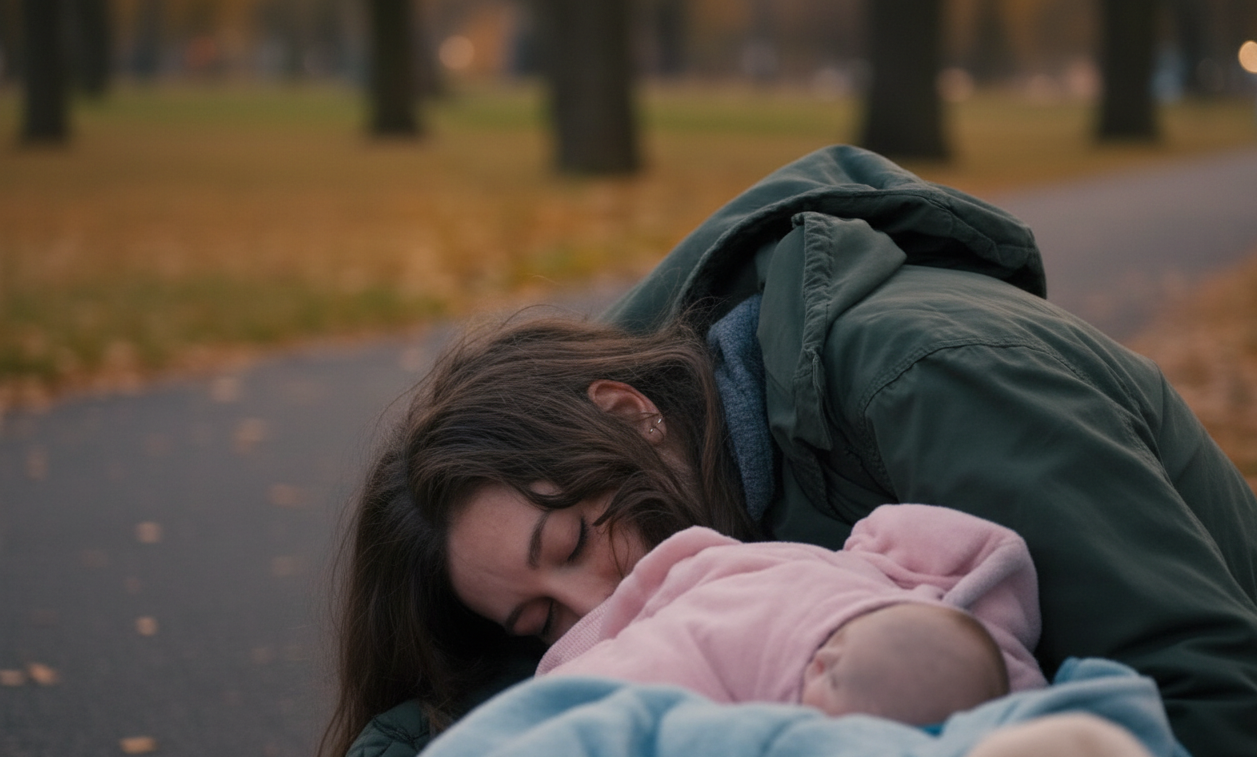
    Nora Blake. Asleep on a bench. Three infants bundled beside her.

    Adrian stopped cold.

    “Adrian?” Margaret asked. “What’s wrong?”

    He couldn’t answer. His throat closed.

    Nora looked thinner. Exhausted. Her coat was too thin for October. One baby whimpered softly, and she didn’t even stir.

    Margaret followed his stare. Her hand flew to her mouth.

    “Oh my God,” she whispered.

    Adrian’s mind raced. Five years. It had been five years since he’d ended things with Nora. Since she’d begged him to choose her. Since he’d told her his life was “too complicated.”

    Since she’d disappeared.

    Now she was here. With three babies.

    The timing clicked into place like a punch to the chest.

    “This can’t be real,” he muttered.

    But it was. The worn diaper bag. The empty bottle. The way Nora’s arms curled protectively around those tiny bodies even in sleep.

    One baby had dark hair. Just like his.

    Margaret moved first, steps careful as she approached the bench. She crouched beside Nora.

    “Nora,” she said softly. “Honey, wake up.”

    Nora jolted awake, eyes wild with panic. She grabbed the babies closer.

    Then she saw Margaret. Her face went pale.

    “Mrs. Hayes…”

    Her gaze lifted. Landed on Adrian.

    “What are you doing here?” Nora’s voice shook.

    Margaret’s eyes filled with tears. “Why are you out here like this?”

    “You need to leave,” Nora said. “Both of you.”

    Adrian found his voice. “Noraโ€””

    “No.” She stood, unsteady, clutching one baby to her chest. “You don’t get to do this.”

    “Do what?”

    “Show up now. Act concerned. You made your choice five years ago.”

    Adrian stepped closer. “Are they mine?”

    Nora’s jaw tightened. “Does it matter?”

    “Yes.”

    She laughed bitterly. “Now it matters. Funny.”

    Margaret touched Nora’s arm. “Please. Just tell us.”

    Nora pulled away. “I tried to tell him. I called. I texted. I went to his office.”

    Adrian’s stomach dropped.

    “Your assistant said you were in meetings,” Nora continued, voice breaking. “Your mother told me to stop being dramatic. And youโ€”” She looked directly at him. “You told me I was trying to trap you.”

    The memory hit him like ice water. He’d said that. In his office. Cold. Certain.

    “You said you’d ruin me if I kept pushing,” Nora whispered. “So I left.”

    Margaret turned to Adrian, horror in her eyes. “You didn’t.”

    He couldn’t meet her gaze.

    “I did,” he admitted quietly.

    Nora wiped her eyes roughly. “So no, Adrian. You don’t get to ask questions now.”

    One of the babies started crying. Then another. Nora juggled them awkwardly, exhaustion written in every movement.

    Adrian watched, throat tight. “Why are you out here?”

    “What?”

    “Why are you sleeping on a bench?”

    Nora’s face flushed. “My landlord locked me out last night. Rent was due three days ago.”

    “Where’s your family?”

    “Dead. Car accident. Two years ago.”

    The word landed like a blow.

    Margaret made a small, broken sound. “Oh, sweetheart…”

    “Don’t,” Nora said sharply. “Don’t ‘sweetheart’ me now.”

    Adrian pulled out his phone. “I’m calling my driver.”

    “Put that away.”

    “We’re getting you somewhere warm. A hotel. A doctorโ€””

    “I said no.”

    “Nora, it’s forty degrees out hereโ€””

    “And whose fault is that?” She stepped closer, voice rising. “You want to help? Where were you when I was working three jobs pregnant? Where were you when I delivered alone? Where were you when I ran out of formula and had to water it down?”

    Adrian’s hands shook. “I didn’t know.”

    “Because you didn’t want to know.”

    Margaret sank onto the bench, crying openly now. “I told you to leave her alone,” she whispered to Adrian. “I said she wasn’t suitable. I was wrong. I was so wrong.”

    Nora stared at her, something raw flickering across her face.

    “You told me I was just a phase,” Nora said quietly. “That Adrian needed someone from his ‘world.’ Someone polished. Someone useful.”

    Margaret covered her face. “I know.”

    “You said I’d drag him down.”

    “I know.”

    “And you…” Nora turned back to Adrian. “You agreed. You looked at me and said, ‘This isn’t going anywhere.’ Like I was nothing.”

    Adrian’s voice cracked. “I was wrong.”

    “Yes. You were.”

    The babies were all crying now. Nora tried to soothe them, swaying, shushing, but her arms were shaking.

    Adrian moved without thinking. He reached for one of the babiesโ€”a little girl with impossibly long lashes.

    Nora flinched but didn’t pull away.

    The baby settled against his chest, tiny fist curling into his shirt.

    Something broke inside him.

    “What are their names?” he asked hoarsely.

    Nora hesitated. “Emma. Noah. Lily.”

    “How old?”

    “Eighteen months.”

    Adrian looked down at the baby in his armsโ€”Lily. She had Nora’s nose. His dark hair.

    “Why didn’t you tell me?” he whispered.

    “I tried to tell you,” Nora said, tears streaming now. “You threatened me. You said you’d destroy my reputation. That no one would believe me. So I disappeared.”

    Margaret stood abruptly. “I need to see them. All of them.”

    She moved to Nora, reaching for Emma with trembling hands. Nora let her take the baby, watching carefully.

    Margaret studied Emma’s face, then Noah’s. Her tears fell freely.

    “They have your eyes,” she told Adrian. “All three of them.”

    Adrian felt the ground shift beneath him.

    “My driver’s five minutes away,” he said quietly.

    “I don’t want your money,” Nora shot back.

    “It’s not charity. It’s child support. Five years late.”

    Nora’s expression hardened. “You can’t just throw money at this and walk away feeling better.”

    “I know.”

    “You can’t fix this with one gestureโ€””

    “I know.”

    “Then what do you want?”

    Adrian met her eyes. “To be their father.”

    Nora laughed, broken and sharp. “You don’t get to decide that now.”

    “You’re right. I don’t.” He adjusted Lily carefully. “But they deserve a father who shows up. And you deserve support. Real support.”

    “I don’t trust you.”

    “I don’t blame you.”

    Margaret spoke up, voice shaking. “Nora… I owe you an apology. A real one. I was cruel. I was classist. I put my son’s career above your dignity. I’m sorry.”

    Nora stared at her, surprised.

    “Sorry doesn’t fix anything,” she said finally.

    “I know. But it’s a start.” Margaret’s voice broke. “Please let us help. Not because we deserve a second chance. Because these babies deserve warmth. Food. Safety.”

    Nora looked down at Noah, sleeping against her shoulder. Her expression crumbled.

    “I’m so tired,” she whispered.

    “I know,” Margaret said gently.

    A black car pulled up to the curb. Adrian’s driver stepped out.

    “Where to, Mr. Hayes?”

    Adrian looked at Nora. “Hospital first. Then my place. It has three guest rooms.”

    “I’m not staying with you,” Nora said.

    “Then a hotel. Your choice. But somewhere warm. Tonight.”

    Nora’s resistance wavered. She looked at the babies, then at the bench that had been their bed.

    “Fine,” she said quietly. “One night. Then we talk.”

    “One night,” Adrian agreed.

    They moved slowly toward the car. Margaret helped Nora buckle the car seatsโ€”three of them, stored in Adrian’s trunk “just in case,” his assistant had said when Adrian bought them months ago after a sleepless night spent searching Nora’s name online.

    Adrian climbed in beside Nora. She kept distance between them, arms crossed.

    “You bought car seats,” she said flatly.

    “Six months ago.”

    “Why?”

    “Because I’ve been looking for you for two years.”

    Nora’s head snapped toward him. “What?”

    “I hired investigators. I checked every social service agency. Every shelter. Nothing.”

    “You… looked for me?”

    “When I realized what I’d done. What I’d said. What I’d become.” Adrian’s voice dropped. “I wanted to apologize. To help. But you were gone.”

    Nora’s eyes filled again. “I used my middle name. Moved to Jersey. Changed everything.”

    “I figured.”

    They drove in silence. At the hospital, a pediatrician examined all three babies while Nora answered questions with quiet exhaustion.

    “They’re undernourished,” the doctor said gently. “But not dangerously. They need better formula. Regular meals. Consistent shelter.”

    Nora nodded, shame coloring her cheeks.

    Adrian stepped forward. “Whatever they need, bill me directly.”

    The doctor glanced between them. “And you are?”

    “Their father,” Adrian said.

    Nora didn’t contradict him.

    At the hotelโ€”a suite Adrian upgraded on the spotโ€”Margaret helped Nora feed and bathe the babies while Adrian ordered food. Enough for a week.

    When the babies were finally asleep, Nora collapsed on the couch.

    “I haven’t slept in a bed in three weeks,” she said distantly.

    Margaret sat beside her. “Why didn’t you go to a shelter?”

    “I tried. They were full. And…” Nora’s voice dropped. “They wanted to separate us. Put the babies in foster care temporarily. I couldn’t.”

    Adrian felt sick. “You’ve been on the street for three weeks?”

    “Parks. Libraries. Coffee shops. Wherever they’d let us stay a few hours.”

    “Jesus Christ.”

    “Don’t,” Nora said sharply. “Don’t act horrified now. This is what happens when men like you erase women like me.”

    The words hit like a slap.

    Adrian sat across from her. “You’re right. I erased you. I prioritized my career, my image, my comfort. I told myself you were being dramatic because admitting you might be pregnant meant my life would get complicated.”

    “It did get complicated,” Nora said bitterly. “Just not for you.”

    “Not then. But it should have.” He leaned forward. “I want to set up an account for you. Backdated child support. Medical expenses. Housing. Everything.”

    “Why now?”

    “Because it’s right. Because they’re mine. Because I failed you.”

    Nora studied him for a long moment. “If I take your money, you’re going to want access.”

    “Yes.”

    “Custody?”

    “I don’t know yet. I want to know them first. Earn that right.”

    “And if I say no?”

    “Then I’ll still pay support. But I’ll ask a court to grant me visitation.”

    Nora’s jaw clenched. “You’d sue me?”

    “I’d petition for my parental rights. There’s a difference.”

    “Not to me.”

    Margaret interjected quietly. “Nora… he’s not trying to take them. He’s trying to be accountable.”

    “Accountability would’ve been five years ago.”

    “You’re right,” Adrian said. “But I can’t go back. I can only move forward. And I want to move forward by being present. Consistent. Reliable.”

    Nora laughed bitterly. “Those are just words.”

    “Then watch me prove it.”

    Over the next weeks, Adrian did exactly that.

    He found Nora an apartment. A real one. Three bedrooms. Safe neighborhood. Lease in her name.

    He set up a trust fund for each child. College. Medical. Emergency.

    He hired a nannyโ€”one Nora interviewed and approved.

    And he showed up. Every other day at first. Then more. Reading bedtime stories. Changing diapers. Learning routines.

    Nora watched him carefully, waiting for him to fail.

    He didn’t.

    Margaret came too. She apologized in actions, not just wordsโ€”cooking meals, babysitting, treating Nora with the respect she’d denied her years ago.

    But it was the lawyers that changed everything.

    Two months in, Adrian’s attorney presented Nora with documents.

    “What is this?” she asked warily.

    “A formal child support agreement,” the lawyer explained. “Backdated to their birth. Including medical, housing, and educational expenses. No strings attached to his visitation.”

    Nora read through it slowly. The numbers made her dizzy.

    “This is more than I asked for.”

    “It’s what you’re owed,” Adrian said.

    She looked up, eyes sharp. “Why are you really doing this?”

    “Because I destroyed you once. I won’t do it again.”

    “That’s not an answer.”

    Adrian sat across from her. “When I saw you on that bench, I realized something. My success meant nothing. My company, my reputation, my moneyโ€”all of it was built while you suffered. While my children suffered. And I can’t live with that.”

    “So this is about your guilt.”

    “Partially. Yes.” He didn’t look away. “But it’s also about them. They didn’t ask to be born. They didn’t deserve poverty because I was a coward.”

    Nora was quiet for a long moment.

    “I’ll sign it,” she said finally. “On one condition.”

    “Name it.”

    “You keep showing up. Not just now, while it’s new. But when it’s hard. When they’re sick. When they’re bratty. When I’m difficult. You stay.”

    Adrian nodded. “I will.”

    “And if you don’t, I’ll take you to court for full custody and drain every penny you’ve got.”

    He met her eyes. “Fair.”

    They signed the papers that day.

    Six months later, things shifted again.

    Adrian was reading to Lily when Noah toddle over and climbed into his lap without hesitation.

    “Dada,” Noah said clearly.

    Adrian froze. He looked at Nora, unsure.

    She smiledโ€”small, guarded, but real.

    “He’s been practicing,” she said softly.

    Emma joined them a moment later, giggling as Adrian tickled her.

    And for the first time since that day in the park, Adrian felt something uncomplicated.

    Not redemption. Not relief.

    Just presence.

    A year after the park, Margaret hosted Thanksgiving dinner.

    Nora arrived with the triplets, all dressed in matching outfits she’d picked out herself. No longer donations. No longer charity.

    Just hers.

    Adrian greeted them at the door. The triplets ran to him immediately.

    “Uncle Marcus is here,” he told Nora. “And my business partner, Kate. I told them everything.”

    Nora tensed. “Everything?”

    “How I failed you. How I’m trying to do better. I’m not hiding it anymore.”

    She studied his face. “You’re ruining your reputation.”

    “I’m fixing it. There’s a difference.”

    Dinner was warm. Chaotic. Real.

    Afterward, as Nora helped clean up, Margaret pulled her aside.

    “I need to say something,” Margaret began.

    “You’ve apologizedโ€””

    “This isn’t an apology. It’s a thank you.”

    Nora blinked. “For what?”

    “For giving Adrian a reason to become a better man. For not giving up on those babies even when the world gave up on you. For your strength.”

    Nora’s eyes filled. “I didn’t feel strong.”

    “You were. You are.” Margaret squeezed her hand. “And you’ll always have a place here. Not because of Adrian. Because you’re family.”

    Nora nodded, unable to speak.

    That night, as Adrian walked her to her car, Nora stopped.

    “You kept your word,” she said quietly.

    “I’m trying.”

    “No. You did.” She looked up at him. “You showed up. Every time. Even when I was awful. Even when it was hard.”

    “It’s what I should’ve done from the start.”

    “But you’re doing it now. That matters.”

    Adrian smiled, tentative. “Does this mean you trust me?”

    “It means I’m starting to.”

    And as Nora drove away with the triplets asleep in the back, Adrian stood in the driveway and felt the truth settle in his chest:

    He’d been given a second chance he didn’t deserve.

    But he’d earned it one day at a time.

    And thatโ€”finallyโ€”was enough.

  • CEO Sat Silent While Humiliatedโ€”Then Her Revenge Erased Billions

    CEO Sat Silent While Humiliatedโ€”Then Her Revenge Erased Billions

    She poured wine on her at the gala in front of everyoneโ€ฆ But one phone call erased $2.4 billion and destroyed an empire.

    The crystal glass caught the light as it tipped.

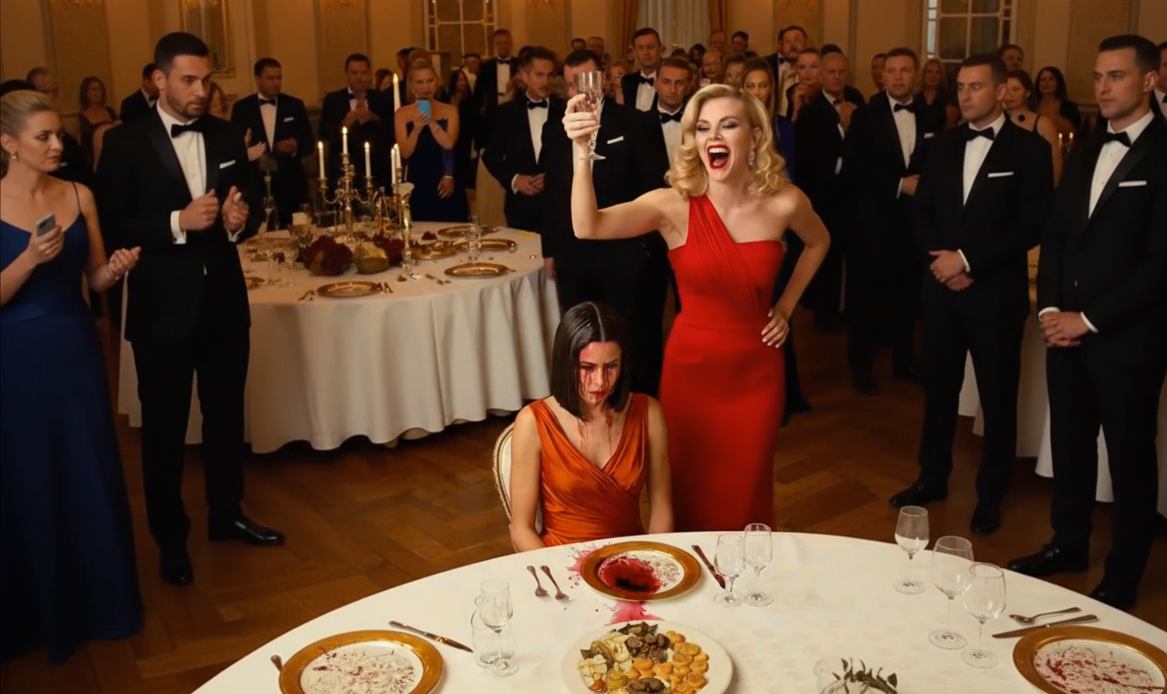
    Red wine cascaded down, soaking through hair, streaming past temples, staining the orange dress dark.

    The room went silent.

    “There. That’s better,” the woman in red said, laughing. “Orange was never your color.”

    Maya sat perfectly still. Wine dripped from her chin to the white tablecloth. She didn’t move. Didn’t flinch. Her hands stayed flat on the table.

    Around her, phones rose. Cameras hungry.

    “Did you see that?” someone whispered.

    “She’s not even reacting,” another voice said.

    The woman in redโ€”Vanessaโ€”twirled her empty glass. “What’s wrong? No comeback?”

    Maya lifted her eyes. Slow. Deliberate.

    Vanessa’s smile faltered.

    The silence stretched. Heavy. Suffocating.

    “She should be grateful,” a man at the next table said loudly. “That wine cost more than her whole outfit.”

    Laughter rippled through the crowd. Nervous. Uncertain.

    Vanessa tossed her hair. “Come on, don’t be shy. Smile for the cameras.”

    Maya said nothing.

    “She doesn’t belong here anyway,” a woman in pearls muttered. “Look at her. Can’t even defend herself.”

    More laughter. More phones recording.

    But not everyone was laughing anymore.

    Two investors at the far end exchanged worried glances.

    “She’s the partner, isn’t she?” one whispered.

    “The contract this morning,” the other confirmed.

    They both went pale.

    Vanessa raised her voice, playing to the crowd. “This is what happens when you sit where you don’t belong.”

    Maya reached for her phone.

    The movement was calm. Unhurried.

    Vanessa leaned closer. “Oh, calling for help? Maybe your driver can bring a towel.”

    Maya held the phone to her ear.

    Her voice, when it came, was ice-cold.

    “Terminate the contract. Effective immediately.”

    The room froze.

    Every conversation stopped. The string quartet stumbled, bows catching mid-note.

    “What did she say?” Vanessa asked, forcing a laugh.

    No one answered.

    Maya ended the call. Set her phone down gently.

    Around the hall, phones began lighting up. Alert after alert.

    A man pulled out his device, scrolling frantically. His face drained of color.

    “Oh my god,” he breathed. “She’s pulling out.”

    “What?” his neighbor leaned over.

    “The deal. She justโ€”” He couldn’t finish.

    Another guest gasped. “2.4 billion?”

    The whispers exploded into chaos.

    “It’s real.”

    “Check the market.”

    “She actually did it.”

    Vanessa spun around, red dress swirling. “She’s bluffing. This is a party trick.”

    But her voice cracked.

    More screens lit up. More gasps rippled through the crowd.

    “The contract’s terminated.”

    “It’s already hitting the markets.”

    “Do you understand what this means?”

    Vanessa’s smile was gone now. “Why are you all staring at your phones? She can’t do this.”

    Maya lifted her glassโ€”not the empty one used as a weapon, but her own. She took a slow sip.

    The simple gesture commanded the entire room.

    A woman clutched her husband’s arm. “She didn’t justโ€””

    “She did,” he whispered. “2.4 billion. Gone.”

    Vanessa turned back to Maya, breathing hard. “You think you can scare me? My brother, our family, we control this city.”

    Maya met her gaze. Calm. Unflinching.

    “Do you know who I am?” Vanessa demanded, voice shaking.

    For the first time since the wine was poured, Maya spoke directly to her.

    “I don’t need to know who you are. What matters is who you’ll be after tonight.”

    The words landed like a hammer.

    Gasps around the hall. Someone whispered, “Oh my god.”

    Vanessa staggered back a step. “This isn’t over.”

    “It is,” an investor said quietly. Loud enough to be heard.

    Chairs scraped as guests leaned toward each other, frantic.

    “Sell. Sell now,” a man barked into his phone.

    “She owns the floor now,” someone else murmured.

    Vanessa clutched her glass tighter. “My family built this. You can’t just erase us.”

    Maya adjusted her posture, relaxed, in control. “Power doesn’t ask for permission.”

    The silence that followed was absolute.

    Vanessa looked around desperately. The friends who’d laughed with her wouldn’t meet her eyes. The guests who’d clapped avoided her gaze.

    They were all looking at Maya now.

    “This is nonsense,” Vanessa tried again, but her voice was hollow. “You think you can walk in here and undo everything?”

    An older man in the back muttered, “She’s finished.”

    “No,” his companion replied. “They’re finished. All of them.”

    Vanessa slammed her glass down. The crystal cracked. “This isn’t over!”

    She turned and stormed toward the exit, red dress trailing behind her.

    No one tried to stop her. No one called after her.

    The doors shut with a hollow thud.

    Maya remained seated. She lifted her glass again, took another sip, and surveyed the room.

    One by one, eyes dropped before hers.

    An investor leaned to his partner. “We need to call the firm.”

    “Already done,” came the reply. “This changes everything.”

    A woman whispered, “She just took down an entire family with one phone call.”

    “No,” her husband corrected. “She took them down when she signed that contract this morning. The phone call just made it official.”

    Maya rose slowly. The wine stains on her dress caught the chandelier’s light.

    What should have been marks of humiliation looked like battle scars now.

    Like proof.

    She walked toward the exit. Each step echoed in the silence.

    The crowd parted without being asked.

    Near the door, she paused. Looked back.

    Her voice carried easily through the hall. “Dignity doesn’t vanish when wine is poured. It endures.”

    She let that settle for a moment.

    “And tonight, everyone here learned who truly holds it.”

    More whispers. Not mocking. Respectful. Awed.

    “She owns everything now.”

    “Did you see how she didn’t even raise her voice?”

    “That’s real power.”

    Maya turned to leave, then stopped once more.

    “Power doesn’t come from spectacle,” she said quietly. “It comes from what happens after.”

    And with that, she walked out.

    The doors closed behind her.

    The hall erupted.

    “Did anyone get that recorded?”

    “This will be everywhere by morning.”

    “Her family’s stocks are going to crater.”

    “That contract was their lifeline.”

    “She didn’t just humiliate them. She destroyed them.”

    In the lobby, Maya’s assistant rushed over with a towel.

    “Ma’am, are youโ€””

    “I’m fine,” Maya said calmly. “Call legal. I want documentation that the termination was processed before I left the building.”

    “Already done. They’re preparing the press release now.”

    Maya nodded. “Good. And the alternative partnerships?”

    “Three firms have already reached out in the last ten minutes. They saw what happened.”

    “Of course they did.” Maya allowed herself the smallest smile. “Everyone did.”

    Her assistant hesitated. “That woman, Vanessaโ€””

    “Will learn an expensive lesson,” Maya finished. “As will her brother. And anyone else who mistakes cruelty for power.”

    She wiped wine from her neck with the towel, composed as ever.

    “Schedule a board meeting for tomorrow morning. We have new partnerships to finalize.”

    “Yes, ma’am.”

    “And send flowers to Vanessa’s brother.”

    Her assistant blinked. “Flowers?”

    “With a card. ‘Thank you for the memorable evening. Best wishes for your future endeavors.’”

    A pause. Then her assistant grinned. “Savage.”

    “Professional,” Maya corrected. But her eyes sparkled.

    They walked toward the exit. Behind them, the banquet descended into chaosโ€”calls being made, alliances shifting, fortunes recalculating.

    Outside, the night air was cool and clean.

    Maya took a breath. Let it out slowly.

    Her driver opened the car door.

    Before stepping in, she glanced back at the building. Through the windows, she could see the crowd still reeling.

    “You know what the best part is?” she said to her assistant.

    “What’s that?”

    “I didn’t lose my temper. Didn’t shout. Didn’t stoop to her level.”

    She smiled, genuine this time.

    “I simply made a business decision. The kind I make every day.”

    “And destroyed an empire.”

    “Consequences,” Maya said simply. “Actions have them.”

    She slid into the car, and they drove away.

    Behind her, in that gilded hall, the lesson was being learned.

    Humiliation is temporary.

    Power is permanent.

    And dignity? Dignity is untouchableโ€”especially when backed by $2.4 billion and the resolve to walk away from anyone who forgets that.

    By morning, the story would be everywhere.

    Vanessa’s family would scramble to contain the damage, but it was too late.

    The contract was gone. Their reputation shattered.

    And Maya? She’d already moved on to the next deal.

    Because that’s what real power does.

    It doesn’t gloat. Doesn’t linger.

    It simply makes the move. And walks away.

    Leaving behind only the echo of what could have beenโ€”if respect had been given where it was due.

  • They Laughed At The Disabled Woman… Then She Showed Them THIS

    They Laughed At The Disabled Woman… Then She Showed Them THIS

    A man shoved a woman on crutches for confronting him about handicapped parkingโ€ฆ But she pulled out a badge that made him go pale

    Mercy General Hospital parking lot. Tuesday morning. That’s where it happened.

    My name is Rachel Martinez. Federal prosecutor. Eastern District of New York. Twelve years on the job.

    I was recovering from ACL reconstruction surgery. Three weeks post-op. Still on crutches.

    I pulled into the parking lot at 9 AM for my follow-up appointment. My right leg was in a brace. Movement was painful.

    The handicapped spot near the entrance was open. I had my placard hanging from the mirror.

    I parked. Gathered my purse and crutches.

    A black BMW swerved into the spot next to mine. The other handicapped space.

    Two men jumped out. Mid-twenties. Gym clothes. No visible disabilities.

    No placard. No plates.

    I maneuvered out of my car slowly. Positioned my crutches.

    The taller oneโ€”buzzcut, tank topโ€”was already walking toward the entrance.

    “Excuse me,” I called out.

    He turned. “Yeah?”

    “That’s handicapped parking. Do you have a permit?”

    He looked at his friend. They both laughed.

    “Do I look handicapped to you?” Buzzcut flexed his biceps.

    “That’s not how it works. You need a permit to park there.”

    His friendโ€”red cap, athletic shortsโ€”pulled out his phone. Started filming.

    “Lady, we’re just running in for five minutes. Relax.”

    “The law doesn’t have a time limit. You’re parked illegally.”

    Buzzcut stepped closer. “You know what? You don’t look that handicapped either.”

    I steadied myself on the crutches. “I have a placard. You don’t.”

    “Maybe you should mind your business.”

    “This is my business. I’m asking you to move your vehicle.”

    He looked at Red Cap. “She’s asking me to move.”

    They both laughed again.

    “Here’s what’s gonna happen,” Buzzcut said. “We’re gonna go inside. You’re gonna forget this conversation. Deal?”

    “No deal. Move your car or I’m reporting it.”

    “Reporting it?” He stepped even closer. “To who? The parking police?”

    “To security. And they’ll call a tow truck.”

    Red Cap zoomed in with his phone. “Yo, this is gold. Karen on crutches.”

    “I’m notโ€””

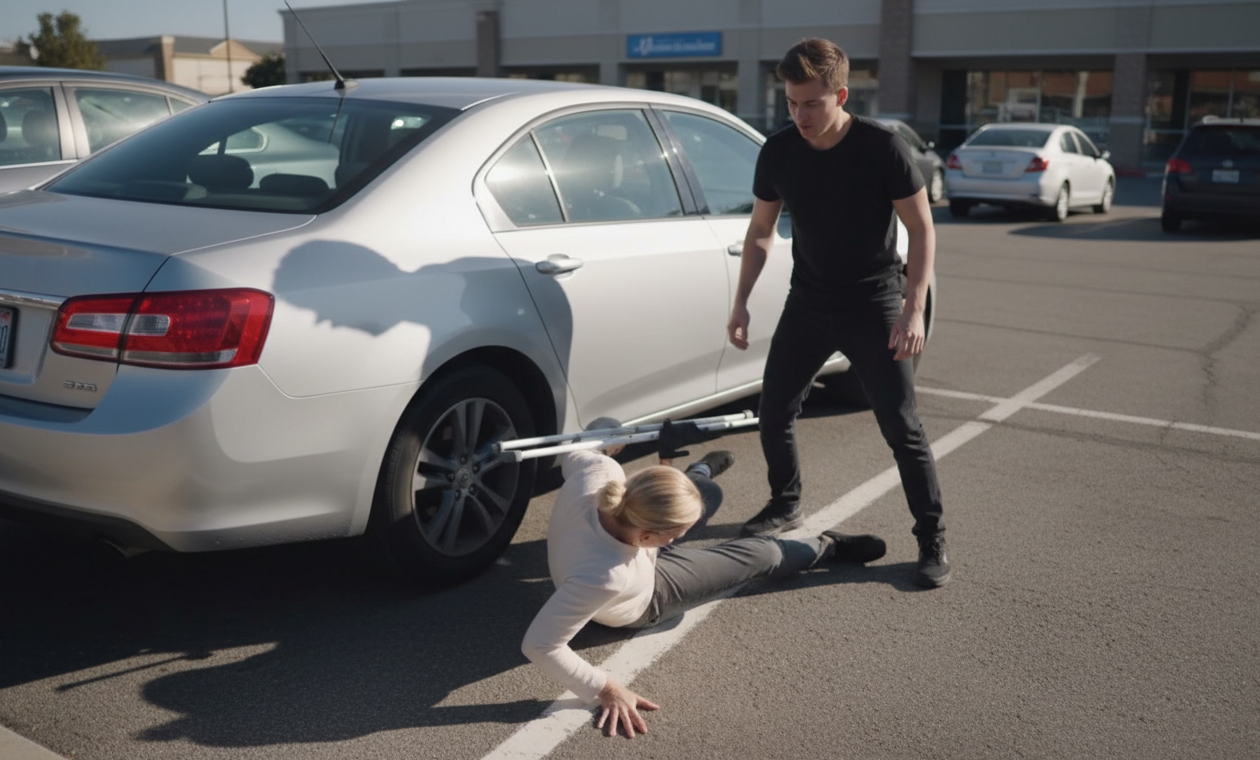
    Buzzcut shoved my shoulder.

    Not hard. But enough.

    I was balanced on crutches. Favoring my injured leg.

    I went down.

    My crutches clattered against the asphalt. Pain shot through my knee as I tried to catch myself.

    I hit the ground. Hard.

    “Oops!” Buzzcut held up his hands in mock innocence. “Should’ve moved faster!”

    Red Cap was still filming. “Oh man, did you get that? She just fell!”

    They high-fived.

    I lay there. Breathing through the pain. My knee was screaming.

    A woman ran over from the parking lot. “Oh my God! Are you okay?”

    “I’m fine,” I said quietly.

    Buzzcut and Red Cap were walking away, still laughing.

    The woman helped me sit up. “That was assault! I saw the whole thing!”

    “I know.” I reached for my purse.

    “Should I call security?”

    “Not yet.” I pulled out my badge case. Flipped it open.

    Federal prosecutor. Department of Justice.

    The woman’s eyes widened. “Oh.”

    I looked at Buzzcut and Red Cap. They were at the entrance now.

    “Excuse me!” I called out.

    They turned.

    I held up my badge. “You just assaulted a federal prosecutor.”

    The smiles vanished.

    “What?” Buzzcut took a step back.

    “Rachel Martinez. U.S. Attorney’s Office. You pushed me. While filming it. On federal property.”

    Red Cap lowered his phone.

    “That was an accidentโ€”” Buzzcut started.

    “There are cameras everywhere.” I gestured to the hospital security cameras. “And your friend filmed it. I have a witness.” I nodded to the woman beside me. “You’re looking at assault charges. Plus the illegal parking.”

    “We didn’t knowโ€””

    “Ignorance isn’t a defense.”

    Security was already approaching. Two officers.

    “Ma’am, we saw what happened. Are you injured?”

    “My knee. I may have re-injured it from the fall.”

    One officer knelt beside me. “We’re calling for medical assistance.”

    The other approached Buzzcut and Red Cap. “Gentlemen, we need you to stay right here.”

    “We were justโ€””

    “Save it.” The officer pulled out his radio. “Dispatch, we need NYPD at Mercy General. Assault on federal property.”

    Buzzcut’s face went white. “Wait, federal?”

    “This is a hospital that receives federal funding,” I explained calmly. “Assaulting a federal official on federal property is a federal crime. Title 18, Section 111.”

    Red Cap’s phone slipped from his hand. “Oh my God.”

    A doctor rushed out with a wheelchair. “Ms. Martinez? Let’s get you inside.”

    “Not yet. I want to make sure these two don’t leave.”

    “We’re not going anywhere,” the first security officer confirmed. “Police are two minutes out.”

    The woman who’d helped me spoke up. “I have the whole thing on my phone too. I started recording when I saw them laughing at her.”

    “Perfect. I’ll need that footage,” I said.

    Two police cars pulled into the lot. Lights flashing.

    Four officers emerged.

    “Officer Ramirez,” one of them approached me. “Ms. Martinez, are you alright?”

    “I’ve been better, Jorge.”

    “You know her?” Buzzcut asked weakly.

    Officer Ramirez smiled. “Everyone in the department knows Ms. Martinez. She’s prosecuted half the cases in this district.”

    “Ma’am, can you explain what happened?” another officer asked.

    I did. Calmly. Factually. While still sitting on the ground.

    Ramirez turned to Buzzcut and Red Cap. “IDs. Now.”

    They pulled out their wallets with shaking hands.

    “Connor Hayes. Twenty-six.” Ramirez read the license. “And you’re Blake Morrison. Twenty-five.”

    “Officers, it was a misunderstandingโ€”” Connor started.

    “You pushed a federal prosecutor after illegally parking in a handicapped spot. That’s not a misunderstanding. That’s multiple crimes.”

    The doctor tried again. “Ms. Martinez, please. We need to check your knee.”

    “One minute.” I looked at the officers. “I want to press full charges. Assault on a federal official. Illegal parking. And if my knee is damaged, we’ll add aggravated assault.”

    Blake was crying now. Actual tears. “Please, I’m so sorry. We didn’t knowโ€””

    “You knew it was handicapped parking. You knew you didn’t have a permit. You knew I was on crutches. You made your choices.”

    Connor pulled out his phone. “My dad’s a lawyer. I’m calling him.”

    “Good,” I said. “He’ll explain exactly how much trouble you’re in.”

    The doctor finally got me into the wheelchair. Took me inside for X-rays.

    My knee was swollen. Not torn, thankfully. But the fall had set back my recovery by weeks.

    While I was being examined, the police impounded Connor’s BMW. Parking violation plus evidence.

    Connor’s father arrived. I recognized him. David Hayes. Defense attorney. We’d faced off in court before.

    He found me in the examination room.

    “Rachel.”

    “David.”

    “My son is an idiot.”

    “Yes.”

    “But assault on a federal official? That’s five years minimum.”

    “I’m aware. I prosecute these cases.”

    He sat down heavily. “What do you want?”

    “I want your son to understand consequences.”

    “If you press federal charges, his life is over. He’s applying to business schools.”

    “He should’ve thought of that before pushing someone on crutches.”

    “Rachel, please. I’m begging you. As a colleague.”

    I studied him. “We’re not colleagues, David. We’re on opposite sides.”

    “As a father, then.”

    I was silent for a long moment.

    “Here’s what I want,” I finally said. “Full apology. Written and in person. Restitution for all medical costsโ€”the X-rays, the extended recovery, the additional physical therapy. Five thousand dollar fine split between them, donated to the hospital’s disability services fund. And both of them complete fifty hours of community service at a rehabilitation center.”

    David exhaled. “And the assault charge?”

    “Dropped to simple assault. State charges, not federal. Probation, not prison. But it stays on their record.”

    “That’s… fair. More than fair.”

    “And one more thing. That video they took? They post a public apology video. Explaining what they did and why it was wrong. Same platform they were going to post the ‘Karen’ video on.”

    “Done. Thank you, Rachel.”

    “I’m not doing this for them. I’m doing it because federal prison is expensive and overcrowded. But if they violate any part of this agreement, I will prosecute to the fullest extent.”

    “Understood.”

    Three days later, Connor and Blake showed up at my apartment.

    Both looked like they hadn’t slept.

    “Ms. Martinez,” Connor began. “We’re here to apologize.”

    “Come in.”

    They sat on my couch. I stayed in my recliner, leg elevated.

    “We’re sorry,” Blake said. “What we did was cruel and stupid. We thought it would be funny. We never considered that you were actually disabled or in pain.”

    “Or that I had the power to destroy your futures,” I added.

    “That too,” Connor admitted. “But my dad said you showed us mercy. When you didn’t have to.”

    “I showed you justice. There’s a difference.”

    Blake pulled out a check. “This is for the medical costs. Five thousand from each of us. And we already donated to the disability fund.”

    I took the check. Verified the amount.

    “The community service starts Monday,” Connor said. “We’re working at Riverside Rehab Center. Fifty hours each.”

    “Good. You’ll learn something there.”

    “We also posted the video.” Blake pulled out his phone. Showed me.

    A two-minute video. Both of them, serious, explaining what they’d done. Taking full responsibility. No excuses.

    “It has three hundred thousand views,” Blake said quietly. “Most of the comments are people calling us trash.”

    “Are they wrong?”

    “No.”

    Connor spoke up. “Ms. Martinez, can I ask you something?”

    “Go ahead.”

    “Why didn’t you destroy us? You could have. My dad said the federal charges would’ve meant prison time.”

    I thought about it.

    “Because prison doesn’t change people. It warehouses them. You’re both young. Stupid, but young. You made a terrible choice. But I believe people can learn from their mistakes. If they’re willing to.”

    “We are,” Blake said earnestly. “I swear, we are.”

    “Then prove it. Complete the community service. Learn from the people at that rehab center. Understand what it’s like to actually struggle with mobility. And never, ever treat another human being like they’re beneath you.”

    They both nodded.

    “And one more thing,” I added. “If I ever hear that either of you has done anything like this againโ€”to anyoneโ€”I will personally make sure the original federal charges are filed. Understood?”

    “Yes, ma’am.”

    They left.

    Six weeks later, I was off crutches. Back to my normal routine.

    I got a letter at my office.

    From the director of Riverside Rehab Center.

    “Dear Ms. Martinez, I wanted to update you on Connor Hayes and Blake Morrison. They’ve both completed their fifty hours and have asked to continue volunteering. Connor has been helping with our adaptive sports program. Blake has been assisting with physical therapy sessions. Both have shown genuine remorse and growth. I thought you’d like to know. Thank you for sending them our way. Sincerely, Dr. Patricia Wong.”

    I smiled.

    My assistant knocked. “Ms. Martinez? The Bradley case is ready for review.”

    “Thanks, Maria.” I stood up. No crutches. No pain.

    Walked to my desk. Pulled up the case file.

    Life moved on.

    But three months later, I was back at Mercy General for a final checkup.

    I parked in a regular spot. Didn’t need the handicapped space anymore.

    As I walked toward the entrance, I saw someone familiar.

    Connor Hayes. In a Riverside Rehab Center volunteer shirt. Helping an elderly man with a walker get out of a car.

    He looked up. Saw me. Froze.

    I walked over.

    “Ms. Martinez.”

    “Connor. What are you doing here?”

    “I, uh, I still volunteer. At Riverside. I’m helping Mr. Patterson with his appointment.”

    The elderly man smiled. “Young man’s been a godsend. Drives me to appointments, helps me with my walker. Real gentleman.”

    “Is that right?” I looked at Connor.

    “I like it,” Connor said quietly. “The volunteering. It makes me feel… like I’m doing something that matters.”

    “Good.”

    “And Ms. Martinez? I got accepted to Columbia Business School. I start in the fall.”

    “Congratulations.”

    “I’m going to study healthcare administration. I want to work in accessibility services. Make sure buildings and programs are actually accessible to everyone.”

    I raised my eyebrows. “That’s a big change from whatever you were planning before.”

    “Before, I was just… existing. Doing what my parents expected. Now I have a purpose.” He paused. “You gave me that. By not destroying me. Thank you.”

    “Don’t thank me. Thank the people at Riverside who showed you what really matters.”

    “I do. Every day.”

    Mr. Patterson patted Connor’s arm. “Shall we head in? Don’t want to be late.”

    “Of course.” Connor looked at me one more time. “Take care, Ms. Martinez.”

    “You too, Connor.”

    I watched them walk into the hospital. Connor adjusting his pace to match Mr. Patterson’s slow shuffle.

    My phone buzzed. Text from my colleague.

    “Hayes case officially closed. Probation completed successfully. Record will be sealed after one year good behavior.”

    I replied: “Good to hear.”

    Inside the hospital, my orthopedist reviewed my X-rays.

    “Perfect recovery, Rachel. You’re cleared for full activity. No restrictions.”

    “That’s great news.”

    “What happened with those guys who pushed you? I heard about it from security.”

    “They learned a valuable lesson.”

    “Good. Too many people get away with that kind of thing.”

    I thought about Connor. About Blake, who I’d heard was now studying physical therapy.

    About how punishment without purpose just creates more problems.

    “Yeah,” I agreed. “But sometimes the lesson sticks. And that makes all the difference.”

    I walked out of the hospital. No crutches. No pain. No limp.

    Behind me, Connor was still helping Mr. Patterson. Patiently. Kindly.

    The parking lot was full. Someone was parked illegally in a handicapped spot.

    But it wasn’t my problem today.

    Justice had already been served.

    And mercy had created something better than revenge.

    Two young men who’d been careless and cruel had become caregivers and advocates.

    That was a win worth celebrating.

  • Cheerleader Pours Coffee On New Girlโ€”INSTANT Karma Follows

    Cheerleader Pours Coffee On New Girlโ€”INSTANT Karma Follows

    The head cheerleader poured iced coffee on the quiet new girl to humiliate herโ€ฆ But the new girl was a black belt who’d been training since childhood.

    Oakridge High was a battlefield disguised as a schoolโ€”ruled by social hierarchies and ruthless queens.

    I was the new girl. Fresh meat.

    My name’s Emma Carter. Fifteen years of Taekwondo hidden beneath my oversized sweater and quiet demeanor.

    “Strength is for protection, not intimidation,” my sensei always said.

    Madison Brooks ruled this school. Head cheerleader. Perfect blonde hair. Designer everything. Her crew controlled the cafeteria, the hallways, even which bathroom stalls were “acceptable.”

    I met Sophia on day one. She was hiding by the water fountain, trying to blend into the tile.

    Our eyes met. I saw years of survival in her gaze.

    Madison stepped into my path that morning. Knocked my books from my arms with a flip of her hair.

    The hallway exploded with whispers and laughter.

    I gathered my things slowly. Methodically.

    “Look at her crawling around,” Madison said to her squad. “Pathetic.”

    I stood up. Met her eyes. Said nothing.

    Walked away.

    Lunch was worse.

    The cafeteria buzzed with tension. I sat alone at a corner table.

    Sophia slid into the seat across from me. Her hands shook slightly.

    “You need to stay away from Madison,” she whispered. “She destroys people.”

    “I’ll be fine.”

    “No. You don’t understand. Last year she got a girl expelled with fake screenshots. Her dad’s on the school boardโ€”nothing happened to her.”

    I nodded. “Thanks for the warning.”

    Then Madison appeared. Her cheer squad flanked our table like a formation.

    She held a venti iced coffee. Caramel drizzle visible through the clear cup.

    “New girl needs to cool off,” Madison announced loudly.

    The cafeteria went silent.

    She tipped the cup. Cold liquid cascaded over my head. Soaked my hair, my sweater, pooled on the table.

    The room erupted in laughter and gasps.

    I sat perfectly still. Let it drip down my face.

    “What, gonna cry?” Madison leaned closer, her perfect makeup inches from my coffee-stained face.

    I stood up slowly. Looked directly into her eyes. “Are you finished?”

    Her smile faltered.

    “Because if you are, I’d like to finish my lunch.”

    The laughter died instantly.

    Madison’s face flushed red. “You think you’re tough?”

    “I think you’re blocking my light.”

    Someone’s phone camera was pointed at us. Madison noticed. Her jaw clenched. “This isn’t over.”

    “It is for today.”

    I grabbed my tray and walked to the bathroom, ignoring the stares.

    By the next morning, the video had gone viral.

    #CoffeeGirl was trending. Students I’d never spoken to were stopping me in the halls.

    “That was so badass,” a sophomore said.

    “Madison’s freaking out,” another whispered.

    Sophia found me before first period. “Principal Harrison wants to see you. And Madison.”

    In the office, Madison was already there, arms crossed. Her motherโ€”wearing a Chanel suitโ€”stood beside her.

    “She provoked Madison,” Mrs. Brooks said immediately. “My daughter was defending herself from harassment.”

    Principal Harrison pulled up the video on her computer. “This shows Madison pouring coffee on Emma without any provocation.”

    “That video is edited! Sheโ€””

    “Mrs. Brooks,” Harrison interrupted. “Madison is on thin ice. One more incident and she’s suspended from cheer and faces expulsion. Do you both understand?”

    “Yes, ma’am,” I said quietly.

    Madison glared at the wall. Said nothing.

    “Madison?” Harrison pressed.

    “Fine.”

    Outside the office, Madison cornered me in the empty hallway.

    “Gym. After school. Just you and me.”

    “Not interested.”

    “Scared?” Her squad materialized behind her, perfectly synchronized.

    “Just smart.”

    “Three o’clock. Be there or everyone knows you’re a coward.” She walked away, her ponytail swinging.

    Sophia caught up to me. “Don’t go. It’s a trap. She’ll have the whole squad there.”

    “I know.”

    “Then why are you considering it?”

    “Because it needs to end.”

    At 3:15, I walked into the gym.

    Fifty students filled the bleachers. Phones out. Recording.

    Madison stood center court in her cheer uniform, flanked by five of her squad members.

    “Thought you’d chicken out,” Madison said.

    “I came to talk.”

    “Talk’s over.” She cracked her knucklesโ€”a gesture that looked ridiculous with her French manicure. Her squad spread out, boxing me in.

    Then the gym doors opened.

    Coach Martinez walked in with two security guards.

    “What’s going on here?” Coach demanded.

    Madison’s smile vanished. “Nothing, Coach. Just practice.”

    “Where’s your equipment?” Martinez looked at the crowd. “Everyone out. Now.”

    Students scattered. Madison shot me a death glare.

    “Brooks, Carterโ€”my office,” Martinez said.

    But Madison shoved past him and lunged at me.

    Fist flying toward my face.

    Muscle memory took over.

    I sidestepped. Caught her wrist. Used her momentum.

    Redirected.

    Madison stumbled forward, off-balance. I swept her leg. She crashed hard onto the polished court.

    The security guards rushed in, but it was over in three seconds.

    Coach Martinez stared. “What just happened?”

    “Self-defense,” I said calmly.

    Madison scrambled up, face red, ponytail askew. “You’re dead! My dad will sueโ€””

    “Your dad will watch the security footage,” Martinez interrupted, pointing at the cameras. “Which shows you attacking first.”

    Madison’s face went pale.

    “My office. Both of you. Now.”

    Principal Harrison reviewed the footage with Madison’s parents.

    Mr. Brooks, a school board member in an expensive suit, watched the screen three times.

    “Madison attacked first,” Harrison said. “Multiple witnesses. Clear video evidence.”

    Mr. Brooks’ jaw worked. “Madison, is this true?”

    Madison stared at the floor.

    “Answer me.”

    “She disrespected me,” Madison muttered.

    “By existing?” I asked.

    Mrs. Brooks closed her eyes. Mr. Brooks loosened his tie.

    “Principal Harrison, what’s your recommendation?” he asked quietly.

    “Madison is suspended for two weeks. Removed from cheer squad for the season. Any further incidents result in expulsion. She’ll also issue a formal apology to Emma and complete anger management counseling.”

    “Dadโ€”” Madison started.

    “Enough!” Mr. Brooks snapped. “You’re lucky you’re not expelled right now.” He looked at me. “I apologize for my daughter’s behavior.”

    I nodded.

    Two weeks later, Madison returned.

    Quieter. No longer wearing her cheer uniform. Her former squad had scattered, finding new leaders.

    I found Sophia by her locker. “Hey.”

    “Hey! Did you hear? Madison’s transferring. Her parents are sending her to private school out of state.”

    “When?”

    “End of the month.”

    I felt no triumph. Just relief.

    Madison approached us after school one day. Alone.

    No makeup. Jeans and a hoodie.

    “Can we talk?”

    Sophia tensed, but I nodded. “Sure.”

    We walked to the parking lot. Madison kicked a pebble.

    “My parents are making me apologize. For real this time.”

    “Okay.”

    “I’m sorry. For the coffee. For being a complete bitch. For everything I put you through.”

    I studied her. Saw something different in her eyes. Shame? Fear?

    “Why’d you do it?” I asked.

    She shrugged. “Because I could. Because nobody stopped me.” She met my eyes. “You did.”

    “I just defended myself.”

    “No. You showed everyone it was possible to stand up.” She paused. “Sophia actually told off Brittany yesterday. Did you know that?”

    I glanced at Sophia, who blushed.

    “Brittany was making fun of her shoes,” Madison continued. “Sophia told her to shut up. And Brittany did.”

    “Good for her.”

    Madison nodded. “Private school might be good for me. Can’t hurt anyone there without real consequences.” She extended her hand.

    I shook it.

    She walked away.

    Sophia exhaled. “That was weird.”

    “Yeah.”

    “Think she meant it?”

    “Maybe. But it doesn’t matter anymore.”

    The next month, Oakridge felt different.

    Lighter.

    Students who’d been targets started sitting together. Forming their own group.

    Coach Martinez asked if I’d help start a self-defense club.

    “Lot of girls asking about it after what happened,” she said.

    “I’m not a teacher.”

    “You don’t have to be. Just show them what you showed Madisonโ€”that they don’t have to be victims.”

    I thought about it. About Sophia. About all the others Madison had terrorized.

    “Okay. I’ll do it.”

    The club met twice a week.

    Fifteen girls showed up the first day. By week three, we had thirty.

    Sophia was there every session, practicing harder than anyone.

    “Why the dedication?” I asked during a water break.

    “Because next time someone like Madison shows up, I want to be ready.” She smiled. “Not to fight. Just to not be afraid.”

    That was the point.

    Three months later, Brittanyโ€”Madison’s former second-in-commandโ€”tried to fill the power vacuum.

    Cornered a freshman girl in the bathroom.

    The freshman was one of our club members.

    She didn’t fight back. Just stood her ground. Looked Brittany in the eye.

    “Walk away,” the freshman said.

    Brittany laughed. “Or what?”

    “Or nothing. I’m just not moving.”

    A crowd gathered. But this time, they didn’t film for entertainment.

    They filmed for evidence.

    Brittany realized it. The script had changed.

    She walked away.

    Principal Harrison called me in that afternoon.

    “I’m hearing good things about the self-defense club.”

    “Thanks.”

    “Brittany backed down today. First time she’s done that.”

    “I heard.”

    She leaned back. “When you first arrived, I wondered if you’d be a problem or a solution.” She smiled. “I have my answer.”

    At graduation two years later, I stood with Sophia and the others from the club.

    The freshman Brittany had tried to bully was giving the valedictorian speech.

    “We learned that courage isn’t about being the strongest,” she said. “It’s about standing up when it matters. About creating a place where everyone can stand.”

    Sophia nudged me. “She’s talking about you.”

    “She’s talking about all of us.”

    After the ceremony, a parent approached me.

    “You’re Emma Carter?”

    “Yes, ma’am.”

    “My daughter joined your club last year. She was being harassed. Your training gave her the confidence to report it. Thank you.”

    I shook her hand. “She did the hard part.”

    My sensei attended graduation. Afterward, we sat on the bleachers.

    “You used your training well,” she said.

    “I tried to follow your teaching.”

    “You did more than that. You showed true strength isn’t about defeating others. It’s about empowering them.” She smiled. “I’m proud of you, Emma.”

    I looked across the field.

    At Sophia laughing with friends. At the freshman valedictorian taking photos with her family. At the school that had once felt like a war zone.

    Madison never came back. I heard she graduated from her private school. Did well, actually. Found humility.

    But Oakridge became something different.

    Because sometimes the true battle isn’t won with fists.

    It’s won by showing others they have strength too.

    And that strength changes everything.

  • Bully Pours Coffee On New Kidโ€”Instantly Regrets It

    Bully Pours Coffee On New Kidโ€”Instantly Regrets It

    He poured coffee on the new kid to humiliate him in front of everyoneโ€ฆ But the new kid was a martial arts master who’d been trained since childhood

    Oakridge High was a beast of its ownโ€”a place divided by social hierarchies and unspoken rules. I was new here, and to everyone else, just “Fresh Meat.”
    The name’s Jacob Daniels. Fifteen years of Taekwondo training hidden beneath my hoodie. My master always said, “Save your strength for the true battles, Jacob.”
    Martin Pike ruled this school. Self-proclaimed king, standing by the lockers with his crew, scanning for his next victim.


    I found Rowan by the water fountain, already in Martin’s crosshairs, trying to disappear into the walls.
    Our eyes met for a split second. I saw years of torment in his gazeโ€”a silent plea to stay invisible. But I wasn’t here to hide.
    Martin stepped into my path. Slammed his shoulder into me. My books scattered across the floor.
    The hallway erupted. I gathered my things with precision, ignoring his taunts.
    “Look at Fresh Meat crawling around,” Martin sneered.
    I said nothing. Stood up. Walked away.
    Lunch was worse. The cafeteria buzzed with whispers. I sat alone.
    Rowan joined me, eyes darting nervously. “You need to stay away from Martin. He destroys people.”
    “I’ll be fine.”
    “No, you don’t understand. Last year, he put a kid in the hospital. His dad’s a lawyerโ€”nothing happened to him.”
    I shrugged. “Thanks for the warning.”


    Then Martin swaggered over, iced coffee in hand. His crew surrounded our table.


    “Fresh Meat needs to cool down,” he announced.
    He tipped the cup. Cold liquid poured over my head, soaking my shirt. The room exploded with laughter.
    I sat perfectly still. Let it drip down my face.
    “What, gonna cry?” Martin leaned closer.
    I stood up slowly. Looked him dead in the eye. “Are you done?”
    His grin faltered. The laughter died.
    “Because if you are, I’d like to finish my lunch.”
    The crowd went silent. Martin’s face reddened. “You think you’re tough?”
    “I think you’re blocking my light.”
    Someone’s phone was recording. Martin noticed. His jaw tightened. “This isn’t over.”
    “It is for today.”


    By next morning, the video had gone viral. #CoffeeKid was trending. Students I’d never met were stopping me in the halls.
    “Dude, that was legendary,” someone said.
    Rowan found me before first period. “Principal Harrison wants to see you. And Martin.”
    In the office, Martin was already there, fuming. “He provoked me! He’s been disrespecting me since he got here!”
    Principal Harrison pulled up the video on her computer. “This shows Martin pouring coffee on Jacob without provocation.”


    “That’s edited! Heโ€””
    “Martin, you’re on thin ice. One more incident and you’re expelled. Both of youโ€”no fighting. Do you understand?”
    “Yes, ma’am,” I said.
    Martin glared. Said nothing.
    “Martin?” Harrison pressed.
    “Fine.”
    Outside the office, Martin cornered me. “Gym. After school. Just you and me.”
    “Not interested.”
    “Scared?” His crew laughed on cue.
    “Just smart.”
    “Three o’clock. Be there or everyone knows you’re a coward.” He walked away.
    Rowan caught up to me. “Don’t go. It’s a trap. He’ll have his guys there.”
    “I know.”
    “Then why are you thinking about it?”
    “Because it needs to end.”
    At 3:15, I walked into the gym. Fifty students filled the bleachers. Phones out. Martin stood center court with five of his buddies.
    “Thought you’d chicken out,” Martin said.
    “I came to talk.”
    “Talk’s over.” He cracked his knuckles. His crew spread out, boxing me in.
    Then the gym doors opened. Coach Martinez walked in with two security guards.
    “What’s going on here?” Coach demanded.
    Martin’s smile vanished. “Nothing, Coach. Just basketball.”
    “Where’s the ball?” Martinez looked at the crowd. “Everyone out. Now.”
    Students scattered. Martin shot me a death glare.
    “Pike, Danielsโ€”my office,” Martinez said.
    But Martin shoved past him and lunged at me. Fist flying toward my face.
    Muscle memory took over. I sidestepped. Caught his wrist. Used his momentum. Redirected.
    Martin stumbled forward, off-balance. I swept his leg. He crashed hard onto the court.
    The security guards rushed in, but it was over in three seconds.
    Coach Martinez stared. “What just happened?”
    “Self-defense,” I said calmly.


    Martin scrambled up, face red. “You’re dead! My dad will sueโ€””
    “Your dad will watch the security footage,” Martinez interrupted, pointing at the cameras. “Which shows you attacking first.”
    Martin’s face went pale.
    “My office. Both of you. Now.”
    Principal Harrison reviewed the footage with Martin’s father, Mr. Pike, a sharp-suited lawyer who showed up within the hour.
    “Your son attacked first,” Harrison said. “Multiple witnesses. Video evidence.”
    Mr. Pike’s jaw worked. “Martin, is this true?”
    Martin stared at the floor.
    “I asked you a question.”
    “He disrespected me,” Martin muttered.
    “By existing?” I asked.
    Mr. Pike closed his eyes. “Principal Harrison, what are you proposing?”
    “Martin is suspended for two weeks. Any further incidents result in expulsion. He’ll also issue a formal apology to Jacob and complete anger management counseling.”
    “That’sโ€”” Martin started.
    “Enough!” His father snapped. “You’re lucky you’re not being expelled right now.” He looked at me. “I apologize for my son’s behavior.”
    I nodded.
    Two weeks later, Martin returned. Quieter. His crew had scattered, finding new leaders.
    I found Rowan by his locker. “Hey.”
    “Hey! Did you hear? Martin’s transferring schools. His parents are sending him to military academy.”
    “When?”
    “End of the month.”
    I felt no satisfaction. No victory. Just relief.
    Martin approached us after school. Alone. “Can we talk?”
    Rowan tensed, but I nodded. “Sure.”
    We walked to the parking lot. Martin kicked a rock. “My dad’s making me apologize. For real this time.”
    “Okay.”
    “I’m sorry. For the coffee. For being a jerk. Forโ€ฆ everything.”
    I studied him. Saw something different. Fear? Shame?
    “Why’d you do it?” I asked.
    He shrugged. “Because I could. Because nobody stopped me.” He met my eyes. “You did.”
    “I just defended myself.”
    “No. You showed everyone it was possible.” He paused. “Rowan actually stood up to someone yesterday. Did you know that?”
    I looked at Rowan, who blushed.
    “Carson was messing with his backpack,” Martin continued. “Rowan told him to stop. And he did.”
    “Good for him.”
    Martin nodded. “Military school might be good for me. At least I can’t hurt anyone there without consequences.” He extended his hand.
    I shook it.


    He walked away. Rowan exhaled. “That was weird.”
    “Yeah.”
    “Think he meant it?”
    “Maybe. But it doesn’t matter. He’s someone else’s problem now.”
    The next month, Oakridge felt different. Lighter. Students who’d been targets started sitting together at lunch. Forming their own group.
    Coach Martinez asked if I’d help with the self-defense club. “Lot of kids asking about it after what happened.”
    “I’m not a teacher.”
    “You don’t have to be. Just show them what you showed Martinโ€”that they don’t have to be victims.”
    I thought about it. About Rowan. About all the other kids Martin had terrorized.
    “Okay. I’ll do it.”
    The club met twice a week. Fifteen students showed up the first day. By week three, we had thirty.
    Rowan was there every session, practicing harder than anyone.
    “Why the dedication?” I asked during a water break.
    “Because next time someone like Martin shows up, I want to be ready.” He smiled. “Not to fight. Just to not be afraid.”
    That was the point.
    Three months later, Carsonโ€”Martin’s former right-handโ€”tried to step into the power vacuum. Cornered a freshman in the bathroom.
    The freshman was one of our club members. He didn’t fight back. Just stood his ground. Looked Carson in the eye.
    “Walk away,” the freshman said.
    Carson laughed. “Or what?”
    “Or nothing. I’m just not moving.”
    A crowd gathered. But this time, they didn’t film for entertainment. They filmed for evidence.
    Carson realized it. The script had changed. He walked away.
    Principal Harrison called me in that afternoon. “I’m hearing good things about the self-defense club.”
    “Thanks.”
    “Carson backed down today. First time he’s done that.”
    “I heard.”


    She leaned back. “When you first arrived, I wondered if you’d be a problem or a solution.” She smiled. “I have my answer.”
    At graduation two years later, I stood with Rowan and the others from the club. The freshman Carson had tried to bully was giving the valedictorian speech.
    “We learned that courage isn’t about being the strongest,” he said. “It’s about standing up when it matters. About creating a place where everyone can stand.”
    Rowan nudged me. “He’s talking about you.”
    “He’s talking about all of us.”
    After the ceremony, a parent approached me. “You’re Jacob Daniels?”
    “Yes, ma’am.”
    “My daughter joined your club last year. She was being harassed by an older student. Your training gave her the confidence to report it. Thank you.”
    I shook her hand. “She did the hard part.”
    My master attended graduation. Afterward, we sat on the bleachers.
    “You used your training well,” he said.
    “I tried to follow your teaching.”
    “You did more than that. You showed true strength isn’t about defeating others. It’s about empowering them.” He smiled. “I’m proud of you, Jacob.”
    I looked across the field. At Rowan laughing with friends. At the freshman valedictorian taking photos with his family. At the school that had once felt like a battlefield, now just a school.
    Martin never came back. I heard he graduated from military academy. Did well, actually. Found discipline.
    But Oakridge? Oakridge became something different.
    Because sometimes the true battle isn’t won with fists. It’s won by showing others they have strength too.
    And that strength changes everything.

  • Hotel Receptionist Refuses Farmer Serviceโ€”His One Phone Call Changed Everything

    Hotel Receptionist Refuses Farmer Serviceโ€”His One Phone Call Changed Everything

    A dirt-covered farmer asked for a room at a five-star Chicago hotelโ€ฆ The receptionist laughed until he pulled out his phone and made one call that changed everything.

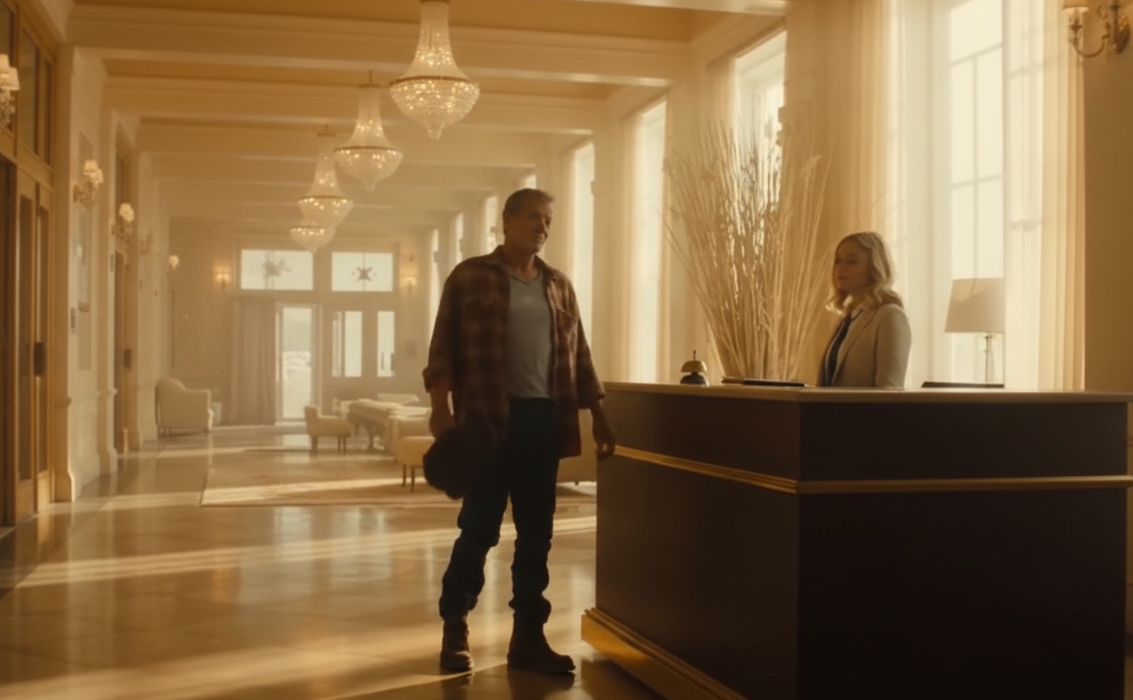
    The revolving doors of the Grandview Hotel spun slowly as a man in his early fifties stepped into the marble lobby. His work boots left faint dust prints on the polished floor.
    He wore a faded flannel shirt with soil stains on the sleeves. His jeans were worn thin at the knees. Anyone could see he’d spent the day working outdoors.
    The receptionist, Madison, glanced up from her computer. Her perfectly styled hair didn’t move as her eyes traveled from his boots to his weathered face.
    “Can I help you?” Her tone was already dismissive.
    “Yes ma’am. I’d like a room for tonight.”
    Madison’s lips pressed into a thin line. “Sir, our rooms start at four hundred dollars per night.”
    “That’s fine.”
    She blinked. “We’re a five-star establishment. Perhaps you’d be more comfortable at the Super 8 off the interstate?”
    A businessman in a gray suit chuckled from the sitting area. His colleague whispered something. They both smirked.
    The farmer smiled gently. “I appreciate the suggestion, but I’d prefer to stay here.”
    “Sir.” Madison’s voice sharpened. “This hotel caters to business executives and international travelers. I don’t thinkโ€””
    “You don’t think I can afford it?”
    “I didn’t say that.”
    “But you meant it.”
    Her cheeks flushed. “I’m trying to save you money. Our rooms are very expensive for someone whoโ€””
    “Someone who what?”
    The lobby went quiet. Three guests near the fireplace turned to watch.
    Madison’s jaw tightened. “Look, I’m busy. Maybe try somewhere else.”
    She turned back to her computer screen, dismissing him entirely.
    The security guard, Frank, shifted uncomfortably by the entrance. He’d worked here fifteen years. Something about this felt wrong.
    The farmer stood there for a long moment. Then he reached into his pocket.
    Madison didn’t look up. “Sir, I already told youโ€””
    He pulled out a sleek smartphone and dialed.
    “Hello, John? It’s me. I’m standing in your hotel lobby right now.”
    Madison’s fingers froze on her keyboard.
    The farmer’s voice remained calm, almost gentle. “Yeah, I tried to check in. There seems to be some confusion about whether I’m welcome here.”


    Silence stretched across the marble floor.
    “Uh-huh. Right at the front desk.” He paused. “Sure, I’ll wait.”
    He ended the call and placed the phone carefully on the counter. His calloused hands rested beside it.
    Madison’s confidence wavered. “Sir, who did you justโ€””
    The elevator chimed.
    A man in an expensive navy suit emerged, walking fast. Behind him, two managers in hotel blazers hurried to keep up.
    “Mr. Carter!” The suited man’s face lit up. “Why didn’t you tell me you were coming to Chicago?”
    The businessman in the gray suit stopped mid-conversation. His colleague’s mouth fell open.
    Madison went pale.
    The farmerโ€”Mr. Carterโ€”smiled warmly. “Didn’t want to make a fuss, John. Just needed a place to sleep.”
    John extended his hand. They shook like old friends. “We would’ve sent a car to O’Hare. Or straight to your farm in Iowa.”
    “I drove myself. Easier that way.”
    John turned toward Madison. His friendly expression vanished. “Why hasn’t Mr. Carter been checked in?”
    “Iโ€ฆ I thoughtโ€ฆ”
    “You thought what exactly?”
    “He wasn’t dressed like our usual guests, and I assumedโ€””
    “You assumed wrong.” John’s voice cut like ice.
    One of the managers stepped forward. “Mr. Carter supplies all the produce for our Michelin-star restaurant. Has for eight years.”
    Whispers erupted through the lobby.
    The businessman in the gray suit stood up abruptly, face red.
    Frank, the security guard, smiled to himself. He knew it.
    Madison’s hands trembled. “I’m so sorry, Mr. Carter. I didn’t knowโ€””
    “You didn’t know because you didn’t ask.” His voice stayed gentle, which somehow made it worse. “You saw dirt and assumed worthless.”
    “That’s not what Iโ€””
    “Yes, it is.” He wasn’t angry. Just tired. “You looked at my clothes and decided I didn’t belong.”
    “I made a mistake.”
    “You made a judgment.”
    John’s jaw clenched. “Mr. Carter, please accept our sincere apologies. Your usual suite is ready. Top floor, corner view.”
    But Carter raised a hand. “Before we go anywhere, I need to say something.”
    The lobby held its breath.
    He turned toward the gathered guests. Some looked away, embarrassed.
    “I wake up at four-thirty every morning. I work twelve-hour days, sometimes more during harvest season. My hands are rough because I use them. My clothes get dirty because that’s what happens when you grow food.”
    No one spoke.
    “The lettuce on your salad? I grew it. The tomatoes in your pasta? Mine. The cream in your coffee? From cows I raise.”
    The businessman who’d laughed earlier stared at his shoes.
    “I’m not telling you this to brag.” Carter’s voice stayed steady. “I’m telling you because somewhere along the way, we forgot that honest work has value. That the people who feed you matter just as much as the people who wear suits.”
    Madison’s eyes glistened. “Mr. Carter, I’m truly sorry. I was wrong to treat you that way.”
    He nodded once. “Thank you for saying that.”
    John stepped in. “Your stay is complimentary. It’s the least we can do.”
    “No.”
    Everyone froze.
    “No?” John looked confused.
    “I’ll pay full price. I came here as a customer, not looking for charity or special treatment.” Carter pulled out a worn leather wallet. “Four hundred dollars, you said?”
    Madison nodded, unable to speak.
    “Then that’s what I’ll pay.”
    He handed over his credit card. His name was embossed on it: “Thomas Carter, Carter Family Farms.”
    As Madison processed the payment with shaking hands, one of the managers leaned toward John and whispered something.
    John’s expression shifted. “Actually, Mr. Carter, there’s something you should know. The hotel owner wants to expand our farm-to-table program. We’ve been trying to reach you all week.”
    Carter raised an eyebrow. “I’ve been in the fields. No cell reception.”
    “We want to triple our order. Maybe quadruple. We’re talking about a half-million-dollar annual contract.”
    The lobby gasped. The businessman in the gray suit looked like he might faint.
    Carter considered this. “That’s a lot of vegetables.”
    “You’d need to hire more people. Expand your operation.”
    “I’d have to think about it.”
    “Of course. No pressure.” John smiled. “But the owner specifically requested you. Said your quality is unmatched.”
    Madison handed back his credit card, her hand trembling so badly she almost dropped it. “Mr. Carter, your room key. Iโ€ฆ I put you in the Presidential Suite. No extra charge.”
    “I said I’d pay full price.”
    “Please.” Her voice cracked. “Let me do this one thing right.”
    He looked at her for a long moment. Really looked. She was young, maybe twenty-four. Probably working her way through college. Trying to impress her bosses.
    “What’s your name?”
    “Madison.”
    “Madison, you made a mistake. That happens. We all do.” He took the key card. “The question is what you learn from it.”
    She nodded, tears spilling over. “I will. I promise I will.”
    Frank approached, offering to carry Carter’s single duffel bag. It was old military surplus, patched in three places.
    “I got it,” Carter said. “But thank you.”
    As they walked toward the elevator, the businessman in the gray suit stood up. “Mr. Carter?”
    Carter turned.
    “Iโ€ฆ I laughed when you came in. That was wrong. I apologize.”
    Carter studied him for a second. “What do you do for work?”
    “Investment banking.”
    “Good profession. Honest work.”
    “Not like yours.”
    “Different, not better or worse.” Carter extended his hand. “We all contribute something.”
    The banker shook it, looking humbled.
    In the elevator, John pressed the button for the top floor. “I meant what I said about that contract. The owner’s serious.”
    “I’ll think about it. Farming’s not just about money. It’s about the land. The animals. Doing right by them.”
    “That’s exactly why we want to work with you.”
    The doors opened to a hallway lined with expensive art. The Presidential Suite was at the end.
    Inside, floor-to-ceiling windows overlooked downtown Chicago. The sunset painted the sky orange and purple.
    Carter set his duffel on the bed. “This is too much.”
    “No, sir. It’s not nearly enough.”
    After John left, Carter stood at the window for a long time. The city sprawled below him, all glass and steel and ambition.
    He thought about his farm. The quiet mornings. The smell of fresh earth. His dog, Rusty, probably wondering where he was.
    This world down hereโ€”the marble lobbies, the thousand-dollar suits, the judgments based on appearancesโ€”it all felt foreign.
    But maybe that was okay. Maybe both worlds needed each other.
    His phone buzzed. A text from John: “Owner wants to meet for breakfast tomorrow. 8 AM. He’s excited.”
    Carter smiled and typed back: “I’ll be there. But I’m wearing my farm clothes.”
    Three dots appeared. Then: “Wouldn’t have it any other way.”

    Downstairs, Madison sat in the break room, her makeup ruined from crying. Her supervisor, Linda, sat beside her.
    “You could be fired for this,” Linda said quietly.
    “I know.”
    “Mr. Carter could file a complaint.”
    “I know.”
    “But he didn’t. John told me he specifically said you should keep your job. Said everyone deserves a second chance.”
    Madison looked up, shocked. “He said that?”
    “He also left something for you at the desk.”
    They walked back to the lobby. On the counter sat a small basket of vegetablesโ€”tomatoes, lettuce, carrotsโ€”and a handwritten note:
    “Madison – These came from my farm. They’re not fancy, but they’re grown with care. Sometimes the most valuable things don’t look like much at first glance. – T. Carter”
    She pressed the note to her chest and sobbed.
    Frank patted her shoulder. “Learn from it, kid. That’s all he’s asking.”

    Two months later, the Grandview Hotel’s restaurant unveiled a new menu. Every dish featured ingredients from Carter Family Farms. The owner, who’d met Thomas for breakfast that morning in November, stood at the podium during the press conference.
    “We’re proud to partner with Mr. Thomas Carter,” he announced. “A man who represents the best of American agriculture. The best of honest work.”
    Carter sat in the back row, uncomfortable with the attention. He wore a clean flannel shirt and his good jeans. Still farm clothes, but presentable.
    Madison, who’d been promoted to assistant manager, caught his eye and smiled. He nodded back.
    After the event, she approached him. “Mr. Carter, I wanted to thank you again.”
    “For what?”
    “For not getting me fired. For the vegetables. Forโ€ฆ teaching me something important.”
    “You taught yourself. I just gave you the chance.”
    “I tell that story to every new employee now. About respect. About not judging.”
    He smiled. “Then something good came from it.”
    As he drove back to Iowa that evening, past cornfields and small towns and silos silhouetted against the darkening sky, Thomas Carter felt something he hadn’t felt in years.
    Hope.
    Not for himselfโ€”he’d always had enough. But hope that maybe, just maybe, people were starting to remember what really mattered.
    That dignity wasn’t about designer labels or corner offices.
    It was about how you treated people. All people.
    And sometimes, the most important lessons came from the quietest voices.

    The next morning, Madison arrived at work to find a line of guests waiting to check in. Among them, a woman in paint-splattered overalls.
    Madison smiled. “Good morning, ma’am. Welcome to the Grandview. How can I help you today?”
    The woman looked surprised. “I’m here for a room. I’m an artist, just finished a gallery installation. I know I’m not dressed forโ€””
    “Your clothes don’t matter here,” Madison said warmly. “What matters is that you’re welcomed. Let me find you our best available room.”
    The woman’s eyes filled with tears. “Thank you.”
    Frank watched from his post by the door and smiled.
    Some lessons stick. Some changes last.
    And Thomas Carter, driving past his barn as the sun rose over Iowa, had no idea that the seeds he’d planted that day in Chicago were still growing.
    But they were.
    In small acts of kindness. In moments of respect. In the quiet revolution of treating people like people.
    That’s what real change looks like.
    Not loud. Not flashy.
    Just steady. Like planting seeds.
    And trusting them to grow.

  • Foster Kid Forced To Eat Off Diner Floorโ€”Then A Veteran Intervened

    Foster Kid Forced To Eat Off Diner Floorโ€”Then A Veteran Intervened

    A foster kid was forced to eat off a diner floor while everyone watchedโ€ฆ Until a scarred veteran stopped it with one word.

    Leo hadn’t eaten in two days. Not really eaten.

    Brenda kept the pantry locked. Always had. State checks came every month, but the food never made it to his plate.

    “You’ll eat when you earn it,” she’d say, smiling that church-lady smile.

    At Sally’s Diner, Leo stared at the menu like it was a test he’d already failed. Brenda sat across from him, waving at the Sunday crowd.

    “Just water for him,” she told the waitress. “He’s not hungry.”

    Leo’s stomach twisted. He was always hungry.

    The waitress hesitated. “Ma’am, he’s a growing boyโ€””

    “I said water.”

    Leo looked down. Don’t make it worse. Never make it worse.

    Then someone ordered pancakes at the next table. The smell hit him like a punch. His hands started shaking.

    “Please,” he whispered. “Just toast. I’llโ€””

    “Excuse me?” Brenda’s voice went ice-cold.

    The diner went quiet.

    “I didn’t say you could speak.”

    She stood up. Grabbed his water glass. Poured it over his head in front of everyone.

    “You want food? You think you deserve food?”

    She swept her arm across the table. A half-eaten plate from the booth behind them crashed to the floor. Eggs. Bacon. Hash browns in a puddle of grease.

    “Eat. On your knees. Like the animal you are.”

    No one moved. The church crowd. The families. The waitress with the coffeepot. Everyone just stared.

    Leo dropped to the floor. He’d done this before. At home, where no one could see. But never like this.

    His fingers touched cold tile.

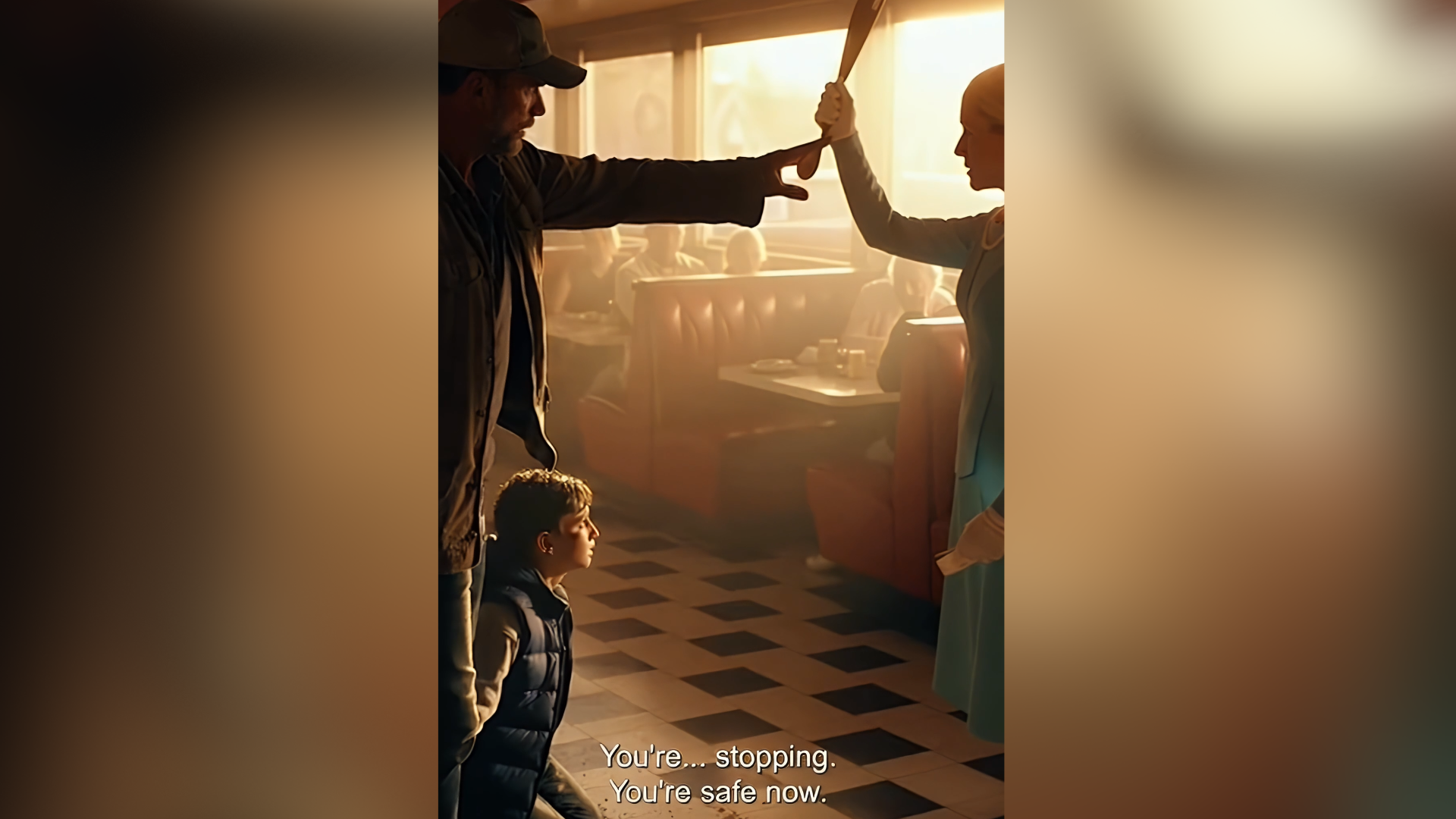
    “Stop.”

    The voice came from the corner booth. Quiet. Final.

    An older man stood up. Worn field jacket. Scar running down his neck. Eyes that had seen things Leo couldn’t imagine.

    Brenda laughed. “This is discipline. He’s my responsibilityโ€””

    “No.” The man walked closer. “That’s torture. And you know it.”

    “Who the hell do you thinkโ€””

    He caught her wrist mid-swing. Didn’t squeeze. Didn’t have to.

    “Everyone in this room,” he said, not looking away from Brenda. “You just watched this happen. You gonna keep watching?”

    Silence.

    “Pick him up.”

    The waitress moved first. Then a trucker from the counter. They helped Leo stand.

    “Now,” the man said to Brenda. “Apologize.”

    “I will notโ€””

    His grip tightened. Just slightly.

    “Apologize.”

    Brenda’s face went red. Then white. “I’m… sorry.”

    The man let go. Turned to Leo. “You’re coming with me.”

    They walked out into September sunshine. Leo’s shirt was still wet. His hands still shaking.

    The man’s truck was old. Military green. He opened the passenger door.

    “Name’s Elias. You’re Leo, right?”

    Leo froze. “How do youโ€””

    “Saw your file. At the courthouse.” Elias pulled out a brown bag from behind the seat. Sandwich. Apple. Water bottle. “Eat first. Talk after.”

    Leo ate like he was drowning. Elias just drove.

    “Where are we going?”

    “Police station. Your terms, not theirs.”

    Leo stopped chewing. “They won’t believe me. Brenda’sโ€”she’s on every church committee. Everyone loves her.”

    “Not everyone.”

    Elias turned down a dirt road instead of toward town.

    “I had a son,” he said quietly. “System took him when I came back from Vietnam. Said I wasn’t stable. They placed him with a ‘good family.’” His jaw tightened. “Found out later they were just like her. I was too late.”

    “I’m sorry.”

    “Don’t be sorry. Be ready. Because I’m not walking away this time.”

    They drove for twenty minutes before Leo saw the lights behind them.

    Sheriff Miller’s cruiser.

    “Eliasโ€””

    “I see him.”

    Elias pulled over. Miller got out slow. Hand on his gun.

    “Elias Grant. Thought that was you.” Miller smiled. It didn’t reach his eyes. “Need to have a word about the boy.”

    “He’s coming with me to report abuse.”

    “Abuse?” Miller laughed. “That what he told you? Kid’s a liar. Always has been. Brenda’s a saint putting up with him.”

    “She poured water on him and made him kneel in a diner full of witnesses.”

    Miller’s smile died. “Those witnesses didn’t see discipline turn into… whatever story you’re spinning. And here’s what I see: a registered felon with PTSD kidnapping a foster child.”

    Elias’s hands tightened on the wheel.

    “Step out of the vehicle. Both of you.”

    They got out. Leo felt his stomach drop.

    “Here’s how this ends,” Miller said. “I take the boy back to Brenda. You disappear before I charge you with kidnapping. Clean. Simple.”

    “No.”

    “Son, you’re not hearing meโ€””

    “I hear you fine, Sheriff. I hear you take payments from Brenda’s trafficking ring. I hear you bury complaints. I hear you’re dirty as they come.”

    Miller’s gun cleared the holster.

    “Run,” Elias told Leo.

    “I’m notโ€””

    “Run!”

    Leo ran. Behind him, he heard Miller shouting, Elias fighting, and then the crack of a gunshot that made his heart stop.

    But he kept running. Through the trees. Through the creek. Until his lungs burned.

    Then he stopped.

    You don’t leave people behind.

    The thought hit him like ice water. Elias didn’t leave him on that diner floor. Didn’t leave him with Brenda. Didn’t leave him with Miller.

    Leo turned around.

    When he got back, Elias was on the ground. Miller standing over him.

    “Should’ve run farther, kid.”

    Miller raised the gun.

    Leo grabbed a fallen branch and swung with everything he had.

    It connected with Miller’s knee. The sheriff went down hard. Gun skittered into the leaves.

    Elias grabbed it. Stood. Aimed at Miller’s chest.

    “Don’t move.”

    They waited like that until the state police arrived. The real ones. The ones Elias had called before they ever left the diner.

    The ones who’d been investigating Miller for months.


    Six months later, Leo walked into Sally’s Diner wearing clean clothes that actually fit. Elias was already in a booth. Same spot as before.

    But everything else was different.

    Brenda was in county jail awaiting trial. Miller too. The foster ring had collapsed. Seventeen kids removed. Three more arrests coming.

    Elias looked older. Thinner. Parole ankle monitor visible under his jeans.

    “They treating you okay?” Elias asked.

    “Yeah. New family’s good. Real good.” Leo sat down. “Got my own room. They don’t lock the pantry.”

    “Good.”

    The waitress came over. The same one from before.

    “What can I get you, hon?”

    “Pancakes,” Leo said. “And bacon. And eggs. Andโ€””

    She smiled. “I’ll bring you the hungry-boy special.”

    When she left, Elias slid something across the table. A patch. Eagle wings. Like the one on his old jacket.

    “What’s this?”

    “Reminder. Eagles hunt. Eagles protect. They don’t eat off floors.”

    Leo picked it up. Turned it over in his hands.

    “The lawyer said you might not get custody. Because of the arrest record.”

    “I know.”

    “But she said I can visit. Once you’re off parole.”

    “I know that too.”

    They sat quiet for a minute. Then the food came. Mountains of it.

    Leo picked up his fork. Looked at Elias.

    “One rule,” Elias said. “The only one that matters.”

    “What’s that?”

    “You don’t eat off the floor. Ever again.”

    Leo cut into his pancakes. Golden butter melting into syrup.

    “I eat at the table,” he said.

    Elias nodded. “That’s right. You eat at the table.”

    Outside, the town was waking up. Church bells. Sunday traffic. Life moving on.

    But in that booth, two people who’d saved each other sat and ate breakfast like it was the most important meal in the world.

    Because it was.

  • โ€‹ฬฒ๐โ€‹ฬฒ๐€โ€‹ฬฒ๐‘โ€‹ฬฒ๐“โ€‹ฬฒ โ€‹ฬฒ๐Ÿ: Billionaire Hears Dead Wife’s Song… Then Sees Who’s Singing It

    โ€‹ฬฒ๐โ€‹ฬฒ๐€โ€‹ฬฒ๐‘โ€‹ฬฒ๐“โ€‹ฬฒ โ€‹ฬฒ๐Ÿ: Billionaire Hears Dead Wife’s Song… Then Sees Who’s Singing It

    A billionaire heard his dead wife’s song from a homeless girl on a Seattle street… Then he saw her eyes and his world shattered.

    The rain hammered Seattle’s downtown like it had a grudge. I sat in the back of my Maybach, stuck in gridlock on 4th Avenue, moving numbers on a screen that meant nothing. Julian Thorne. Tech billionaire. Empty mansion. Dead wife. Ten years since Elena died. Ten years of breathing without living. “Traffic’s locked, Mr. Thorne,” Marcus said from the driver’s seat. “Accident ahead. Twenty minutes, maybe more.”

    I lowered the window an inch. Needed air that didn’t taste like leather and regret. That’s when I heard it. “Sleep now, the stars are fadingโ€ฆ the moon has lost its glowโ€ฆ” My finger froze over the tablet screen. My heart actually stopped. That song.

    Elena wrote it three days before the crash. Never recorded it. Only sang it to me when my nightmares came back. “Marcus. Unlock the doors.” “Sir, it’s pouringโ€”” “Now!” I shoved the door open and ran into the rain. She was under a boarded-up storefront awning. Maybe ten years old. Wearing a men’s coat five sizes too big, sleeves rolled up, hair plastered to her pale face. Plastic cup.

    A few pennies. People rushed past like she didn’t exist. But she kept singing, eyes closed, head tilted back. “Wait for me in the morning lightโ€ฆ wait for me, I knowโ€ฆ” When she opened her eyes, I saw them. One hazel. One blue. Elena’s eyes. I stood there, a billionaire in a three-thousand-dollar suit, shaking in the rain. Not from cold. From seeing a ghost. — The girl stopped singing.

    Pressed back against the graffiti-covered wall, clutching her cup. “I’m not begging,” she stammered. “I’m selling a performance. It’s legal.” “Where did you learn that song?” She blinked water from her lashes. “What?” “That song. Who taught you?” “My mom. Before she left.”

    Her stomach growled. Loud, angry. She wrapped her arms around herself, ashamed. I looked down. Sneakers splitting at the toes, wrapped in duct tape. Empty honey bun wrapper beside her feet. “You’re hungry.” “I’m fine.” “I can buy you food. Just tell me your name.” She studied me. Weighing risk. Starvation versus stranger danger. “Mia.” “Okay, Mia. That’s my car.” I pointed to the Maybach.

    “I’m getting sandwiches from that bakery. Will you wait?” She looked at Le Pain Quotidien, glowing warm and yellow. “Why do you care?” “Because I haven’t heard that song in ten years. And I’d pay everything I have to hear it again.” She saw the grief in my face. Kids who grow up hard can smell trauma. “Turkey club,” she said, chin up. “And hot chocolate. With whipped cream.”

    Before I could move, a rusted pickup screeched to the curb, splashing dirty water everywhere. A woman stumbled out. Thin, frantic, waitress uniform. Gaunt face, wide eyes. “Mia! Get in the truck! Now!” Mia went pale. The defiance vanished. “Aunt Brenda. I didn’t make enough yet. It’s raining, nobody’s stoppingโ€”” “I don’t care!” Brenda grabbed Mia’s collar.

    “Forty dollars or you don’t come home! Who’s this?” She spun on me. Didn’t see a widower. Saw a wallet. “He was bothering me,” Mia lied instantly, trying to protect me. “Yeah?” Brenda stepped close. Cigarettes and cheap perfume. “You yelling at my kid, rich boy?”

    I straightened. The Julian Thorne who crushed boardroom deals resurfaced. “I was offering dinner. Something you clearly haven’t done.” Brenda’s face twisted. She shoved Mia toward the truck. “Get in.” “Wait.” I reached into my soaked jacket, pulled out my money clip. Didn’t count. Tossed the whole thingโ€”two thousand dollarsโ€”at her feet. Brenda stared. Then that greedy grin split her face.

    “Compensating for something?” She snatched it up, dirt and all. “Keep it. But if I see her begging again, I’m calling the cops.” Brenda laughed, harsh and barking. Jumped in the truck. As it peeled away, I saw Mia’s face pressed against the dirty glass. Mouthing: “Thank you.” I stood there until the taillights disappeared. “Mr. Thorne?” Marcus held an umbrella. Too late. “Sir, you’re shivering.”

    I wasn’t cold. “Get the license plate.” “Already did, sir.” “Find where they live. Cancel my London flight.” “Sir?” “I’m not going anywhere. I found her.” — By midnight, I had a file. Marcus was ex-Special Forces. He still had contacts. “Brenda Kowalski. Age 42. Multiple arrests. Petty theft, check fraud, child endangerment.” The mugshot showed the same hard eyes. “The girl?” “Mia Kowalski.

    Age 10. Niece. Mother’s listed as Sarah Kowalski.” I frowned. “Sarah?” “Brenda’s younger sister. Died in childbirth ten years ago. State hospital.” Ten years ago. Same timeline as Elena’s death. But Elena was an only child. Or so she’d told me. “Where do they live?” “Ironwood Trailer Park. South side, near the industrial district. Not a good place, Julian.” I grabbed my coat. “Get the car.”

    “It’s midnight. You can’t walk into Ironwood in a suitโ€”” “I don’t care. She’s sleeping in a place run by someone who makes her beg in the rain. I’m not waiting.” — Ironwood was a scar. Rusting metal boxes, razor wire fences, barking dogs on chains. Burning trash and diesel fumes. The Maybach crept through potholes. We stood out like blood on snow. “That’s the truck.” Parked crooked in front of trailer 409. Windows covered in tin foil. Siding peeling off in strips. I didn’t wait for Marcus. Stepped into the mud. TV blaring inside. Drunk laughter. I pounded on the aluminum door.

    “Police?” A man’s voice. Rough. “No. Open the door.” A lock tumbled. A large man in a stained undershirt blocked the doorway, holding a beer. Behind him, Brenda sat on a torn sofa, counting my wet cash. “Who the hell are you?” “The man who paid for your beer tonight.” I pushed past him. “Hey!” Brenda jumped up, stuffing cash in her bra. “You can’t justโ€”” “Where is she?”

    “She’s sleeping. Get out before I call the cops.” “Go ahead. I’d love to explain why a ten-year-old was working a street corner at 9 PM.” Brenda hesitated. She couldn’t win that fight. “What do you want?” “I want to see her.” She pointed a jagged fingernail toward a narrow door. “She’s in her room.” I walked over. Pushed it open. Not a room. A closet. No bed. Just blankets on the floor.

    Damp walls. Single bulb. Mia was curled up, still in that oversized coat. Shivering in her sleep. But what broke me was the photograph taped to the wall. Two women on a beach. Wind in their hair. Laughing. One was a strangerโ€”Sarah, presumably. The other was Elena. My knees hit the floor. Mia gasped awake, scrambling back into the corner. “It’s okay. It’s me. From the bakery.”

    She stared at me with those mismatched eyes. Looked at the photo. Back at me. “You knew her,” she whispered. “She was my wife.” “She’s my Auntie. My mom said Auntie Elena was the only one who loved us.” The pieces slammed together. Violent. Sharp. Elena had a secret sister. And this girl was my family. “Get up, Mia.” “What?” “You’re not sleeping here. Not tonight. Not ever.”

    “Hey!” Brenda appeared, the large man behind her. “That’s kidnapping!” I turned. The sadness was gone. Just cold rage. “Marcus.” Marcus stepped into the hallway, filling it. Jacket unbuttoned enough to show the shoulder holster. “Handle the trash. I’m taking my niece home.” — The drive to Medina was silent. Heavy silence. Mia sat far away, clutching her dirty coat.

    Every bump made her flinch. “You have a big house,” she whispered when we pulled through the gates. “It’s too big. It echoes.” Inside, she stopped on the marble floor. Looked at her muddy sneakers. Tried to step back outside. “I’m getting it dirty.” I knelt down. “You can walk anywhere. Paint the walls with mud if you want. This is your home now.” “Nothing’s free. Brenda said.

    What do I have to do?” “Just be a kid. And maybe tell me about your mom. When you’re ready.” Later, I found her by the open fridge, eating cold pasta straight from the container. Fast. Eyes darting. She was eating like she didn’t know when the next meal would come. I didn’t stop her. Just leaned against the counter. “The chef makes pancakes in the morning. Whatever you want.” She paused, noodle hanging from her lip. “I like strawberry.” “Then strawberry it is.” She swallowed.

    “Why didn’t Auntie Elena tell you about me?” A knife in my chest. “I don’t know. But I’m going to find out.” — That night, after Mia locked herself in the guest roomโ€”a habit that would take years to breakโ€”I went to the West Wing. I hadn’t entered in five years. Elena’s music room. A Steinway piano under a dust sheet. I pulled it off. Pressed Middle C. The note rang out. Lonely. Sharp. Why, Elena? My hand brushed the underside of the bench. Felt something. Tape. Elena used to hide things. A game we played. I peeled back an envelope. Addressed to: “Julian. For when I’m brave enough.”

    Three letters inside. And Mia’s birth certificate. “My Dearest Julian,” the first began. Shaky handwriting. “If you’re reading this, I finally told you. Or I’m gone. I hope I told you.” “I lied. I’m not an only child. I have a sister, Sarah. My parents disowned her when she got pregnant at sixteen. Threw her out to protect the Vanderwaal name.” I gasped. The Vanderwaals. Old money. Ruthless East Coast elite. Elena had told me she came from nothing. “I tried to help her. But my father threatened me. Said if I told you, he’d destroy your career. He’d bury us in scandals. I was scared, Julian.

    I wanted to protect you. So I kept them secret.” “Sarah just had a baby. Mia. She has my eyes. I’m meeting them next week. I’m bringing them home. I don’t care about threats anymore. We’ll fight my father together.” The date: October 14th, 2014. The day before Elena died. She wasn’t driving to a spa. She was driving to get Sarah and Mia. The crash orphaned Mia and left me alone. I looked up, tears streaming. “I would’ve fought the world for you, Elena.” Now I knew my mission. Finish my wife’s last wish. — Peace lasted forty-eight hours. Third morning, Mia was laughing at Marcus juggling oranges, eating strawberry pancakes with a knife and fork. The house felt alive. Then the intercom buzzed.

    “Mr. Thorne. Police are here. And a lawyer. They have a warrant.” My blood froze. “Don’t let them in.” “Sir, they say it’s about a kidnapping.” Mia dropped her fork. The clatter echoed. “Is it Brenda?” “Stay here. Marcus, don’t let anyone touch her.”

    Two officers burst through the door. A man in a cheap suit. And behind them, Brenda. She’d cleaned up. Modest dress. Brushed hair. Playing the grieving aunt. “That’s him!” She pointed. “He stole my baby!” “Mr. Thorne.” The officer looked uncomfortable. He recognized me. “We have a report you forcibly removed a minor.” “I removed a child from abuse. She was sleeping in a closet.

    Begging in the rain.” “Lies!” The cheap-suit lawyer cut in. “My client is struggling with poverty. You’re a billionaire who thinks he can buy people. Felony.” “Where is she?” Brenda shouted. “Mia! Baby! Come to Auntie!” From the dining room: “No! I don’t want to go!” The officer looked at me. “You have no legal standing. No custody papers. We have to return her.

    Fight it in court. But right now, you’re bordering on arrest.” “She’s my wife’s niece. I have proof.” “Doesn’t matter now,” the lawyer smirked. “No custody rights. Hand her over. Or jail.” I looked at Brenda’s smug face. She didn’t want Mia. She wanted the payout. But I couldn’t let Mia go back. Not for an hour. “Marcus. Bring the car around back.” “Sir?” The officer’s hand went to his holster. “Don’t do anything stupid.” “I’m not.” I pulled out my phone. “I’m calling the Governor. And the best family law firm in the state. But until then…” I looked at Brenda. “How much?” Silence. “Excuse me?”

    The lawyer blinked. “You don’t want the girl. You want money. How much to sign temporary guardianship right now? Until court.” Brenda’s mask slipped. The predator returned. She licked her lips. “Fifty thousand.” “Done. Write it down.” “Brenda!” Her lawyer hissed.

    “Shut up! We can get millions!” “Fifty thousand cash. Right now.” I turned to the officer. “You hear that? She’s selling the child. Is that legal guardianship or trafficking?” The officer’s face hardened. “Ma’am, did you just offer to sell custody?” Brenda paled. “No, I… he offered…” “Get out of my house. Officer, remove these trespassers. I’ll see them in court. And I will bury them.”

    Brenda scrambled back. But as police ushered them out, she screamed: “This isn’t over, Thorne! The Vanderwaals know! I called them! Her grandfather’s coming for her too!” The door slammed. The Vanderwaals. Elena’s parents. The people who destroyed her sister. I’d handled Brenda. Now I was going to war with real monsters. — They didn’t wait for court.

    People like the Vanderwaals buy verdicts before gavels hit. Two days later, three black SUVs rolled through my gates. I’d sent Mia to the greenhouse with Marcus. She was planting strawberries. I didn’t want her to see sharks. Richard Vanderwaal walked in. Seventy. Expensive suit. Silver lion’s head cane. Wife Catherine behind him, Botox face frozen in disdain. I hadn’t seen them since Elena’s funeral. They hadn’t cried then. Wouldn’t now. “Julian. You look tired.”

    “Surprised you came personally. Usually send lawyers.” “This is family business,” Catherine said, inspecting my foyer. “We’re here to collect our granddaughter.” “Granddaughter?” I laughed without humor. “For ten years she was a mistake you let rot in a trailer. You disowned Sarah. Let her die alone.” Richard slammed his cane on the marble. The sound echoed violently. “We did what was necessary to protect this family’s name! Sarah brought shame. And now you have this child creating noise. Gossip.

    We don’t like noise.” “So you want to hide her. Ship her to boarding school in Switzerland so the world doesn’t know about your illegitimate heir.” “We’re offering courtesy,” Richard sneered. “Hand her over, we walk away. Refuse, and we bury you. I know about your merger next month. One phone call kills it. I’ll drain your assets, Julian. You’ll end up on the street with that brat.”

    Valid threat. The Vanderwaals had establishment money. Banks. Senators. But I had something stronger. “I found the letters, Richard.” Deadly silence. Catherine’s face twitched. “What letters?” “Elena wrote before she died. Detailed everything. How you threatened her. Blackmailed her to keep Sarah secret. Told her if she helped her sister, you’d destroy my career.”

    I pulled a photocopy from my jacket. Held it up. “October 14th, 2014. ‘My father says he’ll ruin Julian if I bring Sarah home. But I can’t let my niece starve.’” I looked at Richard. Color drained from his face. “Dated the day before the crash. The world thinks Elena died in a tragic accident. But if I release this? Show the great philanthropist Richard Vanderwaal drove his daughters to their deaths for reputation?” I stepped forward. “Your stock tanks. Your board ousts you.

    You’re a pariah from here to the Hamptons. Care about your name? I’ll burn it to the ground.” Richard stared. His hand on the cane trembled. Looked at Catherine. She looked away. They knew a dead beloved daughter’s final words would be a PR nuclear bomb.

    “What do you want?” “Sign the papers. Full relinquishment. You never see her. Never speak to her. Never mention her name.” “And the letters?”

    “Stay in my safe. Insurance. As long as Mia’s safe and happy, your secret dies with me.” Richard glared with pure hatred. Then walked to the table. Signed with a furious scrawl. Catherine followed. Without a word, they left. Didn’t ask to see Mia. Didn’t ask if she was happy. They just wanted to escape the truth. I watched the SUVs drive away. Sat on the stairs, clutching the papers.

    “Mr. Thorne?” Mia stood at the hallway entrance, holding a basket of strawberries. Hands covered in dirt. Marcus behind her, smiling. “Are the bad people gone?” I smiled through tears. “Yes, Mia. Gone for good.” — Six months later. Seattle Symphony Hall. Sold out.

    Chandeliers glittered above tuxedos and evening gowns. I sat center box, adjusting my tie. Not checking my phone. Not looking at stock prices. Leaning forward. Hands clasped. The conductor raised his baton. The orchestra went silent. A small figure walked onto the stage. Mia wore a midnight blue dress that shimmered under the spotlight. Hair clean and curled. Face healthy and full of color. Not the street urchin in a men’s coat anymore. A princess. She walked to the microphone.

    Looked at the vast darkness of the audience. For a second, I saw the old fear. I stood up. Breach of etiquette. Didn’t care. I wanted her to see me. I nodded. I’m here. Not leaving. Mia saw me. Took a breath. Signaled the pianist. She didn’t sing opera. Didn’t sing a classic. She sang the song. “Sleep now, the stars are fadingโ€ฆ the moon has lost its glowโ€ฆ” Her voice soared through the hall. Clearer. Stronger than in the rain. Not just a child singing. A soul pouring out years of pain and finding release.

    The audience was mesmerized. No coughing. No rustling. Just the pure, haunting sound of Elena’s melody coming back through the daughter she died trying to save. “Wait for me in the morning lightโ€ฆ wait for me, I knowโ€ฆ” When she hit the high noteโ€”the one that stopped my car six months agoโ€”it wasn’t a cry for help. It was a victory cry. A declaration that she survived the storm.

    I closed my eyes. For the first time in ten years, I didn’t see the crash. I saw Elena. Standing on a beach. Wind in her hair. Smiling. She wasn’t waiting for me to join her in death. She was watching us live. The song ended. The final note hung, shimmering. Three seconds of silence. Then the hall erupted. People on their feet. Clapping. Cheering. Some wiping tears.

    Mia beamed. Looked up at my box and waved. I waved back. Heart full. Ghost finally laid to rest. I’d stopped my car to save a homeless girl. Didn’t realize she was saving me. The rain had stopped. The morning light was finally here.

  • โ€‹ฬฒ๐โ€‹ฬฒ๐€โ€‹ฬฒ๐‘โ€‹ฬฒ๐“โ€‹ฬฒ โ€‹ฬฒ๐Ÿ: They Pushed Her Down the Stairs โ€” Then Her Soldier Father Walked In

    โ€‹ฬฒ๐โ€‹ฬฒ๐€โ€‹ฬฒ๐‘โ€‹ฬฒ๐“โ€‹ฬฒ โ€‹ฬฒ๐Ÿ: They Pushed Her Down the Stairs โ€” Then Her Soldier Father Walked In

    They shoved my daughter down the stairs for a viral videoโ€ฆ
    But they didnโ€™t know her father had just returned from combat โ€” and he didnโ€™t come alone.

    Gravity doesnโ€™t ask permission.
    It just takes.

    I was standing at the top of the West Wing stairs at Oakridge High when it happened.

    Lunch bell still echoed through the building. Lockers slammed shut. The air smelled like cheap perfume layered over disinfectant โ€” sweet, sharp, familiar. That scent always meant Chloe was nearby.

    I felt the shove before I heard the laughter.

    A hard push between my shoulder blades.

    My sneakers slid on the polished tile. My sketchbook โ€” charcoal portraits, all of them of my dad in different uniforms, different years โ€” flew from my hands.

    Then the stairs swallowed me whole.

    Shin. Hip. Shoulder.

    Twelve steps of pain.

    My body tumbled like a ragdoll, brown arms flailing, curls whipping across my face, until the landing knocked the breath from my lungs. I tried to scream, but nothing came out. Just a sharp gasp and ringing ears.

    Above me, laughter poured down like rain.

    โ€œDid you get it?โ€ Chloe shrieked.

    โ€œPerfect angle,โ€ Sarah said.

    I tried to move. My ankle exploded with pain. I looked up.

    Three girls. Phones raised. Camera lights blinking.

    Not help.

    Content.

    โ€œPlease,โ€ I croaked.

    Chloe leaned over the railing. She was pale, blonde, perfect โ€” everything Oakridge loved. She zoomed in on my face, swollen already.

    โ€œAww,โ€ she said. โ€œPost it. #ClumsyLoser.โ€

    I curled inward, dark skin scraped raw against the tile, wishing I could disappear. Wishing my dad wasnโ€™t halfway across the world. Wishing being quiet, being mixed, being invisible had ever actually protected me.

    Then the sound changed.

    Not sneakers.

    Boots.

    Heavy. Measured. Intentional.

    Thud.
    Thud.
    Thud.

    The glass doors at the end of the hall swung open.

    Seven men stepped inside.

    They moved like one body.

    Dust clung to their boots. MultiCam uniforms. American flags stitched to their shoulders. Sun-darkened skin on some, lighter brown on others โ€” a brotherhood forged somewhere far louder than a high school hallway.

    The noise died instantly.

    At the center walked my father.

    Sergeant Major Marcus Bennett.

    Tall. Broad shoulders. Skin the color of warm mahogany. Close-cropped hair just beginning to gray at the temples. Eyes sharp enough to cut steel.

    He wasnโ€™t supposed to be home for two more weeks.

    He saw me immediately.

    Father turned Soldier in a heartbeat.

    He dropped to his knees beside me, hands suddenly gentle, cradling my face like I was glass. โ€œIโ€™ve got you,โ€ he said, voice low and steady. โ€œIโ€™ve got you, baby.โ€

    Behind him, his squad spread out, forming a wall without being told.

    A camera flash popped.

    Chloe was still filming.

    โ€œWhoโ€™s that hobo?โ€ she laughed nervously.

    My father stood.

    Slowly.

    The hallway seemed to shrink around him.

    โ€œWho,โ€ he said, his voice calm but carrying like thunder, โ€œpushed my daughter?โ€

    No one answered.

    Chloeโ€™s phone slipped from her fingers, bouncing down the steps until it stopped at his boots.

    He crushed it under his heel.

    Didnโ€™t look away.

    โ€œI donโ€™t repeat myself.โ€

    As he climbed toward them, step by deliberate step, Doc โ€” the medic โ€” was already kneeling beside me, hands sure, voice calm.

    โ€œPossible concussion,โ€ he said. โ€œAnkleโ€™s bad.โ€

    At the top landing, Chloeโ€™s face drained of color.

    She tried to back away.

    She ran into muscle.

    Tex and Tiny blocked the corridor effortlessly.

    โ€œGoing somewhere?โ€ Tex asked, polite as Sunday dinner.

    My father stopped inches from Chloe.

    Didnโ€™t yell. Didnโ€™t threaten.

    Didnโ€™t need to.

    โ€œIn my unit,โ€ he said quietly, โ€œwhen someone falls, we pick them up. We donโ€™t laugh. We donโ€™t film.โ€

    A teacher rushed forward. โ€œSir, you canโ€™tโ€”โ€

    My father turned once, eyes steady, controlled. โ€œThis is assault.โ€

    He faced Chloe again.

    โ€œYouโ€™re going to help her.โ€

    With shaking hands, the girls lifted me. My weight felt heavier with every step โ€” guilt has gravity too. Students lined the hallway, phones raised, but not for me.

    For them.

    For the impossible image of bullies carrying the girl they broke.

    In the nurseโ€™s office, my father stopped them.

    โ€œWeโ€™ll wait for the principal,โ€ he said. โ€œAnd the parents.โ€

    Chloeโ€™s mother arrived like a hurricane in heels and silk, outrage blazing.

    She took one look at my fatherโ€™s uniform, then at my brown face wrapped in ice, and sighed sharply.

    She reached for her checkbook.

    โ€œHow much?โ€ she snapped.

    My father didnโ€™t blink.

    He placed a flash drive on the desk.

    โ€œHallway cameras,โ€ he said. โ€œDeleted cloud footage. Planning. Laughter. The push.โ€

    Her hand froze.

    โ€œFelony assault,โ€ he continued. โ€œPremeditated.โ€

    Silence swallowed the room.

    โ€œExpulsion,โ€ my father said. โ€œOr the police. And the media.โ€

    The checkbook sagged.

    She nodded.

    โ€œOne more thing,โ€ my father added, turning to Chloe. โ€œA video. The truth. Public.โ€

    Chloe sobbed.

    Then she recorded it.

    We walked out into the sunlight together โ€” my father on one side, Doc on the other.

    The squad peeled away at the curb, grinning, bumping fists, ruffling my curls.

    At home, my father handed me my battered sketchbook.

    โ€œIt survived,โ€ he said, writing inside the cover:

    To Maya โ€” the strongest soldier I know.

    My phone buzzed.

    Chloeโ€™s apology was live.

    I set the phone down and picked up my pencil.

    I looked at my father โ€” dusty boots, tired eyes, unbreakable love.

    โ€œIโ€™m drawing,โ€ I said.

    He smiled.

    โ€œIโ€™m not going anywhere.โ€

  • Military Dad Shows Up At School In Uniformโ€”What He Did Next Left Everyone Speechless

    Military Dad Shows Up At School In Uniformโ€”What He Did Next Left Everyone Speechless

    Bullies locked a Colonel’s daughter in the bathroom for an entire classโ€ฆ What he did when he arrived at school left the principal speechless. Full story in the comments.

    Colonel James Mitchell had spent twenty-three years defending his country. He’d survived two tours in Afghanistan, led soldiers through impossible situations, and earned more medals than he could count. But nothingโ€”absolutely nothingโ€”prepared him for the war his twelve-year-old daughter Emma was fighting alone in the hallways of Riverside Middle School.

    It started in September, subtle at first. Emma’s favorite notebooks went missing. Her locker was covered in cruel graffiti. She’d come home quieter each day, retreating to her room the moment she walked through the door. Her mother, Sarah, noticed firstโ€”the way Emma flinched when her phone buzzed, how she’d started wearing baggy hoodies to hide herself, the fake smile she’d paste on when they asked about her day.

    “Just normal middle school stuff,” Emma would say, but her eyes told a different story.

    The bullies were a group of four girls led by Madison Parker, whose father sat on the school board. They were calculated in their cruelty. They’d shove Emma into lockers when teachers weren’t looking, spread vicious rumors about her family, destroy her homework assignments. They called her “Army Brat” and “Wannabe” and worse things Emma refused to repeat to her parents.

    Emma tried to handle it herself. She was a military kidโ€”tough, resilient, taught to adapt and overcome. She reported incidents to teachers, who’d say, “Just ignore them, honey.” She went to the guidance counselor, who suggested she “try to understand where they’re coming from.” She even confronted Madison directly, which only made things worse.

    The breaking point came on a Tuesday in late November.

    The bullies cornered Emma between classes, shoving her into the girls’ bathroom. Madison stood guard at the door while the others taunted her, filming on their phones as Emma tried not to cry. Then Madison locked the door from the outside with a makeshift wedge, trapping Emma inside for the entire next period.

    Emma pounded on the door until her hands hurt. She called out until her voice went hoarse. No one came. She sat on the cold tile floor, hugging her knees, feeling more alone than she ever had in her life. When a janitor finally found her seventy minutes later, Emma walked to the nurse’s office in silence, called her mother, and said just four words: “Mom, I need Dad.”

    That evening, Emma finally broke down. She showed her parents everythingโ€”the videos she’d secretly recorded on her phone over the past three months. Shoves in the hallway. Destroyed belongings. Cruel whispers captured on audio. Messages and posts spreading lies about her. The bathroom incident. All of it, documented with timestamps and dates.

    James Mitchell watched each video with the same controlled expression he’d worn during mission briefings in Kandahar. But inside, a father’s rage was building like a storm.

    “Why didn’t you tell us sooner, sweetheart?” Sarah asked gently.

    “Because I didn’t want to be weak,” Emma whispered. “You’re both so strong. I thought I should be too.”

    James pulled his daughter close. “Asking for help isn’t weakness, Emma. It’s strategy. And now we’re going to deploy some.”

    The next morning, Colonel Mitchell walked into Riverside Middle School in his full dress uniformโ€”the one with all the medals, the one that commanded respect in any room. Emma walked beside him, her hand in his, her spine a little straighter than it had been in months.

    They went straight to Principal Warren’s office. The secretary tried to stop themโ€””He’s very busy this morning, you’ll need to scheduleโ€””

    “I don’t need to schedule anything,” James said calmly but firmly. “Tell him Colonel Mitchell is here regarding the ongoing assault of his daughter, and he has exactly two minutes to make himself available.”

    Principal Warren appeared almost immediately, his smile patronizing. He was a soft man in his late fifties who’d never faced anything more challenging than budget meetings and parent complaints about homework loads.

    “Colonel Mitchell, of course, please come in. I understand Emma had a little incident yesterdayโ€””

    “A little incident?” James’s voice could have cut steel. “My daughter was imprisoned in a bathroom for over an hour by students who have been systematically tormenting her for three months. That’s not an incident. That’s assault and false imprisonment.”

    Warren waved his hand dismissively. “Now, Colonel, I know military life can be stressful, but we need to keep perspective. These are just kids’ problems. Girls this age can be dramatic. They’re just jealous of Emmaโ€”it’ll pass. It always does.”

    Sarah, who’d been silent until now, spoke up. “My daughter has documented bruises. She’s developed anxiety. She’s talked about not wanting to go to schoolโ€””

    “Mrs. Mitchell, I appreciate your concern, but I’ve been an educator for thirty years. I know how middle school girls operate. This is just a phase. Emma needs to develop thicker skinโ€””

    That’s when James Mitchell opened his daughter’s phone and placed it on the desk.

    “These are just kids’ problems?” He pressed play on the first video. The sound of Emma being shoved into a locker, her books scattering. Madison’s voice: “Stay down where you belong, loser.”

    Warren shifted uncomfortably. “That’s unfortunate, butโ€””

    James played another. And another. Three months of documented abuse, each video more damning than the last. The bathroom incident played out in real-time audioโ€”Emma’s pleas, the girls’ laughter, the sound of her eventually crying alone.

    The principal’s face had gone pale.

    “Here’s what’s going to happen,” James said, his voice military-calm, which was somehow more terrifying than shouting. “Copies of every single one of these videos have already been sent to my lawyer, to the school district superintendent, to the school board, and to my contact at the local news station. My lawyer has prepared a detailed case documenting the school’s negligence and failure to provide a safe learning environment for my daughter.”

    He leaned forward slightly. “You have two options, Principal Warren. Option one: You take immediate and decisive action today. The students involved are suspended pending a full investigation. The teachers who ignored my daughter’s complaints are formally reprimanded. A comprehensive anti-bullying policy is implemented schoolwide. Emma receives a written apology, and her safety is guaranteed.”

    James let the silence hang for a moment.

    “Option two: I act tomorrow. My lawyer files suit against the school, the district, and you personally for negligence and creating a hostile environment. Those videos go public. The news stationsโ€”who love stories about military families being failed by institutions they trustโ€”will run it on every evening broadcast. The school board, which I’m told includes the father of the ringleader, will have some very uncomfortable questions to answer about why they allowed this to continue.”

    Principal Warren’s hand trembled slightly as he reached for his desk phone.

    “I’ll also be filing formal complaints with the state education board,” James continued. “And I’ll be requesting a full audit of how this school handles bullying complaints. Given that multiple staff members ignored my daughter’s repeated reports, I suspect this isn’t an isolated incident.”

    Warren looked like he might be sick. “Colonel Mitchell, there’s no need forโ€””

    “There’s every need. My daughter has spent three months in hell because the adults responsible for her safety decided it was easier to look away. Because you decided the daughter of a school board member was more important than a military kid who’d eventually move away anyway. That ends today.”

    Emma squeezed her father’s hand. For the first time in months, she felt like someone actually heard her.

    “So what’s it going to be, Principal Warren?” James asked. “Do you act today? Or do I act tomorrow?”

    The principal picked up his phone with shaking hands. “Get me the district superintendent. Now.”

    What followed was a whirlwind. Madison and her three accomplices were suspended for two weeks, pending a full investigation. Their parents were called in for mandatory meetings. The teachers who’d ignored Emma’s complaints received formal reprimands in their files. Principal Warren himself was placed on administrative leave while the district reviewed his handling of the situationโ€”a leave that would become permanent reassignment to a district office position by Christmas.

    A school-wide assembly was held about bullying. A new reporting system was implemented. Counselors were brought in. Emma’s storyโ€”without her nameโ€”became a case study in what not to ignore.

    But the moment that mattered most happened in the hallway after that first meeting.

    Emma threw her arms around her father, tears streaming down her faceโ€”but this time, they were tears of relief. “Thank you for believing me, Dad. Everyone else said I was being dramatic or that it would pass, but you believed me.”

    James held his daughter tight, this brave girl who’d endured months of torment and still showed up every day. “I will always believe you, Emma. Always. And I will always fight for you. That’s what parents do. That’s what soldiers do. We protect the people who can’t protect themselves.”

    “I tried to protect myself,” Emma said quietly. “I really did.”

    “I know you did, sweetheart. And you were incredibly brave. But you shouldn’t have had to fight this battle alone. The adults failed you, and that’s on us to fix.”

    Sarah joined the embrace, and for a long moment, the Mitchell family stood together in that hallway, a united front against a world that had tried to break their daughter.

    Over the following weeks, things changed. Madison and her friends stayed far away from Emma when they returned. Other studentsโ€”kids who’d been silent witnesses to the bullyingโ€”started saying hello to Emma in the halls. A few even apologized for not speaking up. Emma made new friends, real friends who appreciated her strength and kindness.

    She still had tough days. Three months of trauma doesn’t vanish overnight. But she had her family, she had justice, and most importantly, she had her voice back.

    On Veterans Day, Emma’s class did presentations about family members who served. When Emma stood up to talk about her father, she didn’t just talk about his medals or his deployments.

    “My dad taught me that courage isn’t just what you do on a battlefield,” she told her classmates. “It’s standing up when institutions fail. It’s believing someone when no one else will. It’s fighting for what’s right, even when it’s hard. My dad’s a hero not just because he served our country, but because when I needed someone to believe me, to fight for me, to protect meโ€”he did. Without hesitation. That’s what real courage looks like.”

    There wasn’t a dry eye in the classroom, including the new teacher’sโ€”someone who’d been hired specifically because she had a background in trauma-informed education and took student safety seriously.

    That evening, James found the video of Emma’s presentation on the school’s website. He watched it three times, this decorated colonel who’d faced down enemy combatants and life-threatening situations, wiping tears from his eyes at his daughter’s words.

    Sarah found him in his office. “You okay?”

    “I spent my whole career protecting strangers,” he said quietly. “But nothing I’ve ever done mattered more than protecting her. Nothing.”

    “You did more than protect her, James. You taught her that her voice matters. That she deserves to be heard. That standing up for herself isn’t weaknessโ€”it’s strength. She’ll carry that lesson her whole life.”

    Months later, Emma would write an essay for English class about courage. She didn’t write about her father’s military service, though she was proud of it. She wrote about the courage it took to ask for help. The courage to document injustice even when you’re terrified. The courage to keep showing up even when every day feels impossible.

    And she wrote about what real support looks likeโ€”not dismissing someone’s pain as “drama,” not telling them to “just ignore it,” not protecting bullies because their parents have influence. Real support is believing someone when they speak their truth. It’s taking action even when it’s uncomfortable. It’s using your power to protect those who have less power than you.

    Her essay won a state-wide competition. The prize was a scholarship fund and an invitation to speak at a conference on school safety.

    When Emma stood at that podium months later, a confident thirteen-year-old who’d survived her trial by fire, she looked out at the audience of educators, administrators, and policymakers and spoke the truth they needed to hear.

    “When students come to you for help, they’re not being dramatic. They’re not overreacting. They’re asking you to do your job. And when you dismiss them, when you protect bullies, when you tell them it will passโ€”you’re teaching them that their safety doesn’t matter. That their voice doesn’t matter. That they don’t matter.”

    She paused, letting that sink in.

    “My father is a military officer. He fights for people he’s never met, in countries far from home. But when I needed him most, he fought for me. He believed me when others wouldn’t. He took action when others looked away. Every child deserves that. Every child deserves adults who will fight for them. Who will believe them. Who will protect them.”

    “Don’t wait for a parent to walk into your office with evidence and legal threats. Act the first time a child asks for help. Because every day you wait is another day that child suffers. Another day they lose faith in the adults who are supposed to keep them safe. Another day they learn that their pain doesn’t matter.”

    “Be the adult who believes them. Be the adult who acts. Be the adult who changes their life by simply listening and caring enough to do something about it.”

    The standing ovation lasted five minutes.

    And somewhere in the audience, Principal Davis of Riverside Middle Schoolโ€”the new principal who’d replaced Warrenโ€”wiped tears from his eyes and made a silent promise to do better, to be better, to remember why he’d become an educator in the first place.

    Because one father’s courage had sparked a daughter’s voice, and that voice was changing the system that had failed her.

    That’s the real victory. Not just justice for one girl, but a movement toward protecting all of them.