Category: Deep

  • Golden Son Mocks Brother at Funeral—Then the Lawyer Stood Up
    Golden Son Mocks Brother at Funeral—Then the Lawyer Stood Up

    He mocked his “adopted” brother at the funeral… Then the lawyer stood up with a 30-year-old DNA test.

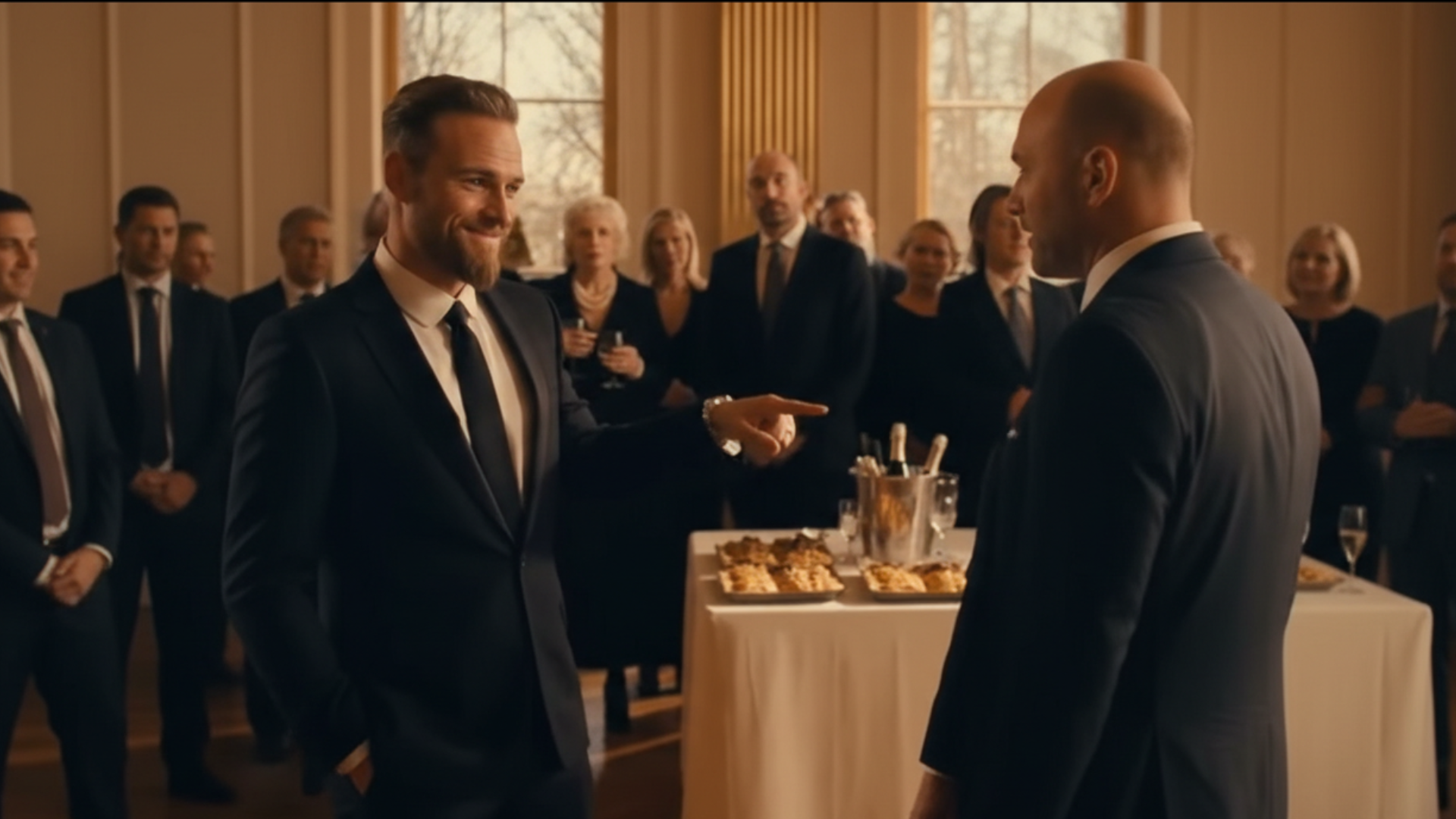
    The crystal chandeliers caught every whisper in the Connecticut estate’s ballroom. Two hundred guests in black silk and Italian wool stood in clusters, champagne flutes balanced on crisp white napkins.

    Marcus adjusted his Rolex and raised his voice. “A toast to Dad—who built an empire and left it to someone who actually carries his legacy forward.”

    His brother Daniel stood by the catering table in a rented suit, refilling water pitchers.

    “Not you, obviously,” Marcus said, turning to point at Daniel. “You were charity. A tax write-off with a bedroom.”

    Scattered gasps rippled through the crowd. Daniel’s jaw tightened, but he said nothing.

    Marcus’s wife Victoria looped her arm through his, diamond tennis bracelet flashing. “Marcus, maybe not here—”

    “Why not here?” Marcus spread his arms wide. “Everyone knows the truth. Dad took pity on some kid from nowhere, gave him a roof, paid for his state school education. Meanwhile, I went to Yale. I ran the international division. I’m the son who mattered.”

    Daniel set down the water pitcher with shaking hands.

    “You were never really family anyway,” Marcus continued, his voice carrying across the silent room. “After today, you’ll go back to whatever mediocre life you had planned, and I’ll be running Dad’s companies. Fifty million dollars and four corporations. Not bad for an afternoon’s work.”

    Victoria squeezed his arm. “The lawyer’s here. Should we—”

    “Let him wait.” Marcus grabbed a champagne flute from a passing tray. “I want to enjoy this moment.”

    An elderly woman in pearls approached Daniel. “Are you all right, dear?”

    “I’m fine, Mrs. Chen.” Daniel’s voice was barely audible.

    “Your father loved you very much,” she whispered. “More than you know.”

    Before Daniel could respond, a sharp voice cut through the room. “If everyone could take their seats.”

    Howard Brennan, the family attorney for thirty-five years, stood at the front of the ballroom beside a mahogany podium. His gray suit was immaculate, his expression unreadable.

    Marcus strode to the front row and dropped into a leather chair. “Finally. Let’s make this official.”

    Victoria settled beside him, smoothing her black Chanel dress.

    Daniel remained standing in the back, hands clasped behind him.

    Howard pulled reading glasses from his jacket pocket. “Before we begin, I need to clarify something. The will I’m about to read is not the one filed with the probate court last week.”

    Marcus frowned. “What?”

    “Your father changed his will eight days before his death.” Howard’s voice was steady. “He left specific instructions that the new will was to be read here, in front of all gathered witnesses, with no prior notification to family members.”

    Victoria’s hand found Marcus’s knee. “That’s unusual.”

    “It’s invalid,” Marcus snapped. “You can’t just change a will a week before dying and—”

    “I can assure you, it’s entirely valid.” Howard opened a leather folder. “Witnessed by three attorneys, notarized, filed appropriately. Your father was exceptionally clear-minded and specific about his wishes.”

    The room went silent.

    Howard cleared his throat. “The Last Will and Testament of Richard Anthony Castellan, dated November second. ‘I, Richard Castellan, being of sound mind and body, do hereby revoke all previous wills and codicils.’”

    Marcus leaned back, confidence returning. “Get on with it.”

    “‘To my son Marcus Castellan, I leave the sum of one dollar, to be paid immediately upon the reading of this will.’”

    The room erupted.

    Marcus shot to his feet. “What?!”

    “‘One dollar,’” Howard repeated calmly. “‘And nothing more.’”

    “That’s impossible! I’m his son! I’m—”

    “Please sit down, Mr. Castellan.” Howard’s tone sharpened. “I’m not finished.”

    Victoria’s face had gone white. She didn’t pull Marcus back down.

    Howard continued. “‘To my son Daniel Castellan, I leave the entirety of my estate, including all liquid assets, all real property, all business interests, and all personal effects. This includes Castellan Industries, Castellan International, Castellan Properties, and Castellan Investments.’”

    Daniel’s knees buckled. Mrs. Chen caught his elbow.

    “The estimated value,” Howard added, “is fifty-three million dollars.”

    “This is insane!” Marcus’s voice cracked. “He’s not even—Dad adopted him! Some random kid! You’re giving fifty million dollars to—”

    “That’s where you’re wrong.” Howard reached into his folder and pulled out a sealed envelope. “Your father left this letter to be read aloud immediately following the will.”

    Marcus’s breathing was ragged. “I’ll contest this. I’ll sue. I’ll—”

    Howard broke the seal and unfolded cream-colored stationery. “‘Marcus, if you’re hearing this, you’ve just learned you’ve been disinherited. You deserve an explanation.’”

    The room was so quiet, the rustle of paper sounded like thunder.

    “‘Thirty-two years ago, I had an affair. I’m not proud of it. Your mother—Catherine—and I were going through a difficult time. The woman’s name was Sarah Mitchell. She worked in our Chicago office. When she became pregnant, I offered support, but she refused. She wanted nothing from me except my absence.’”

    Daniel’s face had gone gray.

    “‘Sarah raised Daniel alone until she died when he was sixteen. Cancer. She told him on her deathbed who his father was. He showed up at our door three days after her funeral with a birth certificate and a letter Sarah had written.’”

    Marcus groped for his chair, missing it, nearly falling.

    “‘I did a paternity test immediately. Daniel is my biological son. My blood. But your mother begged me not to tell you. She said you—Marcus—were fragile. That you needed to believe you were the favorite, the heir, the golden child. She convinced me that bringing Daniel into the family as “adopted” would be easier for you.’”

    Howard paused, letting that sink in.

    Victoria’s hand had slipped away from Marcus’s entirely.

    “‘I agreed, Marcus, because I loved your mother. Because she was dying of the same cancer that took Sarah. Because she asked me with her last breath to give you a chance to become the man she believed you could be.’”

    Someone in the crowd was crying softly.

    “‘I gave you sixteen years, Marcus. Sixteen years to show kindness to your brother. Sixteen years to prove you could be generous, humble, family-minded. Instead, you became cruel. You mocked Daniel at every turn. You called him charity. You made him feel small.’”

    Marcus’s face was the color of old newspaper.

    “‘The final straw was last Christmas, when you told Daniel he didn’t deserve a place at the family table because he “wasn’t real family.” You said this in front of twenty guests. You laughed when he left the room.’”

    Howard looked up briefly. “There’s more. ‘I decided that day that you would get nothing. That the funeral would be your last moment of false glory before the truth destroyed every lie you’d built your identity on.’”

    Marcus made a choking sound.

    “‘Daniel is my biological son. You, Marcus, are not.’”

    The room exploded into chaos.

    Howard raised his voice. “The letter continues. ‘Your mother and I adopted you when you were three days old. We loved you. We gave you everything. But you were never my blood, Marcus. Daniel is.’”

    Marcus turned to look at Daniel, his face a mask of horror and disbelief.

    Howard pulled out another document. “Your father also left this.” He held up a DNA test results page. “Dated August 1995. Confirming Daniel Castellan is Richard Castellan’s biological son with 99.9% certainty.”

    He pulled out a second page. “And this. Marcus Castellan’s adoption papers from Presbyterian Hospital, filed November 1988.”

    The pages were passed down the rows. Guests craned to see them.

    Victoria stood abruptly. “I need air.”

    “Vic—” Marcus reached for her.

    She jerked away. “Don’t touch me.”

    “What? Why are you—”

    “You told me you were inheriting fifty million dollars, Marcus.” Her voice was ice. “You told me your father built his empire for you. That you were blood. That Daniel was just charity your dad took pity on.”

    “I didn’t know! I swear I didn’t—”

    “You’ve been lying to me for two years.” Victoria pulled off her wedding ring and dropped it on the floor. It bounced twice, a tiny metallic ping. “We’re done.”

    “Victoria, please—”

    “My lawyer will contact you.” She walked out, heels clicking on marble.

    The room watched her go in stunned silence.

    Marcus turned back to Howard, desperation flooding his face. “There has to be a mistake. Dad wouldn’t—he raised me. He called me his son. He—”

    “He gave you every chance,” Howard said quietly. “He hoped, until the very end, that you’d change. That you’d show Daniel even a shred of kindness. You didn’t.”

    Marcus looked around the room at two hundred faces staring at him with pity, shock, or satisfaction.

    His gaze landed on Daniel.

    Daniel stood frozen, Mrs. Chen still holding his elbow, his eyes wet.

    “You,” Marcus whispered. “You knew. You knew this whole time and you just—”

    “I didn’t know.” Daniel’s voice cracked. “He never told me. I thought I was adopted too. I thought—”

    “Liar!”

    “I’m not lying!” Daniel stepped forward. “Do you think I wanted this? Do you think I wanted Dad to—” His voice broke completely. “I just wanted a family, Marcus. That’s all I ever wanted.”

    Marcus stared at him, chest heaving.

    “You had everything,” Daniel continued, tears streaming down his face. “You had Dad’s name, his attention, his pride. I got table scraps and your contempt. I would’ve traded it all just to have you treat me like a brother.”

    “You’re not my brother.”

    “Apparently, I’m more your brother than you ever were mine.”

    The silence that followed was deafening.

    Howard closed his folder. “The estate will be transferred to Daniel within thirty days. Marcus, your dollar will be provided in cash before you leave today. That concludes the reading.”

    Marcus didn’t move.

    Guests began to stand, murmuring, glancing between the two brothers.

    Mrs. Chen approached Marcus gently. “Your father loved you both, dear. But love isn’t enough when there’s no kindness to nurture it.”

    Marcus looked at her with hollow eyes. “I have nothing now.”

    “You have what you built yourself,” she said softly. “If you built anything at all.”

    Within the hour, the ballroom had emptied.

    Daniel sat alone in a leather chair, staring at the folder Howard had left him. Inside were keys to four companies, deeds to three properties, and a handwritten letter from his father.

    He opened it with shaking hands.

    “Daniel, you won’t understand this now, but you will one day. I didn’t leave you money to hurt Marcus. I left it to you because you’re my son, and because you have the heart I hoped Marcus would develop but never did. Use it wisely. Use it kindly. Build something better than I did. I love you. I’m sorry I couldn’t say it more when I was alive. —Dad”

    Daniel folded the letter carefully and pressed it to his chest.

    Six months later, Daniel launched the Sarah Mitchell Foundation, dedicated to supporting children who’d lost parents to cancer. The first donation was five million dollars.

    Marcus’s LinkedIn profile listed him as “Sales Associate” at a mall electronics store in Stamford.

    His divorce was finalized in three months. Victoria remarried within a year—to a hedge fund manager she’d apparently been seeing for eighteen months.

    Marcus sent Daniel one text message during that time: “Did you know?”

    Daniel replied: “No. But I wish Dad had just told us both the truth from the start. I wish you’d been kinder. I wish a lot of things.”

    Marcus never responded.

    On the one-year anniversary of Richard Castellan’s death, Daniel visited his grave alone. He placed two bouquets—one on his father’s headstone, one on his mother Sarah’s, two rows away.

    As he turned to leave, he saw Marcus standing by the cemetery gates, fifty yards away, watching.

    They locked eyes for a long moment.

    Daniel raised one hand in a small wave.

    Marcus stared, then turned and walked away.

    Daniel stood in the cold autumn air, watching him go, and felt the strangest mix of grief and relief.

    His father’s words echoed in his mind: Build something better than I did.

    He intended to.

  • CFO Fires IT Guy In Front Of Everyone—His Response Destroyed Her

    CFO Fires IT Guy In Front Of Everyone—His Response Destroyed Her

    CFO fires the “useless” IT guy in front of the whole company for a system crash… But he wasn’t IT—he owned 51% of the company and had six months of evidence proving she’d been embezzling millions

    The all-hands meeting was supposed to last twenty minutes. It lasted six.

    “Can someone PLEASE explain why our entire system crashed this morning?” Victoria Chen’s voice cut through the conference room like a blade. She stood at the front, arms crossed, her Hermès blazer sharp enough to draw blood.

    Fifty employees sat in uncomfortable silence. I stayed in the back corner, laptop bag on my knees.

    “You.” Victoria pointed directly at me. “IT guy. The one who’s been here what, six months? Stand up.”

    I stood slowly.

    “What’s your name again?”

    “David Morrison.”

    “David.” She said it like the word tasted bad. “Your system crashed our payment processing for three hours this morning. Do you understand how much money that cost us?”

    “It wasn’t my—”

    “I don’t want excuses.” She stepped closer, heels clicking on the hardwood. “I want answers. Did you or did you not touch the server configuration yesterday?”

    “I ran a routine backup. Standard protocol.”

    Victoria laughed. Actually laughed. “Standard protocol. This is a Series B company, not your college dorm room.”

    A few nervous chuckles rippled through the crowd.

    “The crash happened because someone disabled the redundancy failsafe,” I said quietly. “That wasn’t me.”

    “Oh, so now you’re blaming someone else?” Victoria turned to address the room. “This is what happens when you hire bottom-tier contractors to save money. They break things, then point fingers.”

    My jaw tightened. I’d heard worse in the past six months.

    “You’re fired,” Victoria said. “Effective immediately. Linda will process your final payment. Clean out your desk and leave your badge at reception.”

    The room went dead silent.

    “Actually,” I said, “I quit.”

    Victoria blinked. “Excuse me?”

    “I quit. Because I’m firing you.”

    Someone near the front gasped.

    Victoria’s smile was pure venom. “Are you having some kind of breakdown? Security—”

    “Before you call security, you might want to check your calendar.” I pulled out my phone. “You have a board meeting scheduled in fifteen minutes. Conference Room B.”

    Her face went pale. “How do you—”

    “I scheduled it. Three weeks ago. Unanimous vote required for executive termination.” I glanced at my watch. “You have fourteen minutes.”

    “This is insane.” But her voice had lost its edge. “Who the hell do you think you are?”

    “David Morrison.” I met her eyes. “Alexander Morrison’s son.”

    The room erupted. Whispers, gasps, someone’s chair scraping back.

    Victoria’s face cycled through emotions—confusion, disbelief, rage. “Alex didn’t have a son. He told me—”

    “He had a son who was in grad school when he died. A son who inherited fifty-one percent of this company.” I let that sink in. “Thirteen minutes.”

    “You’re lying.” But she was already pulling out her phone, fingers shaking as she scrolled. “This is some kind of con. Alex left everything to me. I was his partner, his—”

    “You were his CFO. Not his beneficiary.” I opened my laptop, turned it toward the room. “My father died of a heart attack eighteen months ago. Sudden. Unexpected. You told everyone he wanted you to run the company.”

    “He did!”

    “Then explain why the will filed with his attorney names me as primary heir. Explain why you never mentioned me to the board. Explain why you filed paperwork claiming he had no living relatives.”

    Victoria’s knuckles were white on her phone. “I don’t have to explain anything to some IT contractor who—”

    “I wasn’t just IT.” I pulled up a folder on my screen. “I was documenting. Every day for six months.”

    Her eyes went wide.

    “Screen recordings,” I said. “Keystroke logs. Every transfer you made to those offshore accounts. Every falsified expense report. Every email to your contact in the Cayman Islands.”

    “That’s illegal surveillance—”

    “That’s lawful monitoring of company resources by the majority shareholder. My lawyer assures me it’s completely admissible.” I glanced at my watch again. “Eleven minutes. You should probably head to Conference Room B.”

    “This is a coup.” Victoria looked around the room desperately. “He’s trying to steal the company that Alex built. You all know me. You know what I’ve done here—”

    “We know you’ve been bleeding us dry,” said Sarah Chen from product. She stood up, phone in hand. “I got an email this morning. From David’s lawyer. With documentation.”

    Three more people stood. Then five. Then ten.

    “You’ve been rejecting our raises for a year,” said Marcus from engineering. “Said we couldn’t afford it. But you bought a house in Napa. And a condo in Miami.”

    “I have private investments—”

    “With company money.” I advanced the slides on my laptop. The first image appeared on the conference room screen—a wire transfer receipt. “Forty thousand dollars from our operating account to your personal LLC. Tagged as ‘consulting fees.’”

    Victoria lunged for the laptop. I stepped back smoothly.

    “Here’s another one.” Click. “Sixty-five thousand. Vendor payment for marketing services that were never rendered.” Click. “Ninety thousand. Equipment purchase from a company that doesn’t exist.”

    “Stop—”

    Click. Click. Click. The images kept coming.

    “In six months,” I said, “you transferred two-point-three million dollars out of this company. You almost destroyed what my father built.”

    Victoria’s face was red, then white, then gray. “You can’t prove those weren’t legitimate—”

    “I can. The FBI can too.” I nodded toward the glass doors.

    Two agents in dark suits stood in the hallway. They’d been there the whole time.

    Victoria saw them. Her knees actually buckled. She grabbed the edge of the conference table.

    “The board meeting starts in nine minutes,” I said quietly. “But I don’t think you’ll make it.”

    The lead FBI agent pushed open the door. “Victoria Chen?”

    “This is—this is a mistake—”

    “Ma’am, we have a warrant for your arrest on charges of wire fraud, embezzlement, and falsification of corporate documents.” He held up the paperwork. “You have the right to remain silent.”

    Victoria looked at me, and for the first time, I saw actual fear.

    “My father trusted you,” I said. “He called you brilliant. He thought you’d take care of his company after he was gone.”

    “I did take care of it—”

    “You gutted it. You fired good people to hide the budget holes. You delayed product launches because you’d stolen the development funds. You told everyone my father wanted you in charge because you needed them to believe it.”

    The agent stepped forward with handcuffs.

    “Wait.” Victoria’s voice cracked. “David. Please. We can work this out. I can pay it back. I can—”

    “You told the whole company I was useless,” I said. “You humiliated me in front of fifty people. Called me bottom-tier.”

    “I didn’t know—”

    “That’s not an apology. That’s regret about getting caught.”

    The handcuffs clicked shut.

    “Victoria Chen, you’re under arrest.” The agent began reading her rights as he guided her toward the door.

    She twisted back to look at me. “You set this up. You planned this whole thing.”

    “I documented evidence of a crime. You committed the crime.”

    “Alex would never—”

    “My father would have turned you in himself.” I closed my laptop. “He built this company to help people. You turned it into your personal ATM.”

    The agents led her out. Through the glass walls, I watched them walk her past the rows of desks, past the reception area with its inspirational quotes my father had chosen, past the framed photo of the original team.

    The conference room stayed silent for a long moment.

    Then Sarah spoke up. “What happens now? To the company?”

    I turned to face them. Fifty pairs of eyes. Scared. Uncertain. Hopeful.

    “First, we fire the entire executive team who helped her or looked the other way.” I pulled up a list. “Three VPs. Two directors. All complicit or negligent. They’re gone by end of day.”

    A few people shifted uncomfortably.

    “Second, we promote from within. Sarah, you’re the new head of product. Marcus, you’re CTO. Linda, you’ve been holding HR and finance together with duct tape—you’re COO.”

    Sarah’s hand went to her mouth. Marcus just stared.

    “Third, we restructure. I’m not interested in running a traditional hierarchy. My father wanted this company to be different. So we’re going to be.” I pulled up the next slide. “Employee ownership structure. Everyone in this room gets equity. Real equity. Voting shares.”

    The silence broke. People started talking, gasping, a few even crying.

    “You’re serious?” Linda asked. “Actual ownership?”

    “My father built this company with twenty people who believed in him. You’re the people who stayed when she was gutting the budget. You’re the ones who deserve to own it.”

    “But you own fifty-one percent,” someone called out.

    “I’m transferring thirty percent to an employee pool. I keep twenty-one percent and a board seat. You elect the rest of the board. You vote on major decisions.” I smiled. “That’s what my father would have wanted.”

    Marcus stood up. Then Sarah. Then the whole room. Someone started clapping. Then everyone.

    I held up my hand. “One more thing. The money she stole? The FBI’s going to seize her assets. The house. The condo. The offshore accounts. It won’t be all of it, but we’ll get about sixty percent back.”

    “What do we do with it?” Linda asked.

    “Raises. Retroactive to when she started cutting pay. Plus bonuses. Plus the expansion into AI tools we shelved last year.” I looked around the room. “We’re going to build what we should have built eighteen months ago.”

    Sarah wiped her eyes. “Why’d you wait six months? If you knew she was stealing—”

    “I needed proof. Incontrovertible, FBI-grade proof. And I needed to understand who in this company was part of it versus who was just scared.” I picked up my laptop bag. “Also, I needed to make sure she fired me in front of everyone.”

    “Why?” Marcus asked.

    “Because I wanted you all to see who she really was. I wanted witnesses when the truth came out.” I headed for the door. “Board meeting is in seven minutes. Anyone who wants to attend is welcome.”

    Conference Room B was smaller. More intimate. The board members were already seated—two investors, one independent director, and my father’s old attorney.

    I took my seat at the head of the table. The chair my father used to sit in.

    “Let’s begin,” I said. “First order of business: formal termination of Victoria Chen as CFO and CEO, effective immediately upon her arrest, which occurred approximately four minutes ago.”

    The investors exchanged glances.

    “All in favor?”

    Five hands went up. Unanimous.

    “Second order of business: company restructure to employee ownership model. I’m distributing materials now.”

    I spent the next hour walking them through it. The equity distribution. The voting structure. The financial projections showing how this would actually make the company more profitable, not less.

    “Your father would love this,” the attorney said quietly. “He always said the best companies were the ones where everyone had skin in the game.”

    “That’s why I’m doing it.”

    By five PM, the paperwork was filed. By six PM, the news had spread through the entire office. By seven PM, I was sitting in my father’s old office—my office now—looking at the photo on the desk.

    My father and me. Hiking in Yosemite. Three months before he died.

    My phone buzzed. A message from Sarah: “We’re ordering pizza for everyone. Celebration. You coming down?”

    I looked at the photo one more time.

    “I think we did okay, Dad,” I said to the empty room.

    Then I headed downstairs to join my company.

    Our company.

  • Bank Teller Mocks Elderly Woman—Then She Says Her Name

    Bank Teller Mocks Elderly Woman—Then She Says Her Name

    A teen bank teller mocked an elderly woman asking “stupid questions” about her account… Then she quietly said her name to the manager.

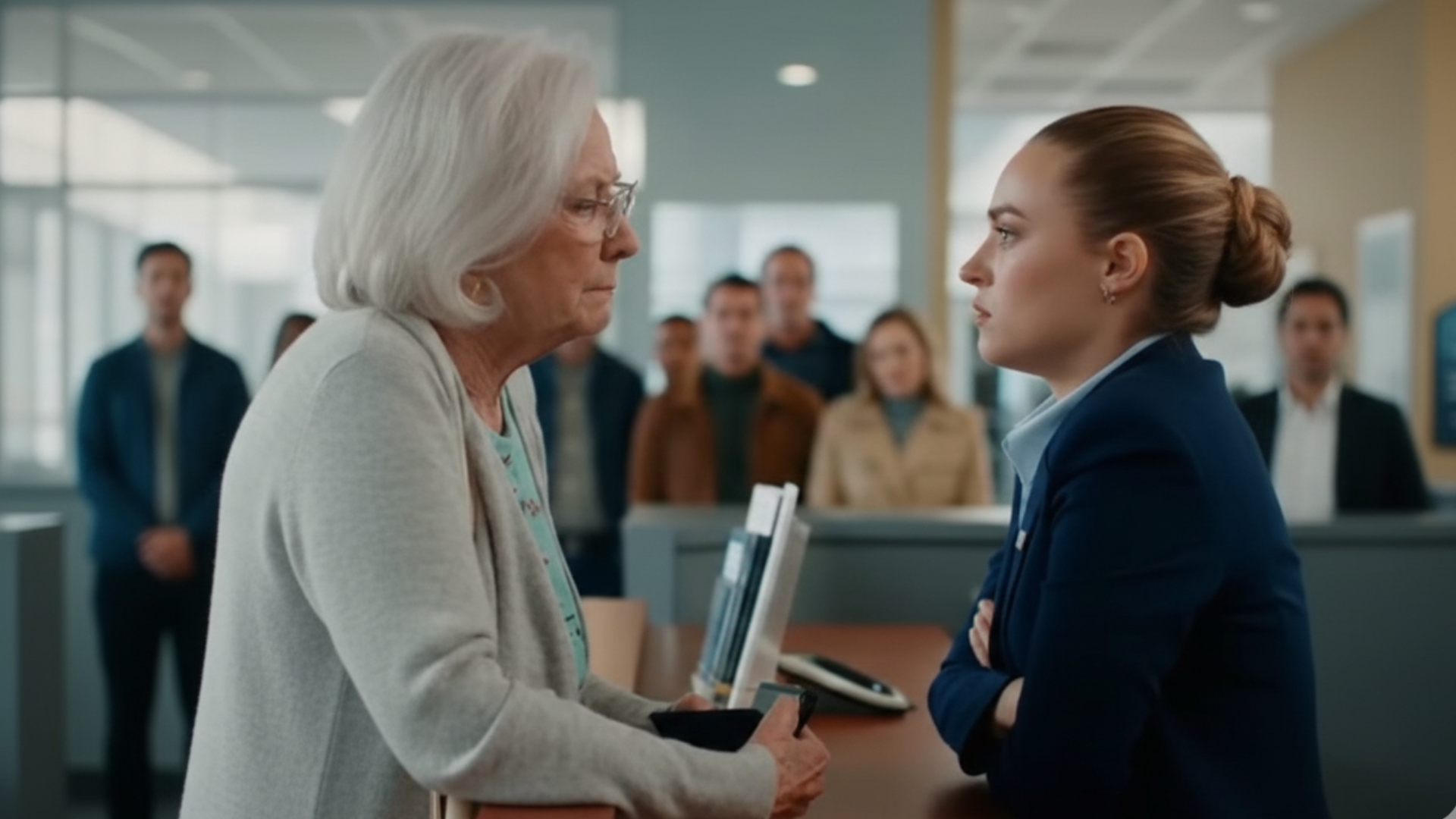
    Dorothy Morrison stood at the counter, her wrinkled hands trembling slightly as she held her checkbook. The mid-morning sun streamed through the bank’s tall windows.

    “Ma’am, I already explained this twice,” the young teller said, her voice rising. “You need to use the app. It’s not that hard.”

    Dorothy adjusted her glasses. “I’m sorry, dear. I just want to understand how to see my balance without—”

    “Without wasting everyone’s time?” The teller, her nameplate reading “Brittany Chen,” rolled her eyes. “Look, there’s a line behind you. Can you step aside and figure this out?”

    Behind Dorothy, a man in a business suit shifted impatiently. A mother with two children checked her phone.

    “I apologize,” Dorothy said softly. “I’m 80 years old. Technology is difficult for me.”

    Brittany laughed. “Maybe you shouldn’t have accounts you can’t manage.”

    Dorothy’s face remained calm. “Could I speak with your manager, please?”

    “Oh my God.” Brittany threw up her hands. “Fine. Waste his time too.”

    She pressed a button on her phone. “Tom? Yeah, some old lady with stupid questions. Can you deal with this?”

    The man behind Dorothy muttered something to his companion. The mother pulled her children closer, uncomfortable.

    Dorothy stood perfectly still, her hands folded over her checkbook.

    A middle-aged man in a tie emerged from a back office. “What seems to be the problem?”

    Brittany waved dismissively at Dorothy. “She doesn’t understand online banking and won’t step aside.”

    Tom approached with a practiced smile. “Ma’am, I’m Tom Reynolds, branch manager. How can I help?”

    Dorothy looked at him with steady blue eyes. “Tell me, Tom. How long have you worked for this bank?”

    He blinked, surprised. “Uh, seven years. Why?”

    “And you, dear?” Dorothy turned to Brittany. “How long?”

    Brittany crossed her arms. “Three months. Not that it’s your business.”

    Dorothy nodded slowly. “I see.” She paused. “Tom, could you tell Richard Carlson that Dorothy Morrison is here? He’s expecting me at ten thirty.”

    Tom’s face went white. “I’m sorry… Dorothy Morrison?”

    “Yes.” She smiled gently. “Though I prefer Dot.”

    Brittany frowned. “Who cares what your name is?”

    Tom grabbed Brittany’s arm, his grip tight. “That’s Mrs. Morrison. She—” He stopped, his voice shaking. “She owns this bank.”

    The lobby went silent. Every conversation stopped.

    “Not quite,” Dorothy corrected. “I’m the majority shareholder. My late husband, Frank Morrison, founded this bank in 1974. I chair the board of directors.”

    Brittany’s mouth opened. No sound came out.

    “I visit branches quarterly,” Dorothy continued. “Unannounced. I like to see how our employees treat customers when they think no one important is watching.”

    A woman in the line pulled out her phone, recording.

    Tom’s face had gone from white to gray. “Mrs. Morrison, I am so deeply—”

    “I’ve been standing here for twelve minutes,” Dorothy said. “I asked simple questions about accessing my account statements. Your employee called my questions stupid. Twice. She suggested I shouldn’t have accounts I can’t manage.”

    Brittany started backing away. “I didn’t know—”

    “No,” Dorothy said, her voice hardening. “You didn’t know who I was. But that shouldn’t matter, should it?”

    The mother in line spoke up. “I heard everything. She was horrible to her.”

    The businessman nodded. “Completely unprofessional.”

    Tom’s hand shook as he pulled out his phone. “Mrs. Morrison, please, let me call Richard right now—”

    “He’s already on his way,” Dorothy said. “We have a ten-thirty quarterly review. I always arrive early to observe.” She looked directly at Brittany. “I’ve been watching you for twenty minutes before I got in your line.”

    Brittany’s face crumpled. “Please, I need this job—”

    “Did that woman at the other counter need respect?” Dorothy asked. “The one you called ‘slow’ under your breath at nine forty-five?”

    Brittany’s eyes widened. “I… I…”

    “Or the man with the accent you mimicked after he left at ten?”

    Tom closed his eyes. “Jesus Christ.”

    The glass doors opened. A tall man in an expensive suit strode in, followed by two others carrying briefcases. Richard Carlson, the regional vice president, stopped when he saw Dorothy.

    “Dot!” He crossed the lobby quickly. “I’m so sorry, I’m a few minutes early—” He saw her face. “What happened?”

    Dorothy gestured to Brittany. “This young woman has been providing customer service for the past hour.”

    Richard’s expression went cold as Tom quietly explained. With each sentence, Richard’s jaw tightened.

    Brittany started crying. “I’m sorry, I’m so sorry—”

    “You’re not sorry you did it,” Dorothy said. “You’re sorry you got caught.” She turned to Richard. “This isn’t just about me. How many elderly customers has she treated this way when I wasn’t here?”

    Richard looked at Tom. “Pull up her transaction records. Every customer interaction. I want to see the surveys.”

    Tom rushed to a computer. His face fell as he scrolled. “Oh no.”

    “What?” Richard demanded.

    “Fourteen customer complaints in three months,” Tom read. “All elderly or disabled customers. I… I didn’t see these. They went to the general feedback inbox—”

    “Which you’re supposed to monitor weekly,” Richard said.

    Dorothy shook her head. “Tom, you hired her?”

    “Yes, ma’am.”

    “And you didn’t review complaint feedback?”

    He looked at the floor. “I’ve been… busy with other priorities.”

    Dorothy was quiet for a long moment. “My husband opened this bank because larger institutions treated working-class families like they didn’t matter. He hired people who needed second chances. People with respect and dignity.”

    She looked around the lobby. “Every person who walks through these doors deserves kindness. Whether they’re 25 or 85. Whether they understand technology or not. Whether they have ten dollars or ten million.”

    Richard nodded. “Brittany, you’re terminated effective immediately. Security will escort you out.”

    Brittany sobbed. “Please—”

    “Tom,” Richard continued, “you’re suspended pending review. Two weeks, no pay. When you return, you’ll undergo management retraining. If there’s one more oversight like this, you’re gone.”

    Tom nodded silently.

    Dorothy opened her checkbook. “Tom, before you go, could you help me with that question? I’d like to know how to access my statements online.”

    He looked up, surprised. “You… still want help?”

    “That’s why I came in,” she said. “The question was genuine.”

    His eyes filled with tears. “Yes, ma’am. Of course.”

    He spent ten minutes patiently walking her through the app, his voice gentle and clear. Dorothy listened carefully, asking questions. Taking notes in careful handwriting.

    When they finished, she smiled. “Thank you. That was excellent customer service.”

    Richard cleared his throat. “Dot, shall we head to the conference room?”

    “One moment.” Dorothy turned to the people still in line. “I apologize for the delay. Please see the other tellers. And if anyone here experienced poor service today or any day, please ask for these comment cards.” She picked up a stack from the counter. “Richard reads them personally. Don’t you, Richard?”

    “Every single one,” he confirmed, his face serious. “And we will do better.”

    As Dorothy walked toward the back offices, she paused by the woman with two children. “Thank you for speaking up, dear.”

    The woman smiled. “My grandmother is 85. If someone treated her like that…” She shook her head. “I hope I would’ve said something even if you hadn’t been Mrs. Morrison.”

    “The world needs more people like you,” Dorothy said.

    In the conference room, Richard slumped into a chair. “Dot, I am mortified.”

    “Don’t be,” she said, settling into her seat. “We found the problem. Now we fix it. I want revised training protocols on my desk by next board meeting. And Tom needs coaching, not just punishment. He’s a good person who stopped paying attention.”

    Richard made notes. “Brittany?”

    “Gone,” Dorothy said firmly. “Some people need second chances. Some people show you exactly who they are.”

    Richard nodded. “The board meeting is Tuesday. Should I add this to the agenda?”

    “As a case study,” Dorothy said. “Not naming names. But our branch managers need to understand that kindness isn’t optional. It’s our foundation.”

    She pulled out a tablet from her purse—the same technology she’d claimed not to understand. Richard raised an eyebrow.

    Dorothy smiled. “I’ve been using tablets since the first iPad, Richard. But I like to see how staff treat customers who need help. You learn a lot about people when they think they have power over someone vulnerable.”

    “Remind me never to underestimate you,” Richard said.

    “Frank taught me that,” Dorothy said, her voice soft. “He grew up poor. He remembered every banker who looked down on his mother when she came in with her house-cleaning money. He built this bank on one principle: everyone deserves dignity.”

    She looked out the window at the lobby. “I’m 80 years old, Richard. I won’t be around forever. When I’m gone, I need to know this bank will still honor that principle.”

    “We will,” Richard promised. “I swear it.”

    Dorothy nodded. “Then let’s get to work.”

    Two weeks later, Dorothy returned to the same branch. Tom was back, noticeably humbled. A new training certificate hung on the wall.

    She got in line with a genuine question about wire transfers.

    Tom served her himself this time. Patient. Kind. Thorough.

    When she left, he walked her to the door.

    “Mrs. Morrison,” he said quietly. “Thank you for the second chance.”

    “Thank you for learning from it,” she replied.

    As she walked to her car, a young woman caught up with her. “Mrs. Morrison? I’m the teller from window three. I just wanted to say… thank you. I’ve been trying to report problems to management for months, but I’m new and scared of making waves.”

    Dorothy stopped. “What kind of problems?”

    The young woman hesitated. “Can I buy you coffee?”

    Dorothy smiled. “Dear, I’m buying. And I have time.”

    They sat in the café next door for an hour. Dorothy took notes. Asked questions. Listened.

    The next board meeting had a fuller agenda than Richard expected.

    And three more branches got surprise visits from an elderly woman with “stupid questions” and a checkbook that never left her purse.

    Because Dorothy Morrison had spent 50 years proving that the most powerful thing you can do with power is remember what it felt like not to have it.